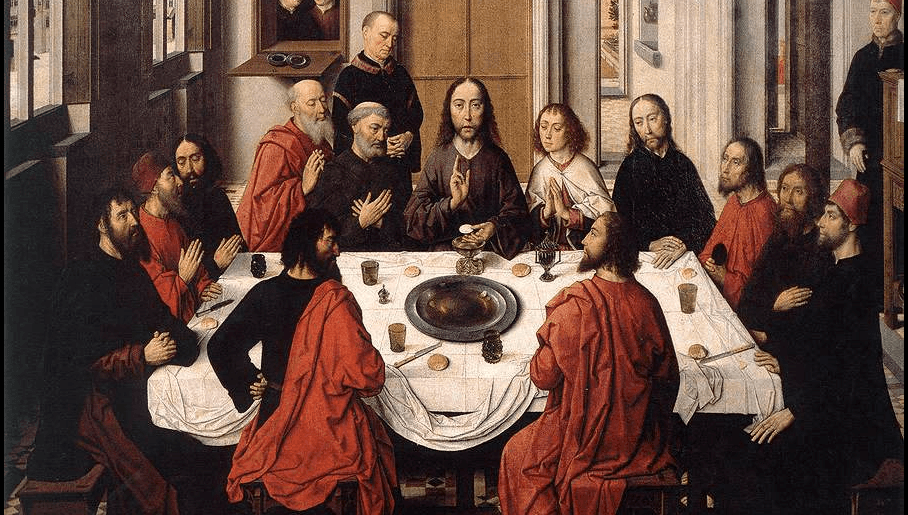
We should not be surprised if a major Catholic writer reflects on the great mysteries of his faith. François Mauriac (1885-1970) was awarded the Nobel Prize for Literature in 1952. Catholicism was the wellspring behind Mauriac’s creativity. It gave him a deep consciousness of the existential drama of life: an awareness that man can be damned and that contending with one’s vices is a necessary lifelong battle. I learnt this from his most famous novel, A Nest of Vipers, which describes a man at his most degraded, and therefore at his most desperate. “Oh God! – if only you existed!” the protagonist, Louis, cries out. In Holy Thursday: The Night That Changed the World (by Francois Mauriac, Sophia Institute Press, 120pp, £7.99/$12), a short series of reflections first published in 1931, Mauriac takes the reader on an intensely personal journey through each aspect of the liturgy: the stripping of the altars, the washing of the feet, the institution of the priesthood and so on, pointing out their profundity and eternal significance. Typically of a man alive to the decline of faith which he saw around him in France in the 1930s, he writes that his reflections are intended for “the non-Christian reader, the hostile or indifferent man who, perhaps, will thumb this little book only because my name is known to him”. He hopes “They will learn ... that the promise is for them also ... because the Son of Man came to seek and to save what was lost.” What particularly seizes Mauriac’s imagination is that the scenes enacted in the Upper Room in Jerusalem 2,000 years ago have been vitally and constantly present in succeeding centuries, though only understood at the time by their divine initiator. Jesus would have known “the philosophers and the scientists who believe only in what they see; and the mockers, the blasphemers who, from century to century would fight with unremitting animosity the small silent Host.” Such a vividly expressed long view of supernatural history helps readers to place the woes of our own time – and there are many, ecclesiastic and secular – in their correct context, as well as to remind us of our own essential place in this drama: “How many times did the cock crow for us as it did for Simon Peter?” Mauriac asks rhetorically. He recalls the liturgy of Holy Thursday from his childhood, awakened by the memories of singing in his college choir and participating in the soulful liturgy of Tenebrae. Unlike his slightly older compatriot, Proust, also deeply alive to the power of early memories, Mauriac concentrates on the action of grace on a person’s soul if he is receptive to it. Meditating on the need for Confession, he remarks, much as French novelist Georges Bernanos might have done: “It is never too late to become a saint.” A book to give to sensitive, literary-minded, atheist friends.
2:00 PM
The Nobel laureate who brought the Gospel to his atheist readers
we should not be surprised if a major catholic writer reflects on the great mysteries of his faith. françois mauriac (1885-1970) was awarded...
Francis Phillips

5 min read



Already a subscriber? Sign in
5freearticles every month
Continue reading with a free account. No card needed.
- Five free articles every thirty days, on any device you sign in on
- The Catholic Herald newsletter, every morning
- Subscribe whenever you like for everything: every article and the magazine

subscribe to the catholic herald today
Our best content is exclusively available to our subscribers. Subscribe today and gain instant access to expert analysis, in-depth articles, and thought-provoking insights—anytime, anywhere. Don’t miss out on the conversations that matter most.
Subscribe