

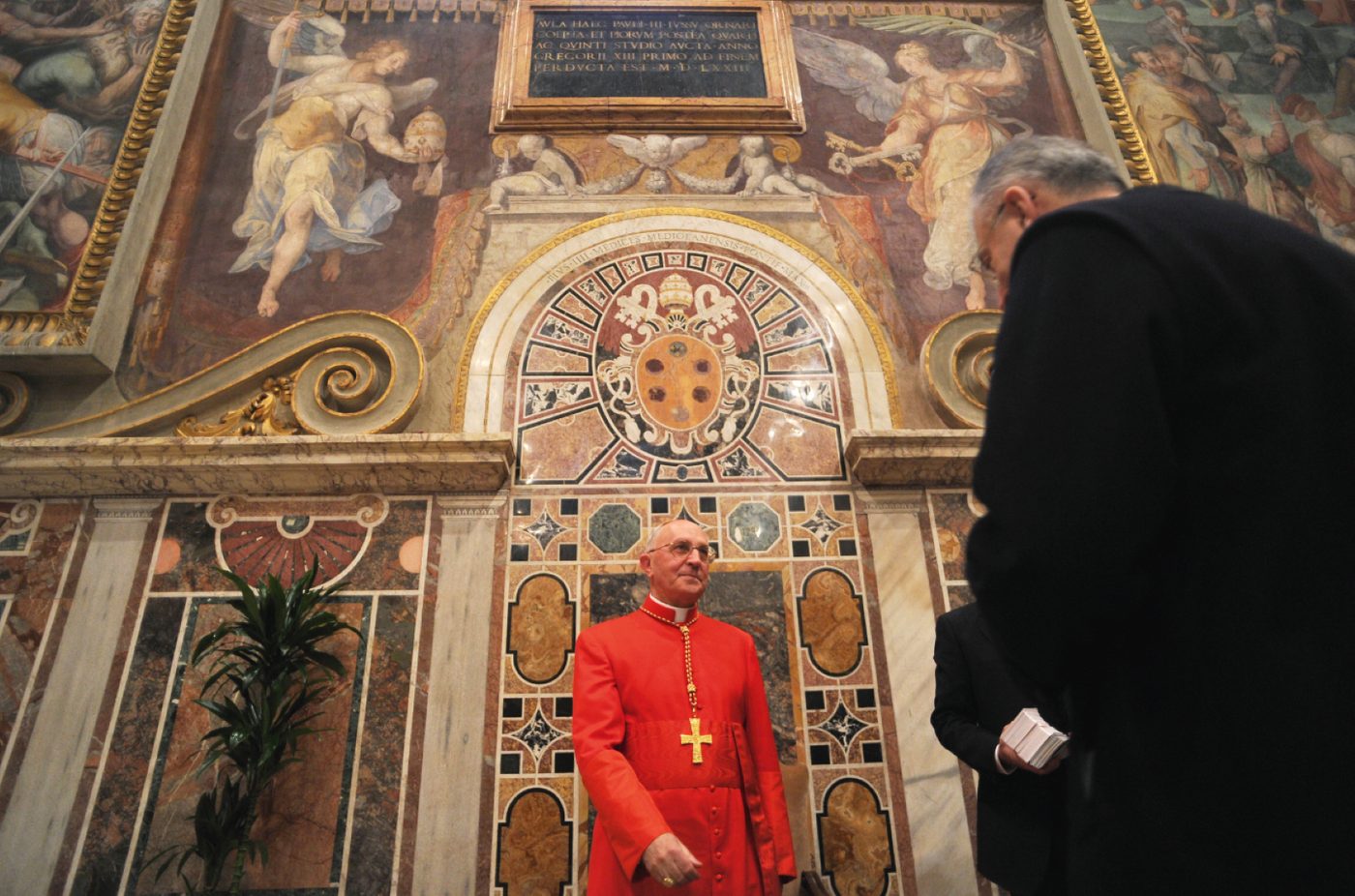
The Church in Iraq by Cardinal Fernando Filoni, translated by Edward Condon, Catholic University of America, 277pp, £16.95 I have always enjoyed reading books about the history of Christianity in Iraq, because I spent much of my childhood in Baghdad around Dominican and Franciscan schools and churches. Over the years, I have read several history books that deal with the Iraqi Church, mainly in Arabic and from the Iraqi Church perspective. Many of these deal with the subject superficially. That has always disappointed me. Cardinal Fernando Filoni, however, probes beneath the surface to uncover the full history of the Iraqi Church. Cardinal Filoni, the current prefect of the Congregation for the Evangelisation of Peoples, has the advantage of a Vatican perspective. He provides a reliable account of events surrounding the Iraqi Christian community. His profound appreciation for the Iraqi Church allows him to describe its central concerns and development with insight. His major contribution is to give a clear and straightforward account of the Vatican’s involvement with the Iraqi Church. As a former apostolic nuncio to Iraq and Jordan, the cardinal is arguably the foremost authority on that relationship. Christians continued their progress and growth under the shadow of Saddam Hussein’s almost secular state. Adherents of all faiths were kept in check but were able to coexist in relative peace, creating a tranquil interfaith relationship. Despite Saddam’s reign of terror and despicable rule, Christians felt safe. The Iraqi Church has passed through very harsh circumstances because of wars, both international and local, and because of displacement and the difficulty of dealing with the complex politics of the Middle East. Additionally, the Church has encountered difficulties in dealing with its brother churches and the Universal Church. Despite all these problems, the Church has managed to set up many printing houses, publish hundreds of books, establish magazines, and build hundreds of churches, monasteries and schools. It has also been active in pastoral and spiritual works. Iraqi Christians have been very faithful, despite their human weaknesses, to the talents that Christ gave them, for they have cast their nets in his name. Since 1980, almost a million Iraqi Christians have fled the country, not just because of wars and violence, but also as a result of incitement to violence by local religious leaders. The indigenous people of Iraq, especially Christians, are leaving for neighbouring countries on a daily basis, and their numbers are dwindling. Many Christian properties have been sold through organised crime syndicates. These operate by forging land registries, bribery and the use of force. The Church does not have a militia with which to defend Christian properties. The Iraqi government is weak and unable to change the situation. Almost 40,000 refugees are in Turkey, 5,000 in Jordan and 10,000 in Lebanon. In the north of Iraq and Baghdad, there are 100,000 Christians who were expelled from Mosul and the Nineveh Plains by ISIS in 2014. Iraqi Christians are being uprooted from a homeland they have inhabited for nearly 2,000 years. It is like a slow-motion genocide. Cardinal Filoni reflects on his personal experience in Iraq by asking the question: “But when the Lord returns, will he find any faith left in this land?” I have spent some time pondering this question, and often wonder whether there is a definite strategy to destroy Christianity in Iraq. During his time in Iraq, Cardinal Filoni was visible to everyone, and was responsible for holding the threads of the Latin Church together. He was always looking at the near and far horizons, and tried to understand events and accurately evaluate people. He was always there in a crisis situation. The book is written in a conventional style. It moves quickly through the grand sweep of nearly 1,500 years of history and the events that befell the Iraqi Church. If you are looking for an accessible and concise history of the Iraqi Church, this is the best place to begin. Robert Ewan is a British-Iraqi freelance journalist
12:00 PM
The slow-motion genocide of Iraqi Christians
Robert Ewan

4 min read



Already a subscriber? Sign in
5freearticles every month
Continue reading with a free account. No card needed.
- Five free articles every thirty days, on any device you sign in on
- The Catholic Herald newsletter, every morning
- Subscribe whenever you like for everything: every article and the magazine

subscribe to the catholic herald today
Our best content is exclusively available to our subscribers. Subscribe today and gain instant access to expert analysis, in-depth articles, and thought-provoking insights—anytime, anywhere. Don’t miss out on the conversations that matter most.
Subscribe



