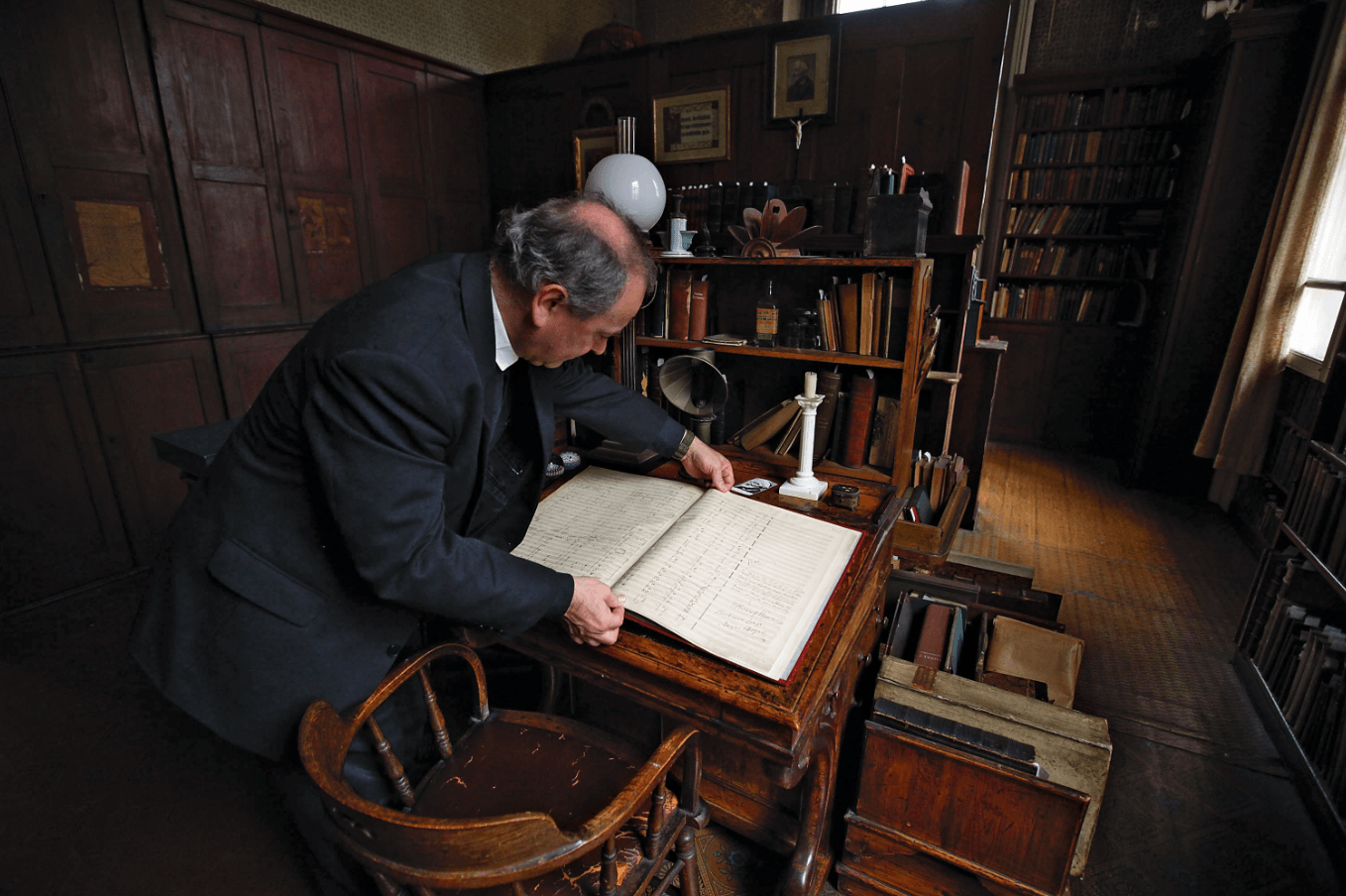


Sir Edward Elgar (1857-1934) is often caricatured as an establishment figure, while in truth he was a sensitive outsider. Born near Worcester into a lower middle-class family, his mother took the unusual step of converting to Catholicism, insisting her children be brought up in the faith. Her husband, who was the organist of St George’s Catholic Church, converted on his deathbed.
Young Edward followed in his father’s footsteps as organist, but also spent time listening to liturgical music in Worcester’s magnificent Anglican cathedral. The building was a venue for the Three Choirs Festival, and Elgar played the violin in several festivals as an orchestral musician, performing new music by composers such as Dvořák and Tchaikovsky, alongside oratorios by Parry, Cowen and others. Yet nothing surpassed Elgar’s admiration for Wagner, especially Parsifal: a Christian myth of spiritual transformation woven from “endless melody” and leitmotivs laden with meaning.