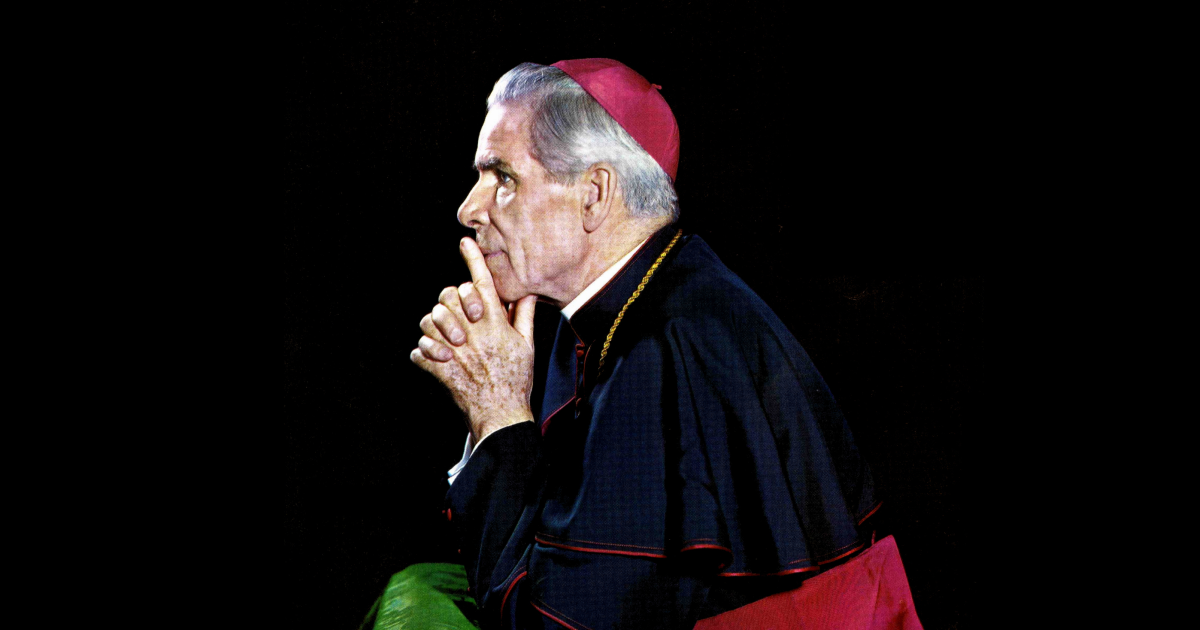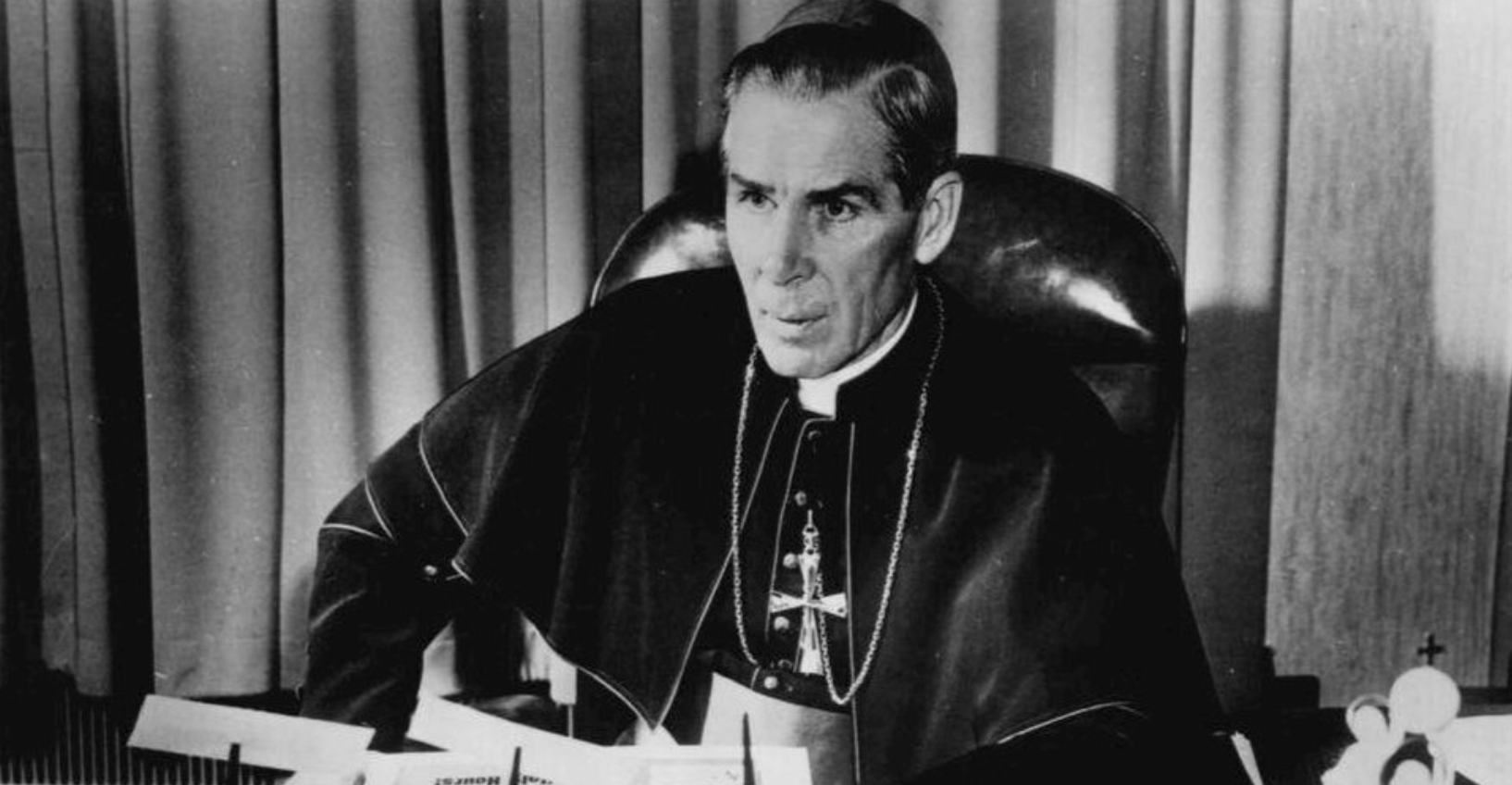


The television show that would catapult Archbishop Fulton Sheen to international stardom and mainstream recognition bears little resemblance to anything on television at the moment, and that is a sad reflection of what American society has become in just half a century.
From 1952 to 1957, Sheen’s show Life is Worth Living aired first on the DuMont Television Network and then on ABC on Tuesdays at 8pm. During its run, the show garnered a healthy audience in the millions each week, with most viewers being non-Catholics.
Looking at modern schedules of basic cable channels, which were all that were available in Sheen’s day, it is clear that programming priorities have changed.
On ABC, Tuesdays at 8pm are occupied by Dancing with the Stars, a show that Sheen himself would probably have been asked to take part in had he still been on the network. (I assume he would have declined.) On CBS, Tuesdays at 8pm are home to The Amazing Race, a game show in which pairs of contestants travel around the world, solving puzzles and completing challenges.
NBC has sports of some sort on Tuesdays at 8pm. Fox airs a show called Best Medicine, an adaptation of the UK programme Doc Martin. The CW has WWE NXT, a show featuring up-and-coming developmental professional wrestlers, and my local PBS network airs Big Cats 24/7, a show following lions, leopards and cheetahs in Botswana. (I may show this one to my two small cats to keep them aware of what their cousins are up to.)
None of these programmes could be called “cerebral” in any way. They do not invite the viewing audience to think, to consider questions of philosophy or theology, or attempt to educate them about any serious topic. Entertainment is important, yes – and who does not love watching non-dancing celebrities attempt to do a competent cha-cha-cha? – but it is sad that within living memory the content of television programming has so rapidly declined.
Of course, there are modern-day versions of Archbishop Sheen. Bishop Robert Barron has a highly successful podcast and ministry. Fr Mike Schmitz hosts the Bible in a Year podcast, which has topped the charts. The Dominican Sisters of Mary, Mother of the Eucharist have produced some surprisingly viral clips on TikTok simply by discussing their everyday life in community.
While all of this is fantastic, the death of the monoculture means that these things have to be sought out to be consumed. Long gone are the days of four major channels dominating American television. (Today, for example, there are four main ESPN channels – ESPN, ESPN2, ESPNU and ESPNews – plus various regional options. And this is just one subsidiary of The Walt Disney Company.) A person cannot simply open the “Podcasts” app and press a button to hear a random episode of a random show in the same way that they can by turning on the television or radio.
In 1952, Archbishop Sheen’s audience was not just “Catholics” – it was all of America. There were basically four options for things to watch on Tuesdays at 8pm, and a large number of people opted to tune in to a witty, charismatic bishop and his chalkboard. The success of the show even shocked the executives at the now-defunct DuMont Television Network, who figured they would be throwing away that timeslot to some poor sap who would be trounced in the ratings by Milton Berle and Frank Sinatra on other channels. They were wrong.
Today’s wide variety of media formats, infinite number of television channels and untold number of other distractions means that people need to curate their content towards a specific audience, rather than appeal to everyone in the hope they will stick around.
I do not think this has made American society, or the content produced to entertain it, better. By default, programmes on the major networks have to appeal to the lowest common denominator to get viewers. But what does it say about society that the lowest common denominator has shifted so dramatically from “person who would sit down and listen to a no-frills show about theology” to “person who will watch celebrities either make a fool of themselves or be unexpectedly good at dancing a tango”?
I am not saying that Bishop Barron or Fr Schmitz should be given a show on network television. But maybe, just maybe, could a major television network take another gamble on a weekday primetime slot and produce a show that prompts viewers to sit down on their sofas and think?