
March 10, 2026

What to make of the Synod’s final report on women in the Church

Niwa Limbu
More
Related
Min read
share

The Vatican has published another study report commissioned following the opening phase of the Synod on Synodality, addressing the debate over the role of women in the Catholic Church.

The latest document, released by the General Secretariat of the Synod on March 3, sets out the conclusions of Study Group No 5, which examined “women’s participation in the life and leadership of the Church”.

The report is the third of several expected from study groups established by Pope Francis after the first session of the Synod of Bishops’ XVI Ordinary General Assembly. These groups were tasked with examining complex questions raised during the synodal consultations that could not easily be resolved during the assembly itself. Their findings are intended to deepen reflection before the wider synodal process continues.

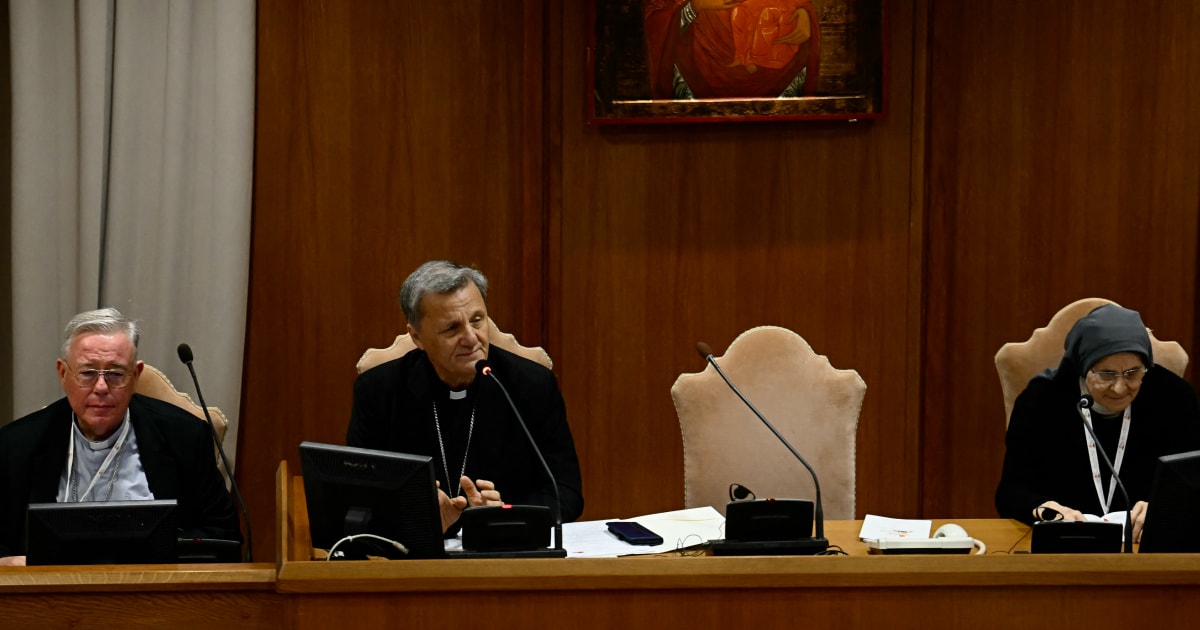
In a statement accompanying the publication, Cardinal Mario Grech, Secretary General of the Synod, emphasised that discussion about women in the Church must first grapple with the cultural issues shaping the Church. “When speaking about the role of women in the life of the Church, we must be aware that it is first and foremost a matter of cultural order,” he said, noting that in many regions social norms still strongly influence how the faith is lived and organised.

Cardinal Grech argued that the Church must distinguish more clearly between authentic Gospel principles and cultural habits that may obscure them. “Too often, the way faith is lived is determined by certain cultural aspects rather than by Gospel values,” he said. The cardinal added that the Church’s task was to ensure that its witness within diverse societies promotes the dignity of all believers and encourages shared responsibility among the faithful. “Our renewed mission is to make the Church a force that embodies the Gospel within cultures, promoting respect for the rights of all and co-responsibility according to each person’s vocation.”

The final report traces the work of the study group and the method it followed in examining the subject. It outlines how theological, pastoral and canonical perspectives were brought together in an attempt to assess how women already contribute to the Church’s mission and how their participation might develop further.

A large portion of the document is devoted to synthesising the themes that emerged during the group’s deliberations. Among the questions explored are the relationship between men and women within the life of the Church, the meaning of authority within ecclesial structures and the distinction between ordained ministry and other forms of service exercised by the laity.

The final report is composed of three parts. One strand of the discussion emphasises that any reflection on women’s roles cannot be separated from a wider understanding of the Church as a communion of men and women who share a common mission. The report therefore raises the possibility that clarifying the scope and responsibilities of ordained ministry might open new opportunities for lay leadership.

In addressing this issue, the document draws upon previous papal teaching to underline the theological limits surrounding the priesthood while also highlighting the broader purpose of ecclesial authority.

A second key theme of the report concerns what it calls the “charismatic dimension” of women’s participation in the Church. The document notes that alongside formally instituted ministries there exist many other stable forms of service that arise from spiritual gifts rather than from specific liturgical appointments.

The report argues that focusing solely on formally instituted ministries risks narrowing the scope of women’s contributions to the life of the Church. Charisms, it suggests, often enable believers to reach situations and communities that traditional structures struggle to address. In this sense, the document says spiritual gifts should be recognised as objective realities that respond to the practical needs of evangelisation.

The final section of the report includes a series of appendices providing more detailed theological and canonical reflections on the issues discussed by the study group. These also contain proposals submitted during the consultations, indicating that the conversation about women’s participation remains an ongoing process rather than a settled question.

The publication forms part of the wider synodal initiative launched by Pope Francis in 2021, which aims to encourage Catholics across the world to reflect on how the Church listens, discerns and makes decisions. The synod’s first assembly session in Rome in 2023 revealed deep interest in questions surrounding governance, participation and the role of different vocations within the Church.

The report contains a mixture of reassurance and ambiguity that illustrates the current tension in the Church.

The first point that must be acknowledged is that the report clearly does not endorse women being admitted to the office of deacon. This is not an interpretation but something the document itself states. In its historical overview of the study group’s work and again in its treatment of ministerial questions, the report declares on page six: “The question of women’s access to the diaconate did not yet appear sufficiently mature, all things considered and as maintained by Pope Francis himself.”

For several years the possibility of women deacons has been widely debated, and some observers assumed the synod process might eventually endorse such a development. Instead, the study group explicitly records that the question remains unresolved and, more importantly, not ready for doctrinal change.

That conclusion becomes clearer in paragraph 32 of the report, where the work of the reactivated commission on the female diaconate is described. The text notes that “during the Second Session of the Synod on Synodality, Pope Francis reactivated the work of the Second Study Commission on the Female Diaconate”. The commission’s conclusion is then summarised with similar clarity, stating that the proposal must be understood “while confirming what was expressed in Saint John Paul II’s Apostolic Letter Ordinatio Sacerdotalis”. 

Ordinatio Sacerdotalis remains the definitive magisterial statement that the Church has no authority to ordain women to the priesthood. The diaconate belongs to the same sacramental structure of Holy Orders, and reaffirming that document effectively safeguards the male-only nature of ordained ministry.

There is also a degree of practical restraint in the report’s treatment of governance. On several occasions it insists that the Church already possesses sufficient canonical structures to allow broader participation by women without altering doctrine. On page 15, paragraph 29, the report notes that “full advantage may be taken of all these possibilities already present in the current canonical framework”. It also states that “there is no reason or impediment that should prevent women from carrying out leadership roles” within what canon law already permits. In practical terms, rather than proposing sweeping reform of canon law, the document suggests using the tools the Church already has.

Yet these reassuring elements are only part of the story. The section dealing with the work of the Female Diaconate Commission illustrates why some apparently reassuring statements function as a double-edged sword. As mentioned earlier, the report does clearly reaffirm the doctrinal limits established by the Church regarding Holy Orders. Yet in the same passage it advances proposals that appear contradictory. As previously noted on page 16: “The same Commission approved by a very large majority (9 votes in favor, 1 against) a thesis that considers the possibility of expanding women’s access to instituted ministries—such as that of catechist—or of establishing new ones… In this regard, it seems opportune to broaden women’s access to ministries instituted for the service of the community.”

This is where the double edge appears. As noted earlier, the document explicitly confirms Ordinatio Sacerdotalis. Because the diaconate belongs to the same sacramental structure of Holy Orders, reaffirming that teaching effectively protects the traditional understanding of ordained ministry. In that sense, the report presents the sacramental question as closed.

Yet the same paragraph proposes broadening women’s access to instituted ministries and potentially establishing new forms of ministry altogether. When new non-sacramental ministries are expanded while the diaconate question continues to be revisited, the structures can more easily be presented as a stepping stone towards further developments. The fact that the report describes the broadening of the female diaconate commission reinforces the impression that the issue, while formally unresolved, remains open to future reinterpretation.

Another example appears in the report’s discussion of the relationship between governance and Holy Orders. On page 13 the text states: “The primatial potestas of the Roman Pontiff may also be delegated to baptised persons who have not received Holy Orders… there would seem to be no obstacles to extending such an approach also at the local level in individual dioceses, without this implying participation in Holy Orders.”

In practice this development is already visible. The appointment of Sister Simona Brambilla as Prefect of the Dicastery for Institutes of Consecrated Life in 2025 and the earlier appointment of Paolo Ruffini as Prefect of the Dicastery for Communication in 2018 demonstrate how lay leadership is being incorporated into the governance of the Church. Yet ordinary jurisdiction remains closely connected to sacramental orders. If authority can be widely delegated to the non-ordained, the practical distinction between clergy and laity becomes less clear.

On the more cultural side of the debate, the synod has weighed in with strong language concerning clericalism and gender. On page 9, paragraph 4, the document states: “Clericalism is the tendency to transfer automatically the authority and unique role that properly belong to the priest in the celebration of the Eucharist into all other areas of community life.”

Later sections reinforce this theme. Appendix VI, in a section titled “Critical Tensions Regarding Clericalism and Male Chauvinism”, explicitly references “Pope Francis’ Contribution against Clericalism and Machismo”.

It should be clear that the male priesthood is grounded not in sociological categories but in sacramental theology and divine institution. Documents such as Presbyterorum Ordinis explain the authority of the priest primarily in terms of his role in celebrating the Eucharist and shepherding the faithful. By contrast, the language of “male chauvinism” and “machismo” draws on modern sociological terminology. The broader picture is that sacramental distinctions are increasingly being interpreted through contemporary cultural frameworks.

Perhaps the most controversial passage in the entire report concerns its interpretation of cultural change. On page 10 the document states: “The ‘question of women’ is a sign of the times, in the sense that the Holy Spirit also speaks through it. This implies that in this area a path of conversion—that is, a change of mentality—is necessary at all levels of the Church.” The report goes on to note factors such as women leaving the Church and declining vocations.

This argument draws upon Vatican II’s Gaudium et Spes, which encouraged the Church to read the signs of the times. Yet that did not imply adopting the assumptions of secular culture or allowing social trends to dictate doctrine. Rather, it meant interpreting contemporary events in the light of the Gospel. Presenting cultural pressure as evidence that the Church must undergo a “change of mentality” therefore remains open to debate.

This interpretation is also open to challenge when one considers the demographic evidence emerging within the Church itself. In recent years many of the most striking examples of female engagement in Catholic life have come not from communities experimenting with the synod but from those more firmly rooted in tradition, particularly communities attached to the Latin Mass and traditional forms of religious life. There has been a steady influx of young women entering or discerning religious vocations within traditional convents and institutes, alongside a wider trend of women converting to or rediscovering the faith through these communities. 

The phenomenon suggests that dissatisfaction with secular culture and a desire for clarity in doctrine, liturgy and spiritual discipline may in fact be drawing many women towards precisely the forms of Catholic life that the wider synodal conversation often treats as peripheral.

Taken as a whole, therefore, the report reveals a Church navigating a delicate path between continuity and adaptation. On the one hand it clearly reaffirms the doctrinal boundaries established by Ordinatio Sacerdotalis and the tradition of the male priesthood. On the other it advances theological language shaped strongly by contemporary debates about power, culture and gender. The result is a document that both reassures and unsettles. 

The Vatican has published another study report commissioned following the opening phase of the Synod on Synodality, addressing the debate over the role of women in the Catholic Church.

The latest document, released by the General Secretariat of the Synod on March 3, sets out the conclusions of Study Group No 5, which examined “women’s participation in the life and leadership of the Church”.

The report is the third of several expected from study groups established by Pope Francis after the first session of the Synod of Bishops’ XVI Ordinary General Assembly. These groups were tasked with examining complex questions raised during the synodal consultations that could not easily be resolved during the assembly itself. Their findings are intended to deepen reflection before the wider synodal process continues.
In a statement accompanying the publication, Cardinal Mario Grech, Secretary General of the Synod, emphasised that discussion about women in the Church must first grapple with the cultural issues shaping the Church. “When speaking about the role of women in the life of the Church, we must be aware that it is first and foremost a matter of cultural order,” he said, noting that in many regions social norms still strongly influence how the faith is lived and organised.

Cardinal Grech argued that the Church must distinguish more clearly between authentic Gospel principles and cultural habits that may obscure them. “Too often, the way faith is lived is determined by certain cultural aspects rather than by Gospel values,” he said. The cardinal added that the Church’s task was to ensure that its witness within diverse societies promotes the dignity of all believers and encourages shared responsibility among the faithful. “Our renewed mission is to make the Church a force that embodies the Gospel within cultures, promoting respect for the rights of all and co-responsibility according to each person’s vocation.”

The final report traces the work of the study group and the method it followed in examining the subject. It outlines how theological, pastoral and canonical perspectives were brought together in an attempt to assess how women already contribute to the Church’s mission and how their participation might develop further.

A large portion of the document is devoted to synthesising the themes that emerged during the group’s deliberations. Among the questions explored are the relationship between men and women within the life of the Church, the meaning of authority within ecclesial structures and the distinction between ordained ministry and other forms of service exercised by the laity.

The final report is composed of three parts. One strand of the discussion emphasises that any reflection on women’s roles cannot be separated from a wider understanding of the Church as a communion of men and women who share a common mission. The report therefore raises the possibility that clarifying the scope and responsibilities of ordained ministry might open new opportunities for lay leadership.

In addressing this issue, the document draws upon previous papal teaching to underline the theological limits surrounding the priesthood while also highlighting the broader purpose of ecclesial authority.

A second key theme of the report concerns what it calls the “charismatic dimension” of women’s participation in the Church. The document notes that alongside formally instituted ministries there exist many other stable forms of service that arise from spiritual gifts rather than from specific liturgical appointments.

The report argues that focusing solely on formally instituted ministries risks narrowing the scope of women’s contributions to the life of the Church. Charisms, it suggests, often enable believers to reach situations and communities that traditional structures struggle to address. In this sense, the document says spiritual gifts should be recognised as objective realities that respond to the practical needs of evangelisation.

The final section of the report includes a series of appendices providing more detailed theological and canonical reflections on the issues discussed by the study group. These also contain proposals submitted during the consultations, indicating that the conversation about women’s participation remains an ongoing process rather than a settled question.

The publication forms part of the wider synodal initiative launched by Pope Francis in 2021, which aims to encourage Catholics across the world to reflect on how the Church listens, discerns and makes decisions. The synod’s first assembly session in Rome in 2023 revealed deep interest in questions surrounding governance, participation and the role of different vocations within the Church.

The report contains a mixture of reassurance and ambiguity that illustrates the current tension in the Church.

The first point that must be acknowledged is that the report clearly does not endorse women being admitted to the office of deacon. This is not an interpretation but something the document itself states. In its historical overview of the study group’s work and again in its treatment of ministerial questions, the report declares on page six: “The question of women’s access to the diaconate did not yet appear sufficiently mature, all things considered and as maintained by Pope Francis himself.”

For several years the possibility of women deacons has been widely debated, and some observers assumed the synod process might eventually endorse such a development. Instead, the study group explicitly records that the question remains unresolved and, more importantly, not ready for doctrinal change.

That conclusion becomes clearer in paragraph 32 of the report, where the work of the reactivated commission on the female diaconate is described. The text notes that “during the Second Session of the Synod on Synodality, Pope Francis reactivated the work of the Second Study Commission on the Female Diaconate”. The commission’s conclusion is then summarised with similar clarity, stating that the proposal must be understood “while confirming what was expressed in Saint John Paul II’s Apostolic Letter Ordinatio Sacerdotalis”. 

Ordinatio Sacerdotalis remains the definitive magisterial statement that the Church has no authority to ordain women to the priesthood. The diaconate belongs to the same sacramental structure of Holy Orders, and reaffirming that document effectively safeguards the male-only nature of ordained ministry.

There is also a degree of practical restraint in the report’s treatment of governance. On several occasions it insists that the Church already possesses sufficient canonical structures to allow broader participation by women without altering doctrine. On page 15, paragraph 29, the report notes that “full advantage may be taken of all these possibilities already present in the current canonical framework”. It also states that “there is no reason or impediment that should prevent women from carrying out leadership roles” within what canon law already permits. In practical terms, rather than proposing sweeping reform of canon law, the document suggests using the tools the Church already has.

Yet these reassuring elements are only part of the story. The section dealing with the work of the Female Diaconate Commission illustrates why some apparently reassuring statements function as a double-edged sword. As mentioned earlier, the report does clearly reaffirm the doctrinal limits established by the Church regarding Holy Orders. Yet in the same passage it advances proposals that appear contradictory. As previously noted on page 16: “The same Commission approved by a very large majority (9 votes in favor, 1 against) a thesis that considers the possibility of expanding women’s access to instituted ministries—such as that of catechist—or of establishing new ones… In this regard, it seems opportune to broaden women’s access to ministries instituted for the service of the community.”

This is where the double edge appears. As noted earlier, the document explicitly confirms Ordinatio Sacerdotalis. Because the diaconate belongs to the same sacramental structure of Holy Orders, reaffirming that teaching effectively protects the traditional understanding of ordained ministry. In that sense, the report presents the sacramental question as closed.

Yet the same paragraph proposes broadening women’s access to instituted ministries and potentially establishing new forms of ministry altogether. When new non-sacramental ministries are expanded while the diaconate question continues to be revisited, the structures can more easily be presented as a stepping stone towards further developments. The fact that the report describes the broadening of the female diaconate commission reinforces the impression that the issue, while formally unresolved, remains open to future reinterpretation.

Another example appears in the report’s discussion of the relationship between governance and Holy Orders. On page 13 the text states: “The primatial potestas of the Roman Pontiff may also be delegated to baptised persons who have not received Holy Orders… there would seem to be no obstacles to extending such an approach also at the local level in individual dioceses, without this implying participation in Holy Orders.”

In practice this development is already visible. The appointment of Sister Simona Brambilla as Prefect of the Dicastery for Institutes of Consecrated Life in 2025 and the earlier appointment of Paolo Ruffini as Prefect of the Dicastery for Communication in 2018 demonstrate how lay leadership is being incorporated into the governance of the Church. Yet ordinary jurisdiction remains closely connected to sacramental orders. If authority can be widely delegated to the non-ordained, the practical distinction between clergy and laity becomes less clear.

On the more cultural side of the debate, the synod has weighed in with strong language concerning clericalism and gender. On page 9, paragraph 4, the document states: “Clericalism is the tendency to transfer automatically the authority and unique role that properly belong to the priest in the celebration of the Eucharist into all other areas of community life.”

Later sections reinforce this theme. Appendix VI, in a section titled “Critical Tensions Regarding Clericalism and Male Chauvinism”, explicitly references “Pope Francis’ Contribution against Clericalism and Machismo”.

It should be clear that the male priesthood is grounded not in sociological categories but in sacramental theology and divine institution. Documents such as Presbyterorum Ordinis explain the authority of the priest primarily in terms of his role in celebrating the Eucharist and shepherding the faithful. By contrast, the language of “male chauvinism” and “machismo” draws on modern sociological terminology. The broader picture is that sacramental distinctions are increasingly being interpreted through contemporary cultural frameworks.

Perhaps the most controversial passage in the entire report concerns its interpretation of cultural change. On page 10 the document states: “The ‘question of women’ is a sign of the times, in the sense that the Holy Spirit also speaks through it. This implies that in this area a path of conversion—that is, a change of mentality—is necessary at all levels of the Church.” The report goes on to note factors such as women leaving the Church and declining vocations.

This argument draws upon Vatican II’s Gaudium et Spes, which encouraged the Church to read the signs of the times. Yet that did not imply adopting the assumptions of secular culture or allowing social trends to dictate doctrine. Rather, it meant interpreting contemporary events in the light of the Gospel. Presenting cultural pressure as evidence that the Church must undergo a “change of mentality” therefore remains open to debate.

This interpretation is also open to challenge when one considers the demographic evidence emerging within the Church itself. In recent years many of the most striking examples of female engagement in Catholic life have come not from communities experimenting with the synod but from those more firmly rooted in tradition, particularly communities attached to the Latin Mass and traditional forms of religious life. There has been a steady influx of young women entering or discerning religious vocations within traditional convents and institutes, alongside a wider trend of women converting to or rediscovering the faith through these communities. 

The phenomenon suggests that dissatisfaction with secular culture and a desire for clarity in doctrine, liturgy and spiritual discipline may in fact be drawing many women towards precisely the forms of Catholic life that the wider synodal conversation often treats as peripheral.

Taken as a whole, therefore, the report reveals a Church navigating a delicate path between continuity and adaptation. On the one hand it clearly reaffirms the doctrinal boundaries established by Ordinatio Sacerdotalis and the tradition of the male priesthood. On the other it advances theological language shaped strongly by contemporary debates about power, culture and gender. The result is a document that both reassures and unsettles. 

subscribe to
the catholic herald

Continue reading your article with a subscription.
Read 5 articles with our free plan.
Subscribe

subscribe to the catholic herald today

Our best content is exclusively available to our subscribers. Subscribe today and gain instant access to expert analysis, in-depth articles, and thought-provoking insights—anytime, anywhere. Don’t miss out on the conversations that matter most.
Subscribe