



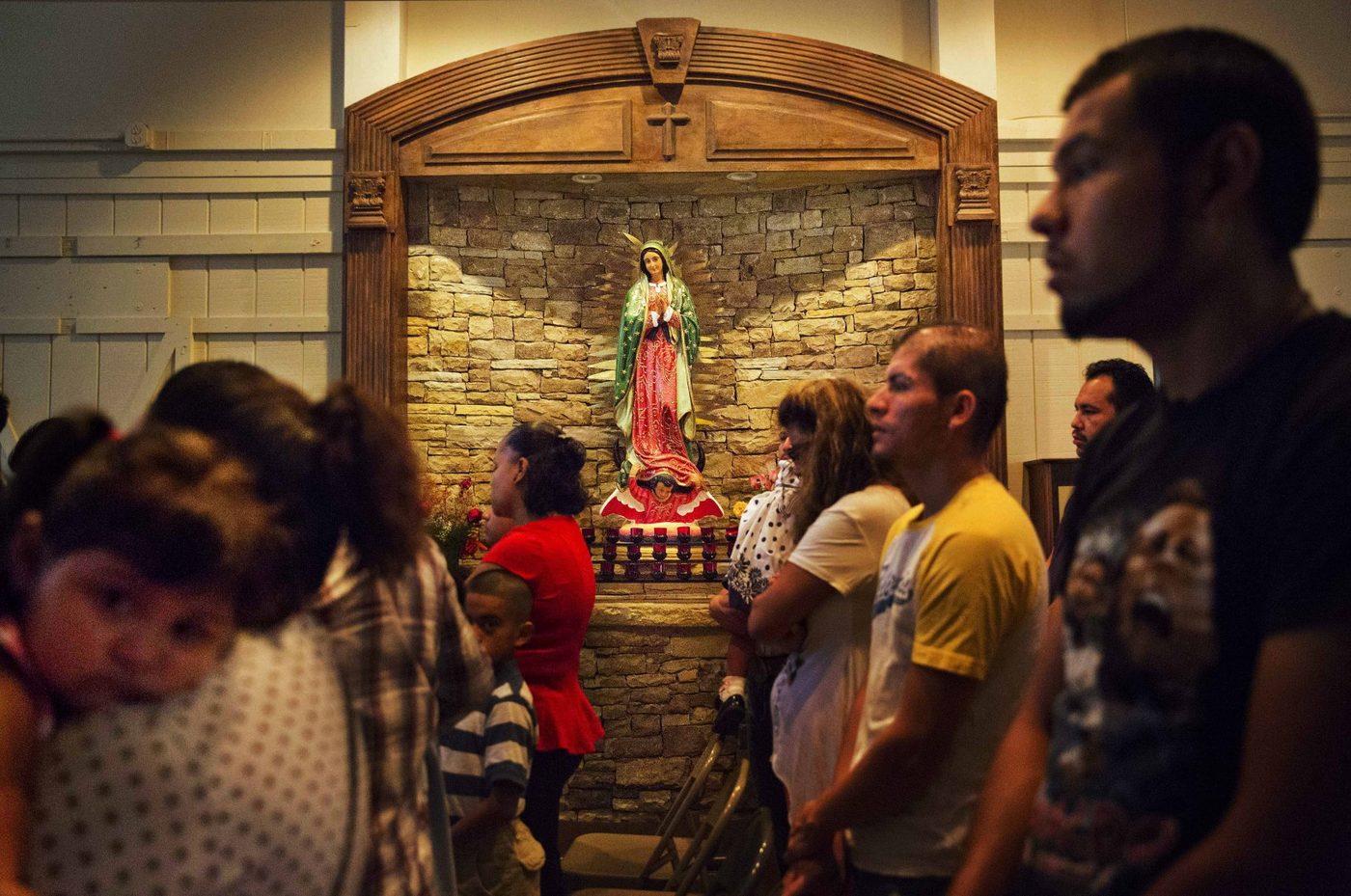
A recent poll reveals that while White Catholics sadly mirror national divisions on abortion, Hispanic and Latino Catholics paint a more complicated picture. Hispanic Catholics are the ethnic group least likely to support the legality of abortion, but drilling down into the data shows that Hispanic Catholics born outside the U.S. were far less likely to support the legality of abortion (59 per cent oppose abortion) than if they were born inside the U.S. In a political climate where it is simply assumed that Hispanic immigrants are a reliable voting block for Democrats, the data suggests that they are not natural allies of the party of Planned Parenthood. In America magazine, J.D. Long-García notes that because “Hispanics were the only race or ethnicity where a majority of respondents thought that abortion should be illegal in all or most cases,” Latino lawmakers find it difficult to represent their constituents in a party which supports abortion on demand. A woman who works on Latino parish engagement in the Archdiocese of Los Angeles, Ms. De Los Santos, explains that Hispanic Catholics “are more likely to identify as pro-family than as pro-life” because the family is the context for understanding the value and sanctity of life. “We grow up with our grandparents and take care of them until they die.” A strong sense of a large and extended family with real familial obligations shapes how they think about the legality of abortion. This is not to say that Hispanic women are not having abortions. They tragically are. But Raimundo Rojas, director of Latino Outreach for the National Right to Life notes in the same article that the stigma of abortion is far more pronounced in Hispanic communities. “It’s something that isn’t done...You can’t look at the Hispanic culture without dealing with telenovelas. Women who have abortions in telenovelas are the villains.” A strong moral disgust underwrites even Latino support for the legality of abortion. The conclusion drawn in America’s reporting on the data is commendable as far as it goes: immigration and abortion are both about human dignity, and are better bedfellows than partisan issues. That conclusion is, however, a political wish that seems distant from political reality. It also doesn’t help to explain why the Hispanic population stands out, in contrast to White Catholics, or why being born in America would become a solvent for those familial attachments that undergird their support for pro-life legislation. One possible explanation which moves in this direction, however, might be found in Mary Eberstadt’s new book Primal Screams: How the Sexual Revolution Created Identity Politics. The book is out next week, and presents a new approach to thinking about the collective “primal screams” of our identity politics as a scream “born of familial liquidation.” In a fascinating essay published this week at Quillette called “The Great Scattering,” Eberstadt previews her thesis that “our macro-politics have become a mania about identity because our micropolitics are no longer familial.” The inverse of that claim would be that where the micropolitics of the family still have a significant claim on people’s lives, they will be less drawn into the “primal screams” of identity that so distort our politics — including the politics of abortion. Eberstadt explains:
1:00 AM
Why Hispanic immigrants are so pro-life
C C Pecknold

5 min read



Already a subscriber? Sign in
5freearticles every month
Continue reading with a free account. No card needed.
- Five free articles every thirty days, on any device you sign in on
- The Catholic Herald newsletter, every morning
- Subscribe whenever you like for everything: every article and the magazine
Related articles
 US News
US-Iran talks break down as Vance cites nuclear deadlock and Catholic voices urge peace
Marathon talks in Islamabad ended without an agreement after JD Vance said Washington had failed to secure assurances over Iran’s nuclear ambitions
The Catholic Herald US News
US dioceses report rise in Easter receptions into the Catholic Church
The Catholic Herald US News
US ambassador rejects claims over Vatican–Pentagon meeting
The Catholic Herald US News
US diocese suspends Sunday Mass obligation for those in fear of ICE raids
The Catholic Herald US News
Archbishop Cordileone endorses Singapore cardinal's defence of Latin Mass
The Catholic Herald
subscribe to the catholic herald today
Our best content is exclusively available to our subscribers. Subscribe today and gain instant access to expert analysis, in-depth articles, and thought-provoking insights—anytime, anywhere. Don’t miss out on the conversations that matter most.
Subscribe



