

William Blake lies in Bunhill Fields cemetery in London, a couple of hundred yards away from the Catholic Herald’s office. His grave was recently rediscovered, and a new memorial stone laid a year ago, bearing lines from his poem Jerusalem. Touchingly, there is always a vase of freshly cut flowers at his grave.
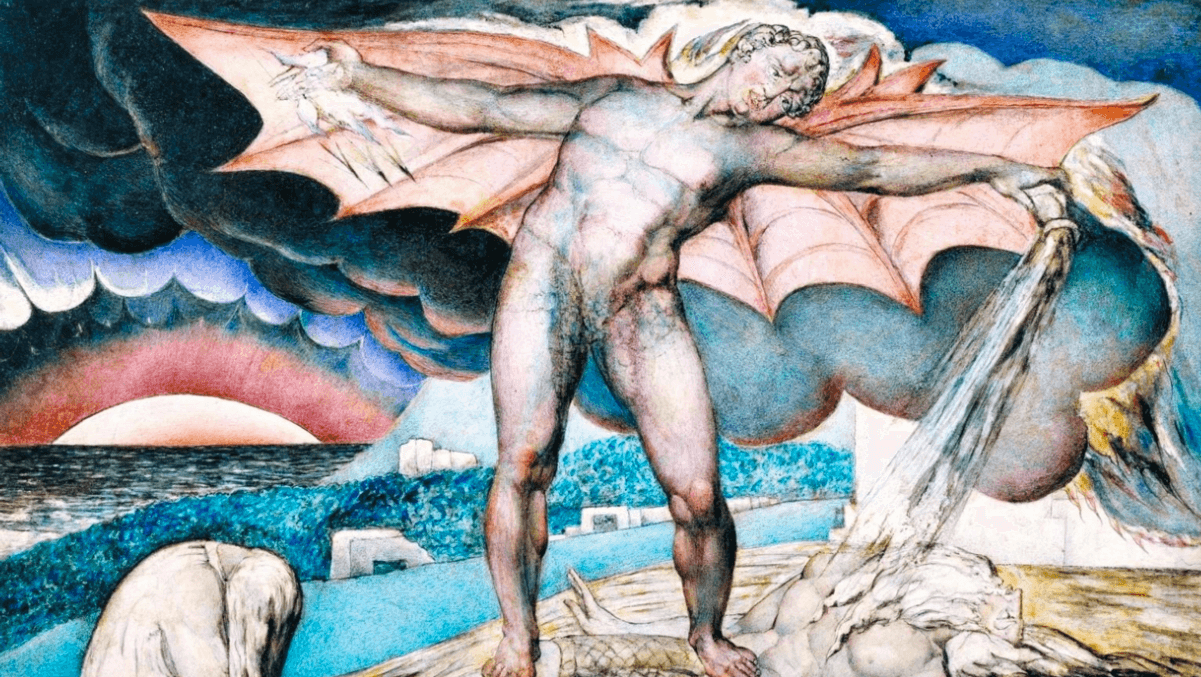
The new exhibition at Tate Britain, the largest in nearly 20 years, features more than 300 of his paintings and prints. By trade William Blake was an engraver, by talent an artist and poet. He was deeply spiritual, more leftfield than orthodox; his mother attended the Moravian Church, and he was also influenced by the mystical teachings of Emanuel Swedenborg. Although he is known for his esoteric paintings, many in this exhibition cover traditional religious topics: the Crucifixion, the conversion of Saul, Moses striking the rock.