
February 12, 2026

With its new leader, is Germany's ruling party returning to its Catholic roots?

Jon Anderson
More
Related
Min read
share

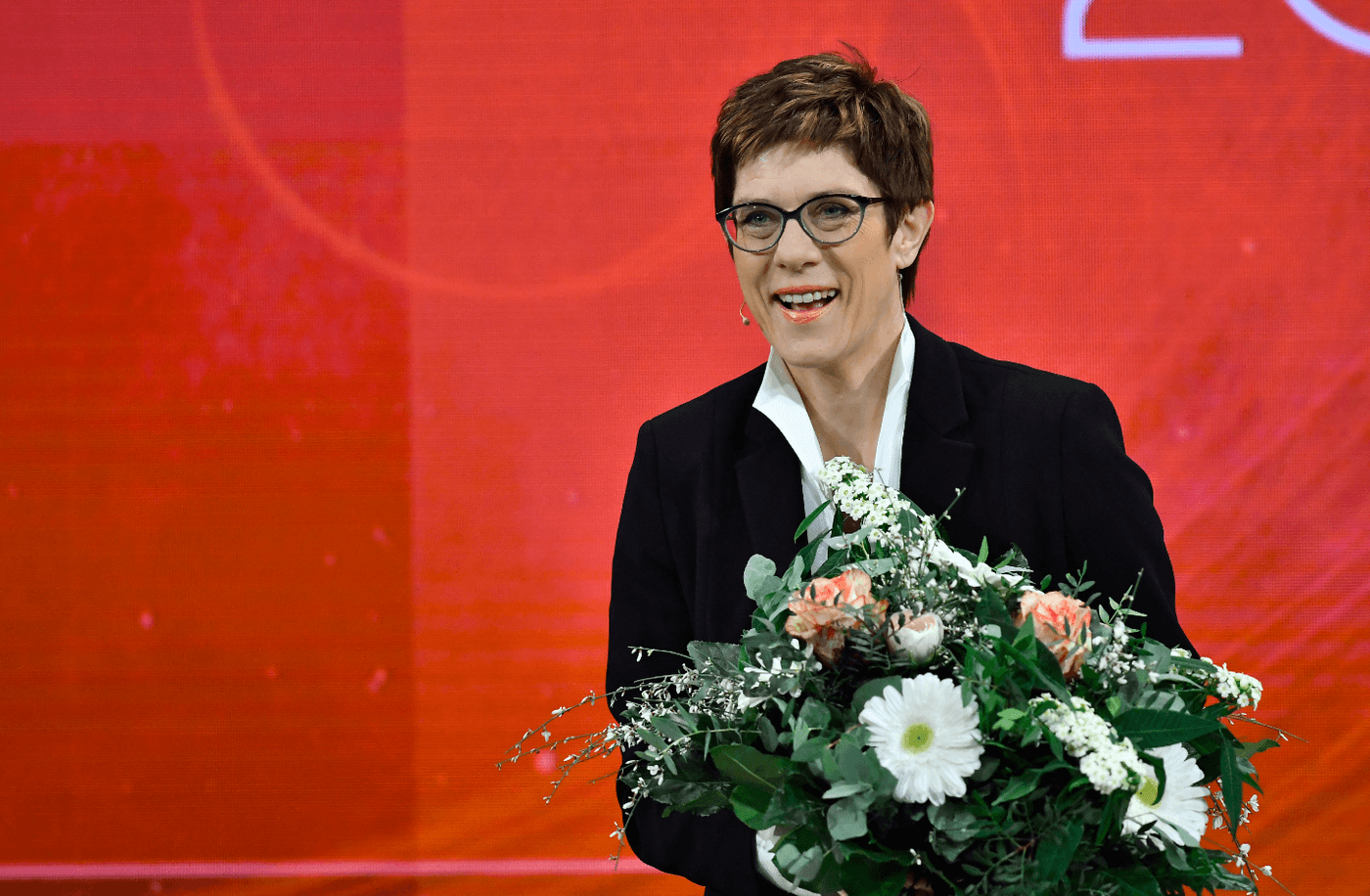
Germany’s Christian Democratic Union (CDU) has a new leader, after the party conference in Hamburg elected Annegret Kramp-Karrenbauer, known as AKK for short, to take over from Chancellor Angela Merkel, party leader since 2000. AKK is now likely to take over as chancellor when Merkel eventually stands down from government. In her acceptance speech, the new leader proclaimed herself the candidate of unity: “There is no conservative or liberal union. There is only one CDU.”

However, unity only narrowly won the day in Hamburg, with AKK defeating Friedrich Merz on the second ballot by 517 votes to 482. In many ways it seemed that the leadership vote was really a proxy vote on the CDU’s departing leader, with whom AKK is closely identified, and the result shows just how split the CDU has become.

Merz – a one-time rival of Merkel’s for the party leadership – had left politics in 2009 to make money as a corporate lawyer, and his comeback was supported mainly by party grandees with long-term grudges against Merkel. That Merz came so close shows how compromised the Merkel brand has become.

AKK is an active Catholic and a member of the Central Council of German Catholics. She was also, until being appointed CDU general secretary by Merkel in February 2018, premier of the tiny south-western state of Saarland, which has the highest proportion of Catholics in the country. So in some ways her election marks the CDU returning to its Catholic roots after the leadership of Merkel, a Protestant from Germany’s mostly non-religious east.

But there is also a clear continuity which has led the German press to dub AKK “mini-Merkel”. She shares her predecessor’s low-key style, in contrast to the more confrontational Merz, and a similar ideological centrism. She supported Merkel’s single most controversial policy, the opening of the borders during the 2015 refugee crisis. And on the biggest moral debate in recent years, the legalisation of same-sex marriage, she took a similar approach of opposing the bill but respecting the result.

AKK’s main leadership credentials are her record of winning elections in Saarland – important for a party languishing at 30 per cent in the polls – and her popularity with the CDU’s activist base. That base is dominated by elderly, conservative churchgoers – the same kind of people who elected Konrad Adenauer in the 1950s when his slogan was “no experiments”. But that is a demographic in long-term decline, and recently the CDU has been leaking support to the nationalist Alternative for Germany.

So cautious pragmatism has barely managed to win the day within the CDU. But it’s still not clear whether cautious pragmatism in the Merkel style can revive an ailing party.

Germany’s Christian Democratic Union (CDU) has a new leader, after the party conference in Hamburg elected Annegret Kramp-Karrenbauer, known as AKK for short, to take over from Chancellor Angela Merkel, party leader since 2000. AKK is now likely to take over as chancellor when Merkel eventually stands down from government. In her acceptance speech, the new leader proclaimed herself the candidate of unity: “There is no conservative or liberal union. There is only one CDU.”

However, unity only narrowly won the day in Hamburg, with AKK defeating Friedrich Merz on the second ballot by 517 votes to 482. In many ways it seemed that the leadership vote was really a proxy vote on the CDU’s departing leader, with whom AKK is closely identified, and the result shows just how split the CDU has become.
Merz – a one-time rival of Merkel’s for the party leadership – had left politics in 2009 to make money as a corporate lawyer, and his comeback was supported mainly by party grandees with long-term grudges against Merkel. That Merz came so close shows how compromised the Merkel brand has become.

AKK is an active Catholic and a member of the Central Council of German Catholics. She was also, until being appointed CDU general secretary by Merkel in February 2018, premier of the tiny south-western state of Saarland, which has the highest proportion of Catholics in the country. So in some ways her election marks the CDU returning to its Catholic roots after the leadership of Merkel, a Protestant from Germany’s mostly non-religious east.

But there is also a clear continuity which has led the German press to dub AKK “mini-Merkel”. She shares her predecessor’s low-key style, in contrast to the more confrontational Merz, and a similar ideological centrism. She supported Merkel’s single most controversial policy, the opening of the borders during the 2015 refugee crisis. And on the biggest moral debate in recent years, the legalisation of same-sex marriage, she took a similar approach of opposing the bill but respecting the result.

AKK’s main leadership credentials are her record of winning elections in Saarland – important for a party languishing at 30 per cent in the polls – and her popularity with the CDU’s activist base. That base is dominated by elderly, conservative churchgoers – the same kind of people who elected Konrad Adenauer in the 1950s when his slogan was “no experiments”. But that is a demographic in long-term decline, and recently the CDU has been leaking support to the nationalist Alternative for Germany.

So cautious pragmatism has barely managed to win the day within the CDU. But it’s still not clear whether cautious pragmatism in the Merkel style can revive an ailing party.

subscribe to
the catholic herald

Continue reading your article with a subscription.
Read 5 articles with our free plan.
Subscribe

subscribe to the catholic herald today

Our best content is exclusively available to our subscribers. Subscribe today and gain instant access to expert analysis, in-depth articles, and thought-provoking insights—anytime, anywhere. Don’t miss out on the conversations that matter most.
Subscribe