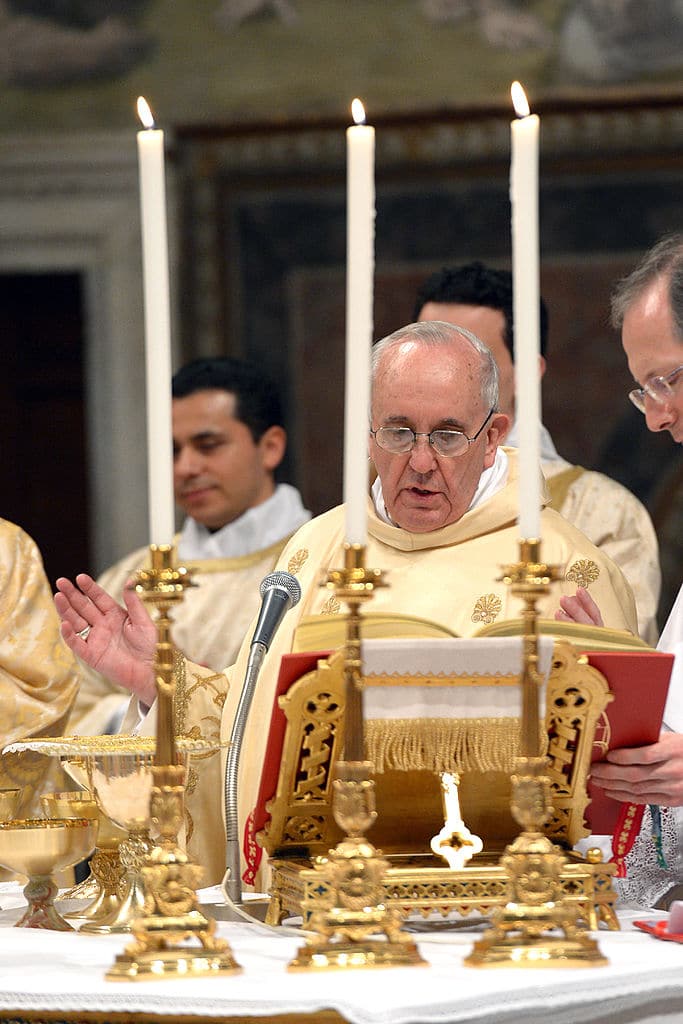


Cover image: Pope Francis celebrates Mass in the Sistine Chapel on March 14, 2013 (AFP PHOTO/OSSERVATORE ROMANO via Getty Images)
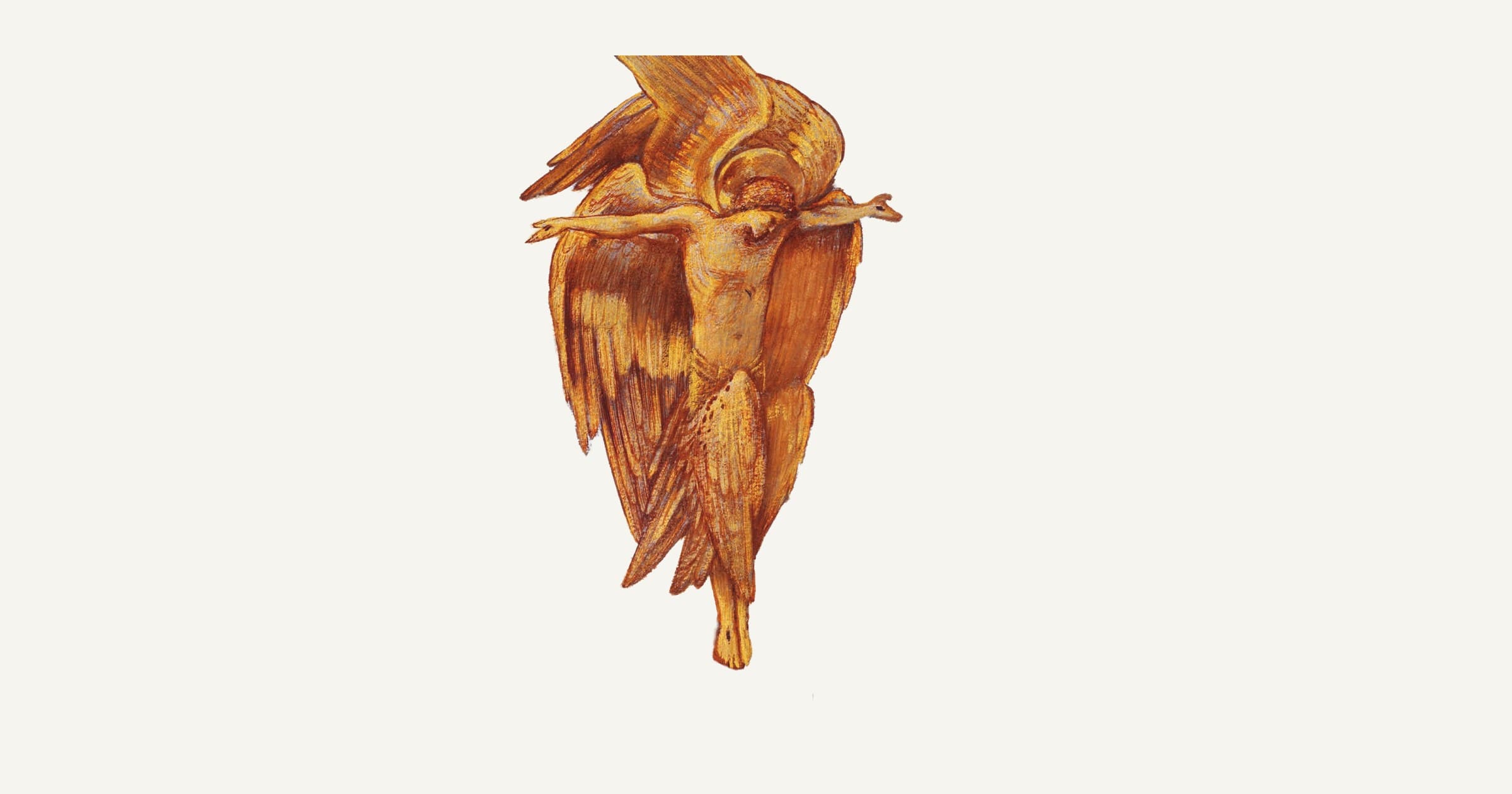
In humble prayer we ask you, almighty God:command that these gifts be borneby the hands of your holy Angelto your altar on highin the sight of your divine majesty These words, from the first Eucharistic Prayer – also known as the Roman Canon, one of the most ancient prayers of the Church – will be at least somewhat familiar to the majority of English-speaking practising Catholics. Older Massgoers, or those who attend traditionally-inclined parishes where priests choose to use Eucharistic Prayer 1 as often as possible, may have heard them thousands of times. One of the great advantages of formal liturgy is that, over time, it imprints itself on your mind. Even on those Sundays when you are preoccupied with worries or doubts, or whether your children are planning to escape from the pew and cause mayhem in the side aisle, you hear the same glorious words and you make the same responses. You kneel when you need to, even if some part of you is protesting furiously. You repeat the Our Father, a prayer which Jesus himself gave to us and which has been said by almost every Christian who has ever lived, and the Creed, which Catholics have been saying every Sunday for more than a millennium and a half. It gets into your bones. You don’t have to come up with your own words, or impress anyone with your individual eloquence. You can simply speak with the Church. An acquaintance of mine once suggested that the Mass resembles a long free verse poem. I consider this an incredibly fascinating and fruitful insight. After all, what is poetry but the use of words to grapple with things that cannot quite be said? TS Eliot, in the great poem East Coker, calls the poetic endeavour “a raid on the inarticulate”, which is to say we must recognise that there is something else behind words, of which we can nevertheless find little glimpses if we use language with an eye to precision and beauty and transcendence. For example, in his Church Going, Philip Larkin, speaking as an atheist, says of a Christian church, “A serious house on serious earth it is / In whose blent air all our compulsions meet / Are recognised, and robed as destinies”. You could devote many pages of analysis, or long hours of conversation, to explaining these lines, and still not exhaust their depth of meaning. Larkin had a sort of fascination with the attractive – but to him unattainable – consolations of the faith. His short work Days uses a memorable image: