
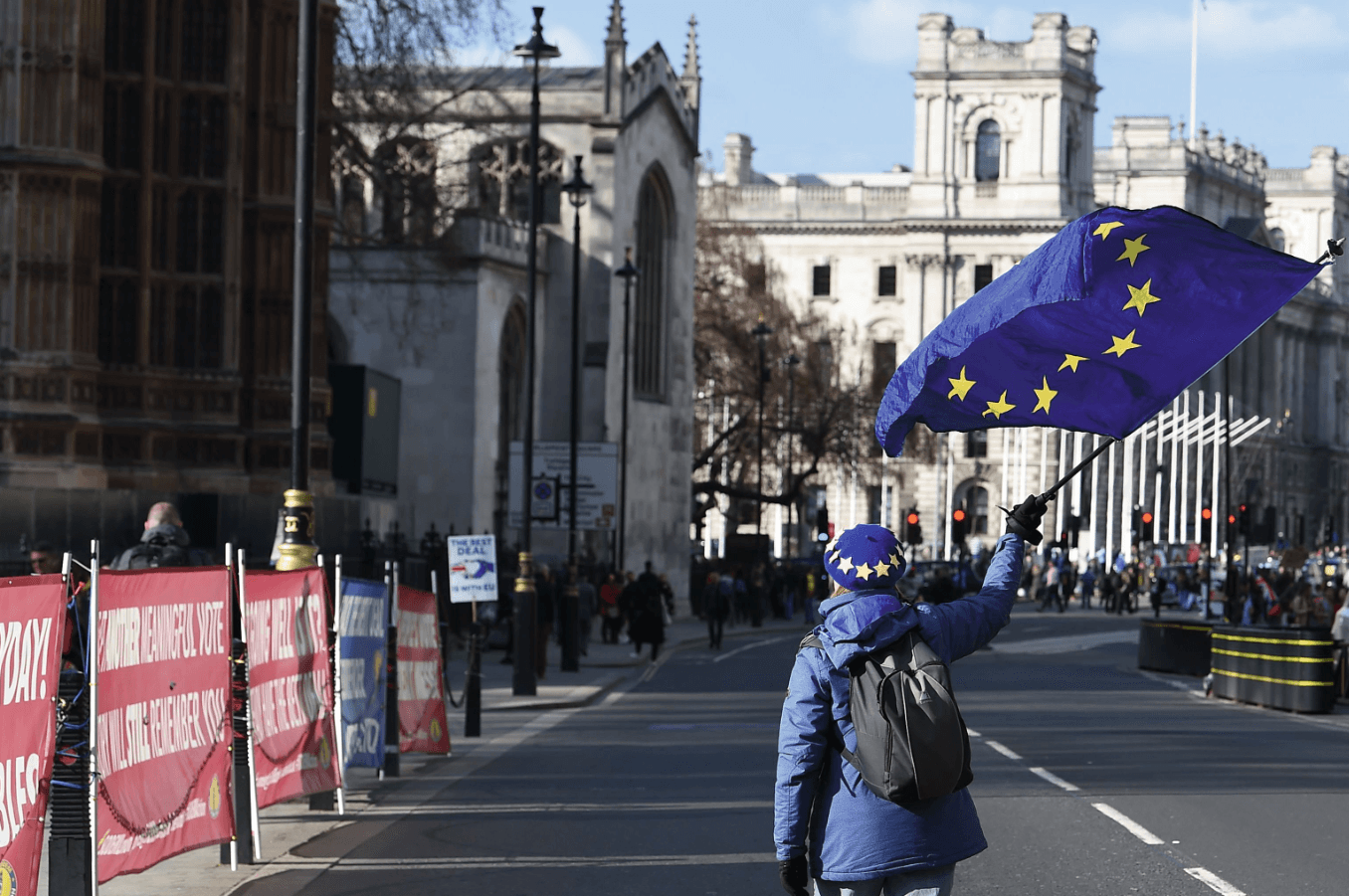
It certainly was an impressive sight: hundreds of thousands of people on the streets of London last weekend demonstrating, essentially, in favour of remaining in the European Union – or at the very least, putting the question to a second referendum. All those fluttering EU flags – 12 stars on a field of blue – celebrating the “unity, solidarity and harmony” of the European peoples could scarcely fail to be striking. But I wonder how many of the demonstrators were aware that they were carrying an emblem based on veneration of the Blessed Virgin Mary. Arsène Heitz, who designed the first European flag – adopted by the Council of Europe on the feast of the Immaculate Conception, December 8, 1955 – was a devout Catholic who was inspired by the traditional 12-star halo of the Blessed Virgin Mary, Queen of Heaven. This image is often repeated in Marian imagery, drawn on the Book of Revelation’s reference to “a woman clothed with the sun – and a crown of 12 stars on her head.” Heitz, from Strasbourg in Alsace, belonged to the Order of the Miraculous Medal, whereon the 12 stars around Our Lady are still seen. He was supported in his first design by the Belgian journalist Paul Michel Gabriel Lévy, a Jewish Holocaust survivor. The flag was regarded as drawing on European cultural roots, not as a sectarian emblem. The French author Olivier Roy points out in a recent book, L’Europe est-elle chrétienne?, that three of the four founders of the EU were committed Catholics: Schuman, De Gasperi and Adenauer – and “the first two died in the odour of sanctity” – so the continuity of those cultural roots is warranted. The flag is certainly a beautiful design, though perhaps some Leavers may take a different interpretation from the fact that it features only 12 stars, not 28 for each nation now in the EU – because the number 12 symbolises “completeness and unity”. Some might say – as the Labour politician Gisela Stuart has suggested – that the EU was successfully complete with just a dozen nations. The problems arose when it grew too big for its boots. But that’s another debate …
2:00 PM
They may not know it, but pro-EU marchers are flying the flag for Our Lady
it certainly was an impressive sight: hundreds of thousands of people on the streets of london last weekend demonstrating, essentially, in f...
Mary Kenny
4 min read



Already a subscriber? Sign in
5freearticles every month
Continue reading with a free account. No card needed.
- Five free articles every thirty days, on any device you sign in on
- The Catholic Herald newsletter, every morning
- Subscribe whenever you like for everything: every article and the magazine

subscribe to the catholic herald today
Our best content is exclusively available to our subscribers. Subscribe today and gain instant access to expert analysis, in-depth articles, and thought-provoking insights—anytime, anywhere. Don’t miss out on the conversations that matter most.
Subscribe