
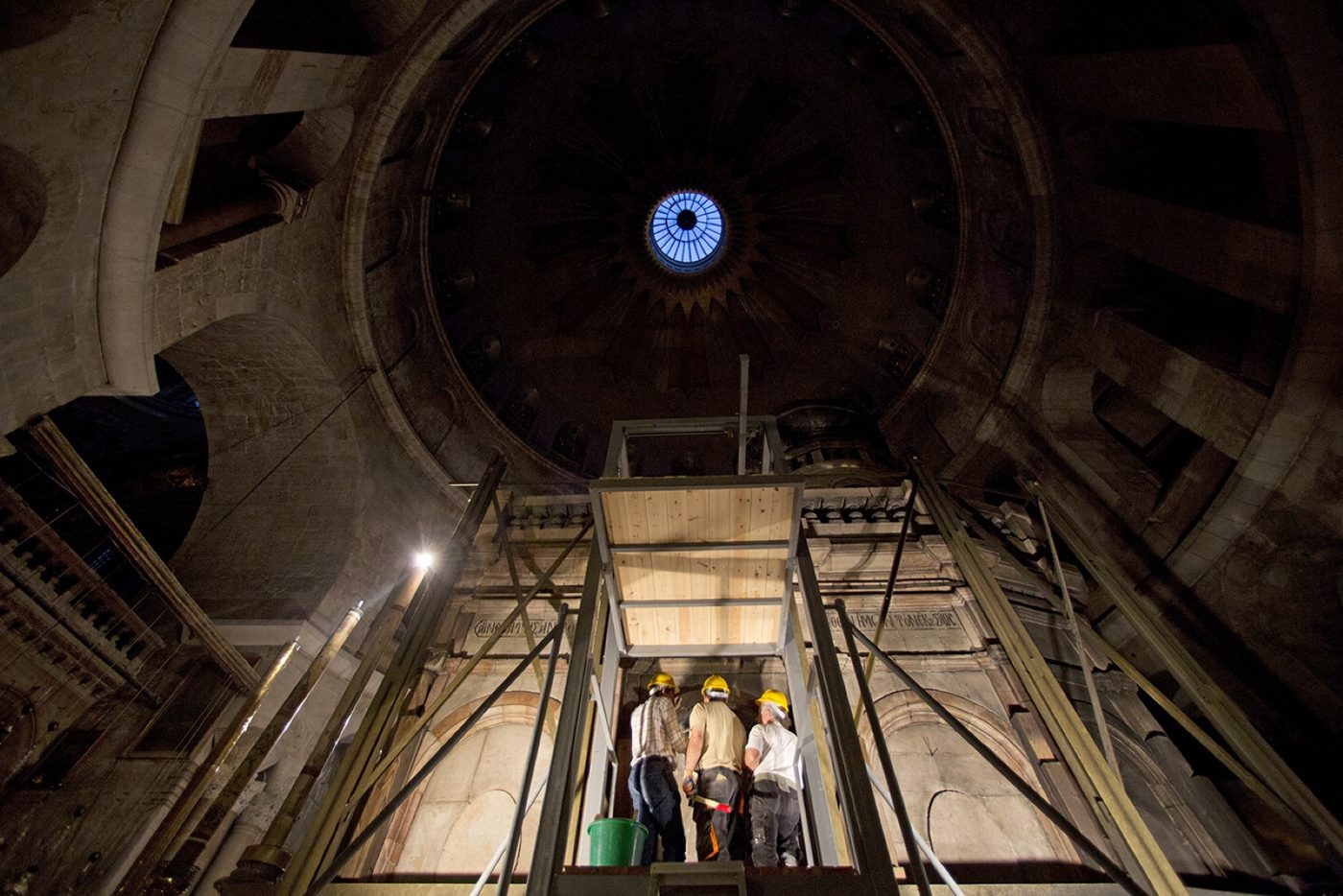
Last week, for the first time in its history of nearly 2,000 years, the tomb (sepulchre) of Jesus was examined by archaeologists and conservationists. Never before has it been subject to scientific scrutiny. These men of science, accompanied by a group of selected priests and monks, were surprised by what they saw. Despite centuries of damp, wars and more than a dozen earthquakes, everything in the rock-cut cave chamber is still intact. It has been central to the Church of the Holy Sepulchre, or, as it is called by Orthodox Christians, the Church of the Anastasis (the Resurrection), since it was commissioned 1,670 years ago by Emperor Constantine a year after the Council of Nicaea.
12:00 PM
A glimpse inside Christ’s burial place
last week, for the first time in its history of nearly 2,000 years, the tomb (sepulchre) of jesus was examined by archaeologists and conserv...
Jill, Duchess of Hamilton

7 min read



Already a subscriber? Sign in
5freearticles every month
Continue reading with a free account. No card needed.
- Five free articles every thirty days, on any device you sign in on
- The Catholic Herald newsletter, every morning
- Subscribe whenever you like for everything: every article and the magazine

subscribe to the catholic herald today
Our best content is exclusively available to our subscribers. Subscribe today and gain instant access to expert analysis, in-depth articles, and thought-provoking insights—anytime, anywhere. Don’t miss out on the conversations that matter most.
Subscribe