

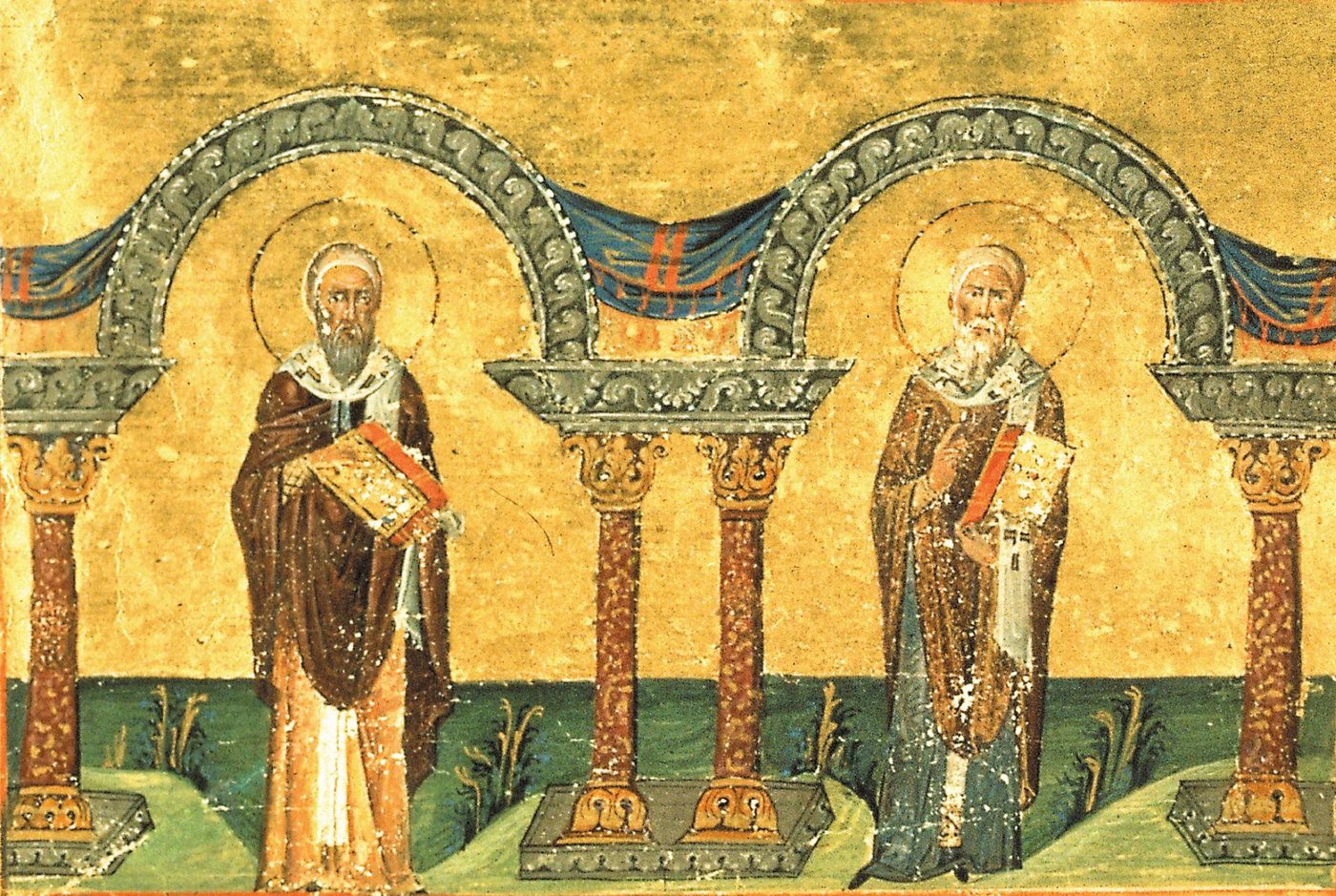
The Creed by Scott Hahn, Emmaus, £12.99 Valentinus, a heretical priest of the 2nd century, was uncomfortable with the idea of God being a Father. He preferred to describe God as the “First-Beginning”, or “First-Unthinkable, who is both unutterable and unnameable”. In response, the great St Irenaeus said that if we were going to start replacing divinely revealed names with our own, why stop there? And to demonstrate the point, he launched into a discussion of Valentinus’s theology incorporating some new terms such as Melon, Gourd and Cucumber. Part of the appeal of Scott Hahn’s work has always been these entertaining details of history and theology. Hahn, a professor at the Franciscan University of Steubenville, is a man learned well beyond his main field of Scripture. There is considerable erudition behind that chatty, simple style. Though shorter and less detailed than books such as A Father Who Keeps His Promises and The Lamb’s Supper, the approach Hahn takes in The Creed, newly out in paperback, will be familiar to those who know his work. He takes something familiar in Catholic life and deepens our knowledge of it through anecdote, theology and an immersion in Scripture. The point of this book, at its simplest, is that words matter. “I believe in one God …” is a phrase which effects something, like “I do” or “You are sentenced to 37 years.” As Hahn points out, St Paul says our salvation comes from what we say: “If you confess with your lips that Jesus is Lord and believe in your heart that God raised him from the dead, you will be saved.” Throughout the New Testament, it is profession of faith which marks out the Christian: Peter’s “You are the Christ,” Thomas’s “My Lord and my God.” And from the early Church, the rite of Baptism included a profession of faith. Even before the formalised creeds, the Church Fathers speak of a “measure” or “rule” of faith, by which the believer can distinguish truth from error. Valentinus had plainly departed from what the Church said about God: that was how you knew he was preaching heresy. The Arians, two centuries later, promoted ideas which could not fit with the Church’s baptismal rite. Priests baptise “in the name of the Father, and of the Son, and of the Holy Spirit”, implying equality of the three persons. But – as the opponent of Arianism St Athanasius observed – the Arians would be baptising into “the Creator, and the created”. In refuting Arianism and its successors, the Church came up with the Nicene Creed – which we say at Sunday Mass. One of this book’s themes, which is obvious when you think about it but which you might not notice if Hahn didn’t point it out, is that God’s Fatherhood is perpetually a scandal. It was Jesus’s revelation that made us know God as Father: in the Old Testament, we learn, there are 7,000 references to “The LORD” (YHWH) and 2,600 to “God” (Elohim), but only 17 to God as “Father”. Yet God is called a Father around 260 times in the New Testament. “Father,” says Hahn, is “the Christian revolution” in a word. And every counter-revolutionary since has tried to obliterate God’s fatherhood. Muslims are shocked by the idea: at the Dome of the Rock, there is an inscription declaring: “Far be it removed from his transcendent majesty that he should have a son.” But God’s Fatherhood is not just a technical detail of theology, but a description of how He loves us. In teaching us about Christ, who was fully human, they also teach us about the rest of the human race. And this is why the creeds, as Hahn writes with customary brio, “proclaim the mystery that rationalists and heretics in every age have denied, from the Arians to the Jehovah’s Witnesses, from Mohammed to Thomas Jefferson. ‘Jesus Christ is Lord.’ ” The book is full of these well-phrased aphorisms. Hahn has never been afraid of a shameless pun, especially in his chapter titles (“Son Worship”, etc), and he has some enjoyably geeky asides: he tells us at one point that Pontius Pilate lives on in the creeds “mostly as metadata: a tag for the lifetime of a poor man he condemned to die”. Yet this book, 160 pages of large print, excluding the appendices, feels quite short. Those who want the full story of the creeds will have to look through Hahn’s bibliography. Given his gift for narrative, I did sometimes wish that this had been an in-depth work of Church history, but you can’t have everything. One slight quibble. In his description of the Arian crisis, Hahn tells us that Pope Liberius “stood with Athanasius” against the heresy. “Athanasius and Liberius spent years in harsh exile” for their courage in “stand[ing] up to the world.” This is true, but there is also considerable debate about whether Liberius later sided (under tremendous pressure) with the Arians and condemned Athanasius. As the fairly pro-Liberius entry in the Catholic Encyclopedia says, “the question of the fall of Liberius is one that has been and can be freely debated among Catholics.” When we recognise human fallibility, we can see even more clearly that the creeds are a great gift from God.
12:00 PM
A history that provides reasons to believe
Dan Hitchens

5 min read



Already a subscriber? Sign in
5freearticles every month
Continue reading with a free account. No card needed.
- Five free articles every thirty days, on any device you sign in on
- The Catholic Herald newsletter, every morning
- Subscribe whenever you like for everything: every article and the magazine

subscribe to the catholic herald today
Our best content is exclusively available to our subscribers. Subscribe today and gain instant access to expert analysis, in-depth articles, and thought-provoking insights—anytime, anywhere. Don’t miss out on the conversations that matter most.
Subscribe



