

I travelled from Malta to London and down to Sussex to watch Claudio Monteverdi’s opera L’Orfeo, which is possibly one of the very first operas ever composed.
There was plenty of exquisite singing and the Orchestra of the Age of Enlightenment, directed by Jonathan Cohen, was resonant and crisp; just the sort of sound that an orchestra with two theorbos, a harp and plenty of brass should sound … A cross between Gonzaga panache and galant music in its infancy …
It’s extraordinary how the opening toccata of L’Orfeo and the opening of the famous Vespers of 1610 start in exactly the same way: “Deus in adjutorium meum intende”!
Fanfares of early baroque that command attention and this is what started a train of thought in my head about Christianity and mythology as the drama progressed.
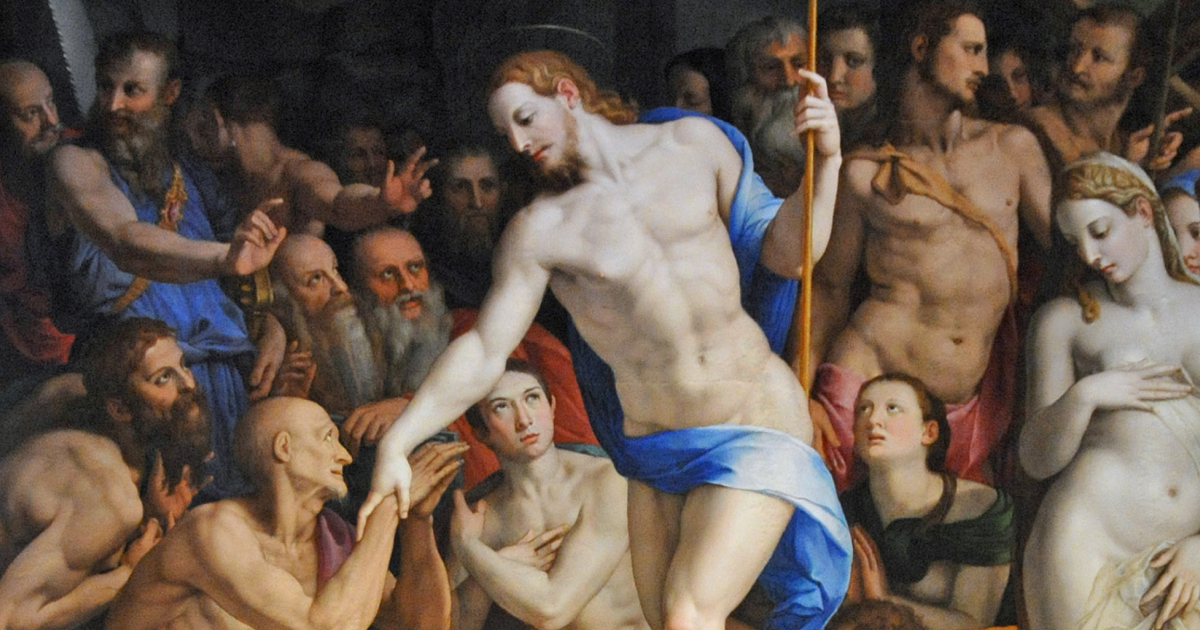
I could not help picturing one of my most favourite paintings by Bronzino called The Harrowing of Hell; a very unusual subject even then of the part of our Creed where “he descended into hell”. What did Christ do there? He liberated the righteous going right back to Adam and Eve and led them into Heaven. This happened on Holy Saturday even before the Resurrection. Bronzino captured the raw emotion of the moment in a way that never fails to move me profoundly. Just focusing on the figure kissing Christ’s feet is enough for me to well up.
So back to Orpheus, the son of Apollo, the musician par excellence who lost his new wife Eurydice on their wedding day when a snake bit her and went down to Hades to bring her back. Here the legend varies, especially where the ending is concerned. In Monteverdi’s opera, Pluto decrees that Orpheus is not to look at Eurydice till they are both out of Hades and sadly he fails the test and loses her forever in some of the most gloriously poignant music I’ve ever listened to. In the more well-known Gluck opera there’s Amour, the messenger of the gods, who makes the same decree but relents when Orpheus fails it and lets Eurydice go back to the land of the living.
The legend of Orpheus is lost in the mists of antiquity. He is very often represented sitting in the midst of a menagerie of animals playing the harp, as is Apollo, which brings me to another uncanny analogy. If any of you have ever had the wonderful experience of seeing the Byzantine mosaics in Ravenna, there’s a depiction of Christ as the Good Shepherd wearing a toga, surrounded by sheep and looking exactly like Apollo/Orpheus! In fact, in many early depictions Our Lord is like a continuation of the Apollo/Orpheus legend; beardless and with a glorified body without blemish … the Risen triumphant Christ. There is none of the blood and gore that followed the later Counter-Reformation. Crucifixes are empty as Christ is risen; Χριστός ἀνέστη! Christos Anesti!
As the stories of Byzantium and Rome developed in such a radically different way it was inevitable how Christian iconographics diverged till they became unrecognisable.
Going back to my Glyndebourne adventure, it’s indeed fascinating how Man has always tried to defeat death. While even the son of Apollo didn’t manage, Christ did, which is why they say that at Jesus’s birth a great voice was heard declaring that the great god Pan was dead!
What is also fascinating is how in Greek mythology all mankind went to Hades; a dark and forbidding place over the river Styx, on which one was ferried by Charon, which is why the dead were buried with gold coins over their eyes to pay the stern ferryman. Then one went past the gates of Hades, braving Cerberus the multi-headed dog and the Furies. From there nobody ever got out, which brings me round full circle to Bronzino’s painting.
The history of the world, particularly us in Europe, is based on Greek philosophy and belief. There’s always the million-dollar question of whether Rome conquered Greece or vice versa but, like Mary Beard, I subscribe to the fact that the Romans became Greeks. So when this singular empire under Constantine made Christianity the state religion in the 4th century, the reason in my opinion was because Christianity promised redemption and an afterlife not in gloomy Hades but in a place full of music and light, full of angels and archangels, full of seraphim and cherubim, patriarchs, prophets and saints all praising God eternally. This is why the early martyrs died so willingly … they knew that they’d be passing into a glorious eternity and this is what Faith does.
This is the radical difference between the world of Orpheus and that of Christ.
Christ created a world full of Hope, that “still, small voice” that can move mountains and which in this world full of strife and unrest keeps us Catholics to the path of Redemption.