
When watching “American Martyr: The Stanley Rother Story”, one is struck by just how many things had to go both wrong – and right – for Blessed Stanley Rother to become the first American-born priest to be recognised as a martyr and the second person to be beatified on US soil.
“American Martyr: The Stanley Rother Story”, a feature-length documentary narrated by Martin Sheen, tells the story of Blessed Stanley Rother, a priest from rural Oklahoma whose life would come to an end at the hands of a Guatemalan death squad.
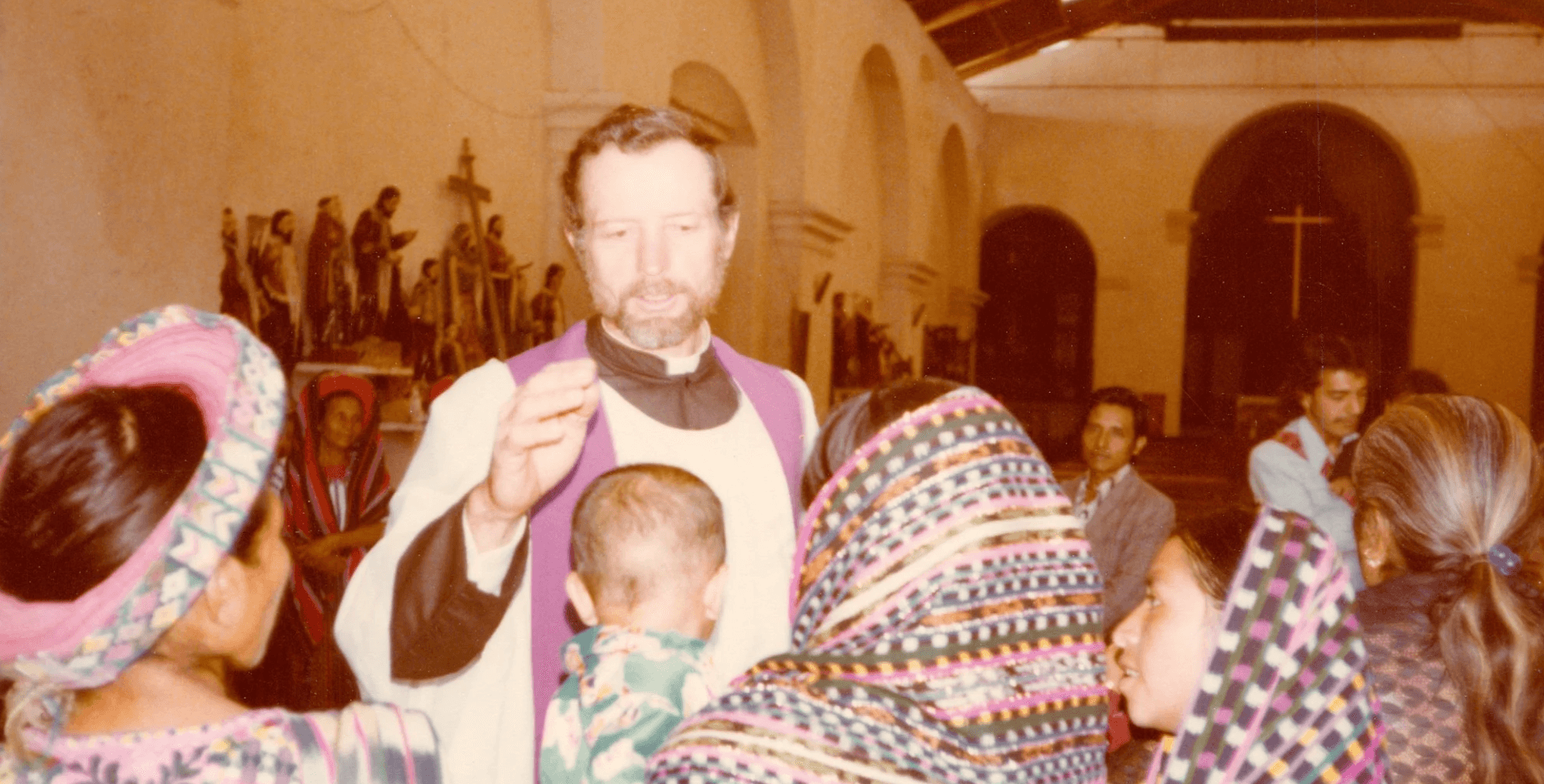
But long before Rother was beatified, he was just Stan. And it is “Fr Stan” whom viewers really get a sense of in the film, through interviews with those closest to Rother, including his siblings and other family members, and archival footage of Rother’s life.
To become a priest, Rother had to reject the life that was laid out for him: agriculture. As the oldest of Franz Rother and Gertrude Smith’s four children, and the president of Future Farmers of America when he was in high school, it seemed natural that young Stan would follow in the family business and work on the farm.
But he did not, and shortly after high school, he instead told his parents that he would like to become a Catholic priest.
(Not to be outdone, the day Stanley told his parents he would be entering the seminary, his sister Betty announced to their parents that she, too, had discerned a vocation and would be entering a convent. Neither Stanley nor Mr and Mrs Rother had any idea she was discerning. The now-Sister Marita Rother is interviewed in the film, and last year celebrated her 70th anniversary as a sister.)
And this is where the second major thing went awry: having been prepared for a career in agriculture, Stan the seminarian proved to be terrible at Latin and was dismissed from San Antonio’s Assumption Seminary for his poor grades.
Bishop Victor Reed of Oklahoma City evidently saw something in Stanley, so he called around, desperate to find a place for him to continue preparing for the priesthood. All regional seminaries said “no”. Mount Saint Mary’s, all the way in Emmitsburg, Maryland, accepted him at the end of the summer of 1959.
The farm boy was sent east.
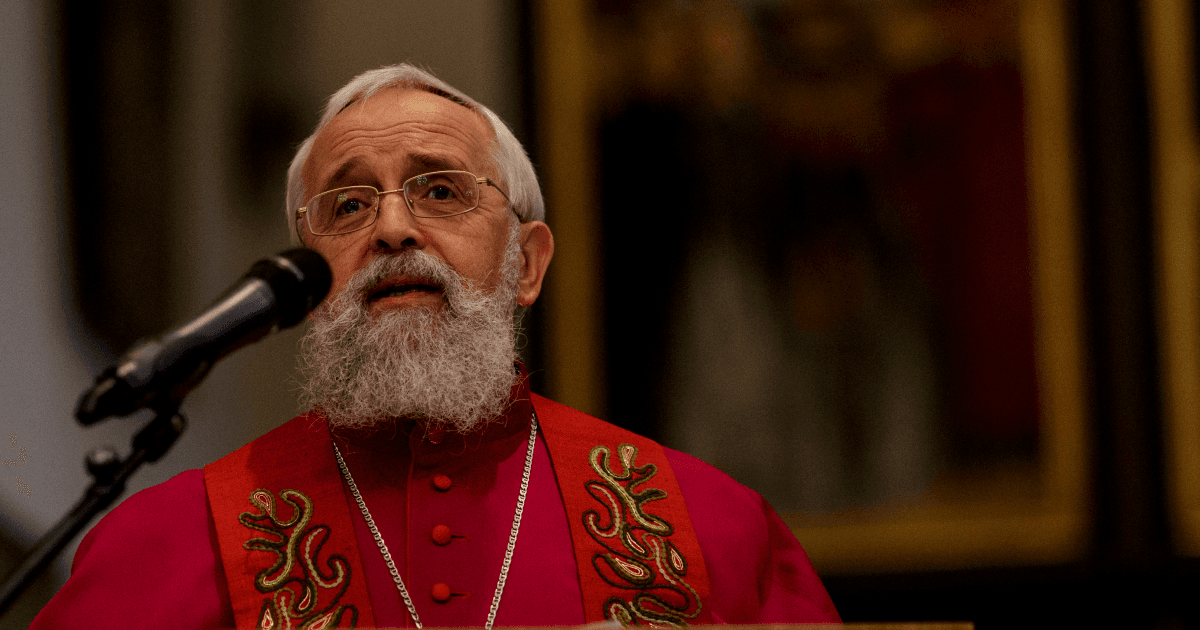
“Oklahoma to San Antonio is not that big of a leap, but Oklahoma to Maryland? That’s a different part of the country and altogether different culture,” said Archbishop Paul Coakley of Oklahoma City.
Coakley characterised Rother’s willingness to move so far away as “courageous, in a small way”.
After his ordination, his brother Thomas recounts in the film that they went home and went back to harvesting the wheat crop. “Fr Stan”, as he was now known, would continue on a rather unconventional priesthood path, said Sheen, and was tasked with building and supervising various projects in addition to serving as an associate pastor at several parishes.
But Fr Stan wanted to do something more with his priesthood – so he requested to be moved to the diocese’s mission parish in Santiago Atitlán in Guatemala. There, the priest who had struggled so mightily with languages that he failed seminary was tasked with learning both Spanish and Tz’utujil.
And against all odds, he somehow thrived at both, even assisting with translating the Bible into Tz’utujil. Rother’s farming background proved ideal for the mission field, where he became known as “Padre Francisco” as there was no equivalent to “Stanley” in the local language.
As the Guatemalan Civil War continued in the background of his mission work in Guatemala, eventually Rother received word that he was on a list of targets. He briefly returned to the United States for his own safety, but returned in time for Easter.
Rother’s earthly work would come to an end in the early morning hours of July 28, 1981. Then, gunmen entered his rectory and forced teenage Francisco Bocel at gunpoint to lead them to Rother.
Bocel, who is interviewed in the film, says he still carries guilt from that night and likened himself to Judas betraying Jesus.
Rother was shot twice in the head and killed instantly. The people of Santiago Atitlán immediately took steps to preserve Rother’s spilled blood, perhaps recognising that their former priest had become a martyr, said author Maria Scaperlanda.
The Vatican confirmed in 2016 what the villagers already knew – that his death was indeed an act of martyrdom.
“American Martyr: The Stanley Rother Story” demonstrates how sainthood is accessible for everyone. One does not need to have a superior intellect, privileged upbringing or some sort of supernatural gift to become a saint.
Instead, Rother had a love for the people of Santiago Atitlán – and was willing to die for his people.
“American Martyr: The Stanley Rother Story” is produced by Lampstand Story Company and distributed by Fathom Entertainment. Tickets can be purchased on Fathom’s website. The documentary will be in cinemas on August 25 and 26 in English, and on August 27 in Spanish.
While the film is not overly gory, parents should be aware that a shooting is depicted on screen.