May 24, 2026

America’s Declaration and the paradox of unalienable rights

Ken Craycraft
More
Related
Min read
share

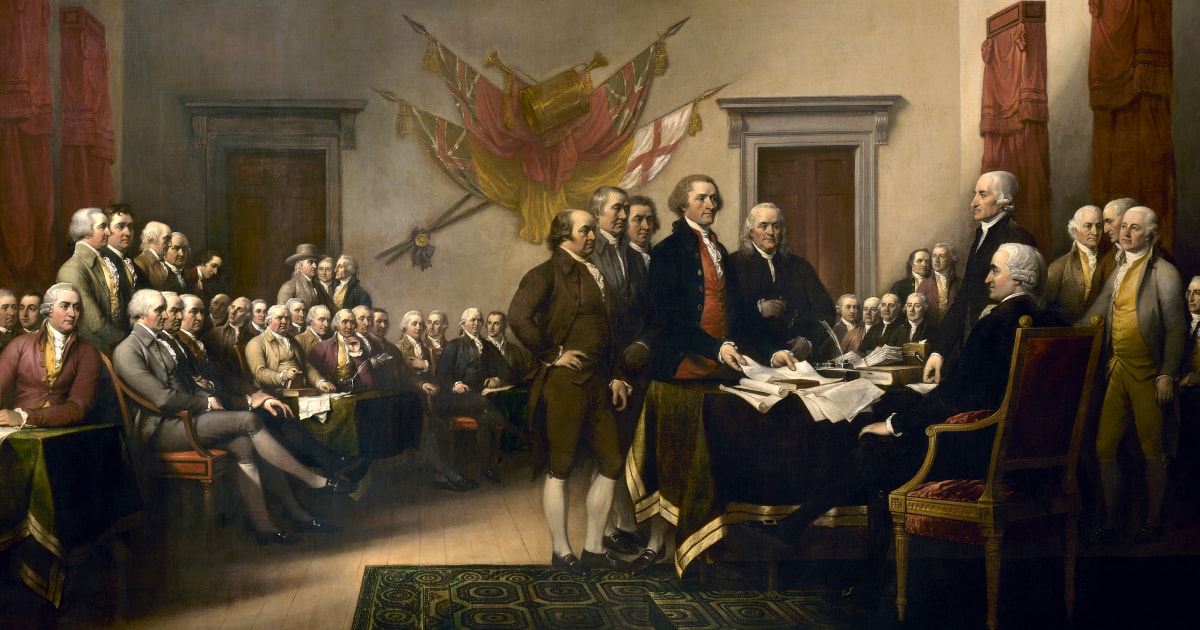
This summer, the United States is celebrating the 250th anniversary of the signing of the Declaration of Independence. It is often described as the 250th birthday of the US. It is not. To be sure, on 4 July 1776, 56 members of the Continental Congress – representing the 13 colonies – ratified the Declaration of Independence. But this was an assertion of independence, not its accomplishment. Recognised sovereign independence of the United States of America would not occur until nearly eight war-torn years later, when the Treaty of Paris was ratified by the Confederation Congress on 15 January 1784.

While the Declaration of Independence is mostly a catalogue of 27 grievances against King George III, those complaints are not what most Americans remember about the document. Rather, nearly every American can recite the philosophical and moral assertion: “We hold these truths to be self-evident, that all Men are created equal, that they are endowed by their Creator with certain unalienable Rights, that among these are Life, Liberty and the Pursuit of Happiness.” The sentence is not merely philosophical mythology – for many signatories of the Declaration, it is rank hypocrisy.

When the Declaration was signed, slavery was legal in all 13 colonies. One-fifth of the population were enslaved people, and more than half of the signatories of the Declaration of Independence were enslavers. These included Benjamin Franklin, for example, and the chief draftsman of the document, Thomas Jefferson, who enslaved more than 600 human beings and fathered several children with one of them. While they did not sign the Declaration, such luminaries as George Washington – perhaps as many as 1,000 slaves – James Madison – more than 100 – and James Monroe – about 75 – also enslaved people. Twelve of the first 18 American presidents enslaved people.

The hypocrisy is especially odious in the case of Thomas Jefferson, whose entire fortune was dependent upon the labour of enslaved people. To be sure, Jefferson paid lip service to banning the slave trade and even to eventual emancipation. But rather than emancipate his own slaves as an example, he owned at least 130 when he died in 1826. Other than five relatives of the enslaved woman Sally Hemings – three of whom were most likely Jefferson’s own children – these enslaved people were not freed when Jefferson died, but rather sold to other enslavers to settle the profligate Jefferson’s enormous debts.

Jefferson’s proclamation of the “self-evident” truth that “all men are created equal” and “endowed with” the “unalienable Rights” to “Life, Liberty and the Pursuit of Happiness” is one of the most cynical and duplicitous assertions in American history. This hypocrisy is set in dramatic relief by Jefferson’s famous last letter to Roger C Weightman on 24 June 1826, 10 days before his death on 4 July, exactly 50 years after the signing of the Declaration. There he boasted of “arousing men to burst the chains” which arose under “monkish ignorance” and to “assume the blessings… of self-government”. The “mass of mankind has not been born with saddles on their backs”, Jefferson asserted. This is either an utter lack of self-awareness or – more likely – a revelation of deep moral blindness.

The assertion of “unalienable Rights” in the Declaration of Independence has philosophical problems as well as moral ones. As a threshold matter, the assertion of “self-evident” anything is highly problematic, if not epistemologically unintelligible. Moreover, the theory of subjective, possessive, individual rights at the foundation of American politics and law – and western liberalism more generally – has increasingly come under scrutiny by theologians and philosophers. Not only are such rights not “self-evident”, some thinkers contend that they are a fiction. In the colourful words of Alasdair MacIntyre, belief in subjective individual rights “is one with belief in witches and unicorns”. They are fictions, suggests MacIntyre, “with highly specific properties”.

And indeed, we Catholic Christians in the US – and other liberal societies – must take a hard look at what moral and theological legacy we might have traded for the protections and privileges that a theory of natural rights is meant to secure. We enjoy the relative libertarian freedoms that such a theory provides, but is that enjoyment secured at the cost of an authentically Catholic understanding of the human person and society?

As it is used in the Declaration, the theory of rights suggests that there is no transcendent telos towards which all humans are ordered in common with one another. And while we might look to the relative goods that such a theory has delivered, we must ask ourselves how long a society can be sustained by such thin philosophical gruel. A robust theory of possessive rights does indeed secure a modicum of individual liberty, which can be used to pursue the true, the beautiful and the good. Is this exchange worth the cost of a broader cultural story that persistently denies that truth, beauty and good are real and attainable? And is a society built on such a theory sustainable? It will not take another 250 years for the answer to impress itself upon us.

Continue reading with a free account

Create a free account to read up to five articles each month
Create free account

You have # free articles remaining this month.

Subscribe to get unlimited access.
Sign up

subscribe to the catholic herald today

Our best content is exclusively available to our subscribers. Subscribe today and gain instant access to expert analysis, in-depth articles, and thought-provoking insights—anytime, anywhere. Don’t miss out on the conversations that matter most.
Subscribe