


Most of the archers in Michelangelo’s Archers Shooting at a Herm (c 1530) have forgotten their bows. They stretch as if to draw their strings, lean in towards the target, muscles taut, back feet aloft, and miss. Arrows fly through the air and rebound off the base of the statue. A couple of putti kneel at their feet, kindling fire with their breath, while Cupid dozes in the corner. With fiery lust instead of love, an archer is doomed to misfire.
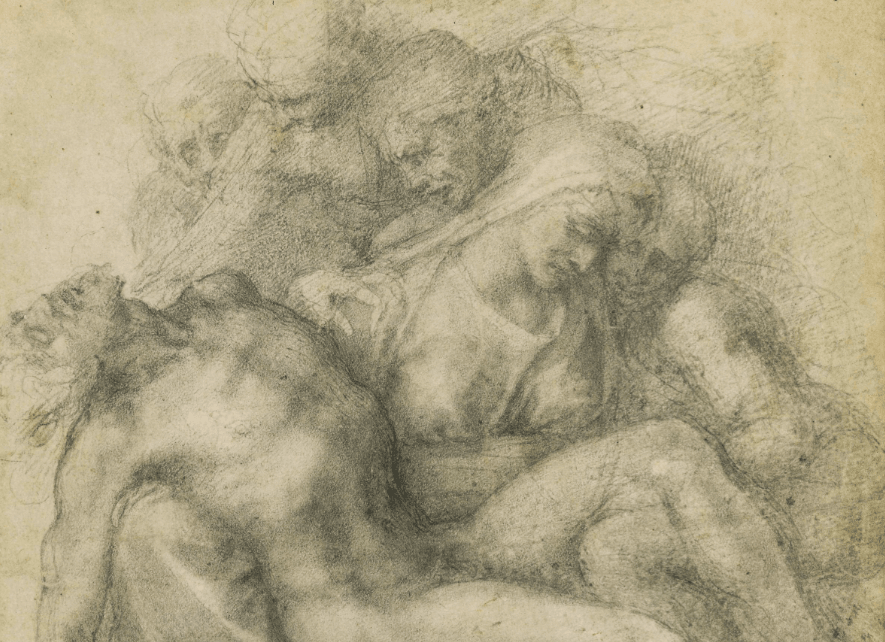
Michelangelo once likened the approach of death to the motion of an arrow through space. “The years of my life’s journey have reached their mark,” he reflected, “like an arrow that has landed on its target.” His optimism about the end and about the power of spiritual love to transcend the flesh is evident in many of his works. No one else depicted the Resurrection with quite as much joy and energy. Christ spins skyward from his tomb, wrists crossed, ankles entwined, streamlined, in a chalk drawing from circa 1532. Even Michelangelo’s studies of the Madonna and Christ Child, with their sorrowful foreshadows of the Pietà, offer a quiet hopefulness.