



The letter that Pope Emeritus Benedict XVI sent to the Polish bishops to mark the centenary of his immediate predecessor’s birth covers a good bit of well-trodden ground, but there is one line that is current: “I was impressed by the humility of this great Pope, who abandoned ideas he cherished because he could not find the approval of the official organs that must be asked according to established norms.” That line reads like Benedict wrote it for his successor. Church-watchers and Vaticanologists across the spectrum of opinion have long wondered at Francis’s willingness to govern basically without the Roman Curia: from Francis’s establishment of a “kitchen cabinet” of cardinal-advisors to spearhead the curial reform effort, to his effective side-lining of the Vatican’s doctrinal dicastery (the Congregation for the Doctrine of the Faith – CDF – which the man who became Benedict XVI headed for nearly a quarter-century), examples abound of Francis’s willingness to sidestep official organs of power and governance in favour of his own people and ideas. Benedict XVI has come in for serious and often severe criticism – including from this quarter – for his willingness to say things after he promised to retreat into seclusion, especially for his willingness to say things he’s already said elsewhere and repeatedly. When coupled with his unwillingness to tell us what he knows of the abuse and coverup crisis at the highest echelons of ecclesiastical power, hearing him go over points he’s already made and insights he’s already offered can be grating. Here however, the Pope Emeritus has a point, which he makes with his grace and subtlety, in the exquisite style of his elegant curialese. It is worth considering the broad context in which he offers the observation – a “brief personal remark” apt to illustrate “an important aspect” of Pope St John Paul II’s character and modus operandi:
3:00 PM
Analysis: BXVI's letter on St John Paul II has at least one line for Francis
It's easy to confuse questions of doctrine with those of governance - there's often a good deal of real-world overlap - which is why it's important to make and keep the distinction
Christopher R. Altieri


8 min read



Already a subscriber? Sign in
5freearticles every month
Continue reading with a free account. No card needed.
- Five free articles every thirty days, on any device you sign in on
- The Catholic Herald newsletter, every morning
- Subscribe whenever you like for everything: every article and the magazine
Related articles
 Analysis
Catholics were in America long before 1801
From Spanish Jesuit missionaries in Virginia to Maryland’s Catholic settlers, the history of Catholicism in America stretches back to the colonial era
Christine Rousselle Analysis
The extreme violence behind the international trade in drugs
Simon Caldwell Analysis
Assessing Pope Francis's most controversial decisions
Elise Ann Allen/ Crux Analysis
As Francis marks 12th anniversary of his election in hospital, we should recall his words during first days as Pope
Charles Collins/Crux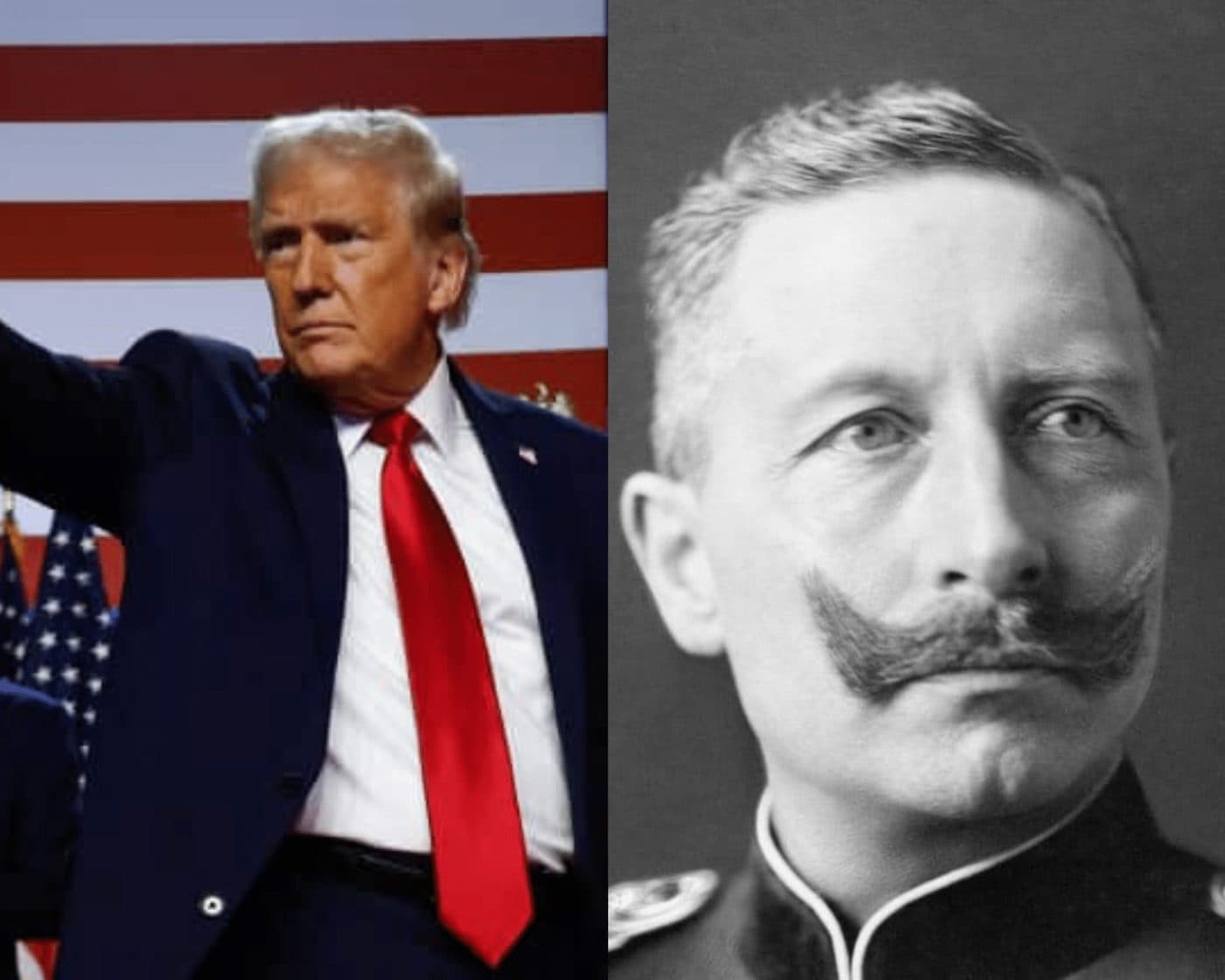 Analysis
Trump's critics should consider parallels with another German leader
Charles Collins/Crux
subscribe to the catholic herald today
Our best content is exclusively available to our subscribers. Subscribe today and gain instant access to expert analysis, in-depth articles, and thought-provoking insights—anytime, anywhere. Don’t miss out on the conversations that matter most.
Subscribe



