


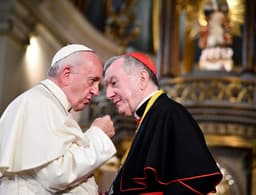
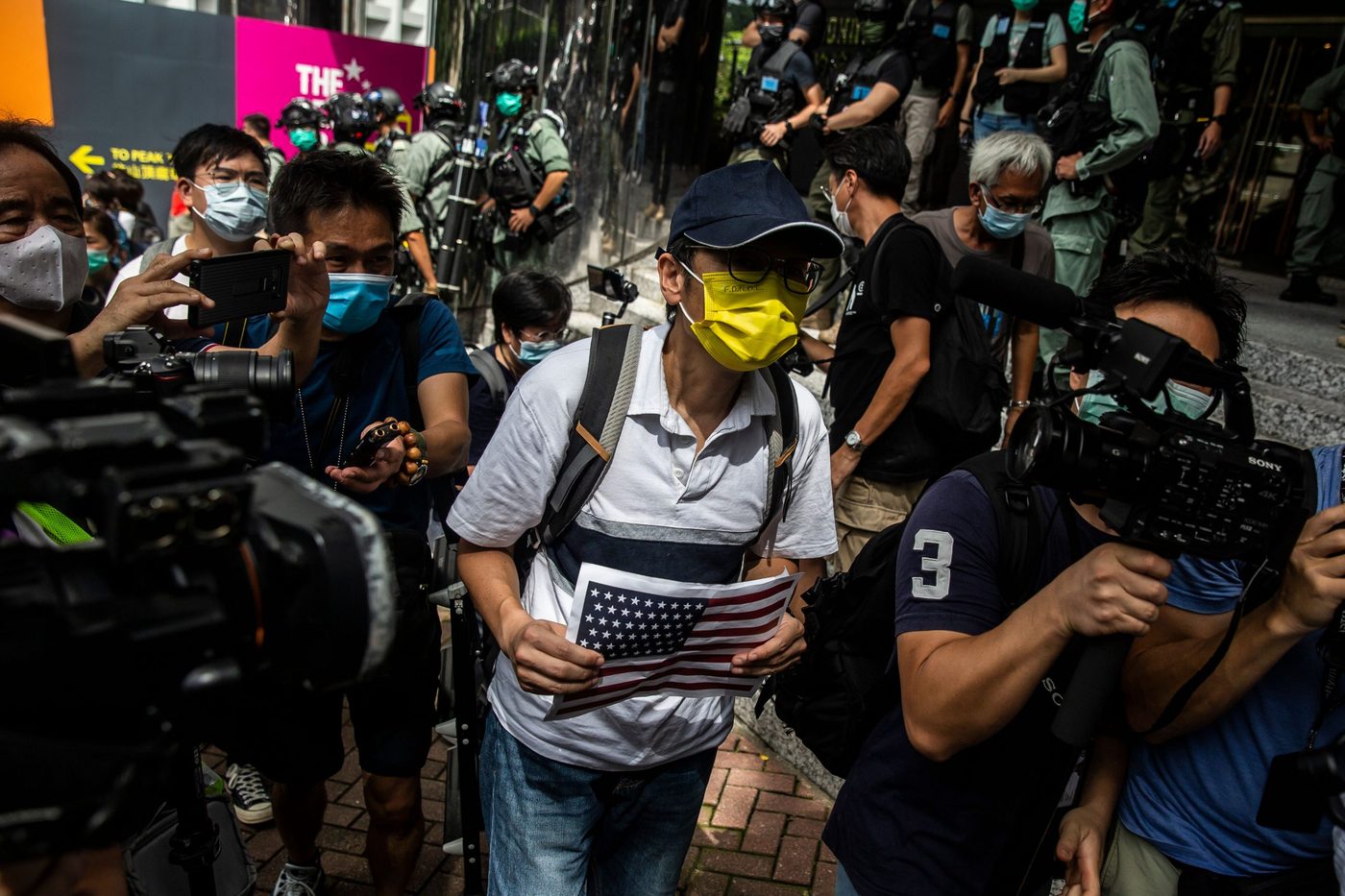
On Sunday morning, journalists covering the Vatican beat got word from official Vatican communications channels, strongly suggesting Pope Francis would be using his remarks to the faithful at the Angelus to address the ongoing crisis in Hong Kong. When he’d prayed the traditional noonday prayer of Marian devotion, however, mention of the troubled island city was conspicuous by its absence, and journalists were scrambling for an explanation. The omission is serious: either Pope Francis decided for some reason—on his own and at the very last minute—to skip the appeal, or someone convinced him not to pronounce on the situation in Hong Kong, where a security law mandated by Chinese authorities in Beijing went into effect last Tuesday. The law punishes “secession, subversion and terrorism”—which critics say are codewords for speech critical of the government—with terms up to and including life imprisonment. The law came in the wake of a nearly 18-months’ agitation that began when Hong Kong’s security bureau proposed modifications to extradition laws that would allow suspected criminals to be taken to the Chinese mainland for trial. That bill was eventually scrapped, but agitation continued. Protests were occasionally violent. There were attacks on persons and institutions. In late May, mainland authorities announced they would impose security legislation, which passed a week later and went into effect last week. Beijing maintains that the law is necessary. Critics of the law say it violates the spirit, at least, of the 50-year “one country, two systems” arrangement that was part of the UK’s cession of the city to Chinese authorities in 1997. On Sunday, news reports said authorities had confiscated books from public libraries “for review” to see whether they conform to the new law. Pro-democracy advocates have resigned or stepped back from their leading roles. It wasn’t just chatter in Vatican hallways that led the corps to expect remarks from Pope Francis, either. That would have been fairly easy to overlook. There was a draft text distributed to journalists under embargo. Word from inside the Vatican’s communications department is that Vatican News was set to publish its own report on the Angelus appeal for Hong Kong, separate from both the main Angelus writeup and their other separate report on the other appeal Pope Francis made on Sunday, backing a UN call for an immediate global ceasefire to allow governments to face the coronavirus emergency. When the statement on Hong Kong didn’t come, it left journalists in a tight spot. Technically, embargoed texts don’t exist until the Pope pronounces them. So, how does one report on something that didn’t happen? Pretending it was never going to happen was out of the question. The issue is too momentous to treat it as just another of the audibles that have become almost run-of-the-mill during this pontificate. A request the Catholic Herald sent to the Vatican’s press office for further information has gone so far without reply. When it comes to the substance of what journalists were expecting, suffice it to say we were waiting for what would have been a pretty anodyne statement. Still, it was not nothing—and more than we’ve heard from Pope Francis on the crisis in Hong Kong. The only time he has spoken directly to the crisis was in response to a query from a journalist during the in-flight presser en route to Rome from Japan in November of last year. Then, Pope Francis lumped the already long-running unrest in Hong Kong with several other tense situations and trouble-spots:
11:57 AM
Analysis: Pope's Hong Kong omission complicates all the narratives
The questions journalists have now, are: “What made Pope Francis not say the thing?” and “What does this tell us about both the Vatican’s China policy and who has the Pope’s ear in these and other regards?”
Christopher R. Altieri

6 min read



Already a subscriber? Sign in
5freearticles every month
Continue reading with a free account. No card needed.
- Five free articles every thirty days, on any device you sign in on
- The Catholic Herald newsletter, every morning
- Subscribe whenever you like for everything: every article and the magazine
Related articles
 Analysis
Catholics were in America long before 1801
From Spanish Jesuit missionaries in Virginia to Maryland’s Catholic settlers, the history of Catholicism in America stretches back to the colonial era
Christine Rousselle Analysis
The extreme violence behind the international trade in drugs
Simon Caldwell Analysis
Assessing Pope Francis's most controversial decisions
Elise Ann Allen/ Crux Analysis
As Francis marks 12th anniversary of his election in hospital, we should recall his words during first days as Pope
Charles Collins/Crux Analysis
Trump's critics should consider parallels with another German leader
Charles Collins/Crux
subscribe to the catholic herald today
Our best content is exclusively available to our subscribers. Subscribe today and gain instant access to expert analysis, in-depth articles, and thought-provoking insights—anytime, anywhere. Don’t miss out on the conversations that matter most.
Subscribe



