July 10, 2026

Ann Widdecombe: A Catholic conscience in public life

The Catholic Herald
More
Related
Min read
share

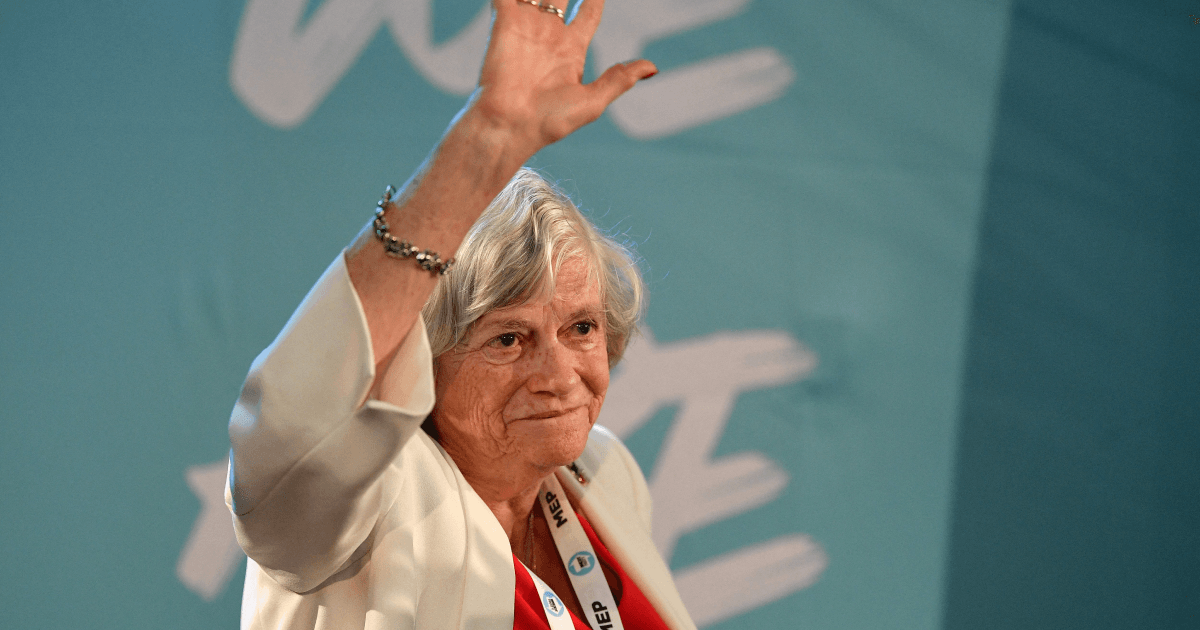
Few Catholic politicians have occupied quite the place in Britain’s public imagination that Ann Widdecombe did. Across several decades she remained one of the country’s most recognisable public figures: a parliamentarian, minister, broadcaster, author and campaigner whose unmistakable voice and uncompromising convictions made her admired by supporters and exasperating to critics in almost equal measure. Beneath the public persona, however, was a convert whose Catholic faith increasingly became the thread running through both her political life and her understanding of public service.

Ann Noreen Widdecombe was a woman of settled convictions, and she carried those convictions with a confidence that became steadily rarer in modern politics. Friends admired her courage while opponents accused her of obstinacy – even while saluting her kindness and indefatigability. None had any doubt that she believed exactly what she said.

Born in Bath in 1947, Widdecombe was baptised and raised in the Church of England. After a period at the Royal Naval School in Singapore – her father was a civil servant with the Ministry of Defence – she had her first substantial encounter with Catholicism at La Sainte Union convent school in Bath before reading Latin at the University of Birmingham. After periods working for Unilever and for the University of London and serving as a local councillor, she entered Parliament in 1987 as Conservative MP for Maidstone, beginning what would become a 23-year career in the House of Commons.

Widdecombe quickly established herself as a diligent parliamentarian rather than a climbing political operator. Her ministerial appointments under John Major included employment and later prisons, and it was in the latter role that she acquired a reputation for seriousness, particularly on questions of criminal justice and prison reform. Although often caricatured as uncompromisingly “law and order”, her interest in the prison system reflected a deeper concern with personal responsibility, punishment and rehabilitation.

After the Conservative defeat in 1997, William Hague appointed her Shadow Home Secretary, a role that made her one of the Opposition’s most recognisable figures. Her exchanges across the despatch box displayed many of the qualities that would define her public reputation: formidable preparation, sharp wit and a willingness to advance lines of arguments that others would have steadfastly avoided. She was never an especially tribal politician and sometimes proved almost as awkward for colleagues as she did for political opponents – as evidenced by her comment that her party leader Michael Howard had “something of the night about him”.

One of the defining events of Widdecombe’s life occurred in 1993, when she was received into the Catholic Church. She made her decision following the Church of England’s decision to approve the ordination of women to the priesthood, a development she regarded not primarily as touching the authority and apostolic continuity of the church.

She later described her reception into the Church not as an act of rebellion but as one of obedience to conscience. Widdecombe found in Catholicism an authority that she believed transcended both fashion and individual preference. It became the intellectual and spiritual framework within which she approached political questions for the rest of her life.

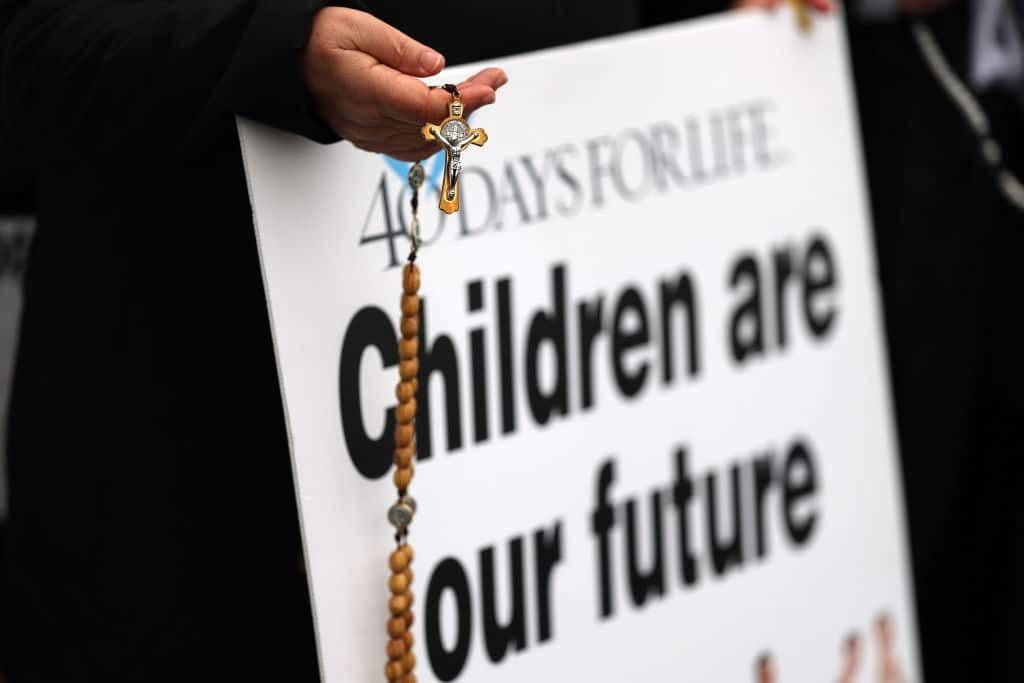
Her Catholicism shaped many of the causes for which she became best known. She was an unwavering defender of the sanctity of human life, opposing abortion and assisted suicide with consistency over many decades. She argued publicly for the protection of religious liberty and frequently questioned legislation that weakened or undermined long-established moral and social institutions. Even those who profoundly disagreed with her generally recognised that these positions arose from sincerely held beliefs rather than political calculation.

Yet Widdecombe never fitted neatly into the stereotype of the dour moral campaigner. She possessed a dry, frequently self-deprecating humour and an ability to laugh at herself that endeared her to audiences well beyond Westminster. Her appearance on Strictly Come Dancing in 2010 introduced – and endeared – her to an entirely different section of public. While her dancing attracted mixed reviews, her willingness to embrace the experience with evident good humour revealed a side of her personality that political coverage had often overlooked.

Anyone who imagined her retirement from the House of Commons in 2010 would mark the end of her public career was left either disappointed or surprised. Widdecombe regarded Britain’s continued membership of an ever-shifting European Union as a constitutional question of the highest importance. She became an energetic supporter of Brexit and served as a Member of the European Parliament for the Brexit Party after the 2019 European elections. In later years she also lent her support to Reform UK, remaining an active participant in political debate almost until the end of her life.

Throughout these later years, however, it was often her Catholic witness that distinguished her most clearly from many contemporaries. She wrote and spoke regularly on questions of faith, conscience and ethics, refusing to accept the increasingly frequent assumption that religious belief should – or could – remain confined to private life. She did not expect public policy to mirror Catholic teaching in every respect, nor did she believe Catholics should apologise for allowing faith to inform their public reasoning. For her efforts, she was honoured as a Dame of the Order of St Gregory the Great in 2013.

The combination of religious conviction and public prominence made her an unusual figure in modern Britain. While some politicians have often preferred discretion when discussing matters of faith, Widdecombe chose the opposite course. She defended Catholic teaching openly, accepted the criticism that followed, was always willing to have a frank discussion, and appeared remarkably untroubled by personal unpopularity. If she sometimes found herself outside the political mainstream, it was usually because she had decided that conscience mattered more than consensus.

Political colleagues remembered her independence of mind and personal kindness. Lord Alton, her fellow Catholic and the former Liberal whip, said that Ann’s views “were always trenchantly, intelligently, and honestly expressed – and never with malice”. He continued that her beliefs were founded upon two pillars, her Catholic faith and her deep love of country. “Beyond the well-known public figure, there was also a less well-known private person, capable of great kindness in responding to people facing personal challenges and tragedy.”

Brexit campaigner and Conservative peer Daniel Hannan noted that Widdecombe was a “stickler for every kind of tradition or rule” but that  she was always “humane and tolerant in her personal life”. Reform UK campaigner Gawain Towler described her as “a stalwart, a trooper, and someone of deep faith and kindness”.

Kemi Badenoch, the leader of the Conservative party in which Widdecombe spent most of her political career, hailed Widdecombe as “a formidable politician who was never afraid to speak her mind and fought hard for what she believed.”

“Always true to herself,” Badenoch continued, “her politics were strongly guided by her faith and her values. May she rest in peace.”

Former Foreign Office official Ameer Kotecha captured Widdecombe’s spirit on Twitter, noting that “there was something just so English and old school about her”.

Ann Widdecombe’s public life coincided with profound changes in British politics and society. During those decades, many politicians learnt to speak cautiously, trim their opinions and follow the prevailing currents of public sentiment. Widdecombe instead remained unmistakably herself: intellectually serious, comfortably eccentric, often controversial and entirely unconcerned with whether fashionable opinion approved.

Her colleagues and opponents alike recognised that Ann Widdecombe possessed a quality now in short supply: the willingness to treat service in Parliament as an expression of conscience rather than career. For Catholics in Britain, she demonstrated that there was no need to confine religious conviction to the private sphere. She insisted upon bringing the full force of her worldview into public life, and accepted the consequences with characteristic good humour. Born on 4 October 1947, Anne Widdecombe departed this life on 9 July 2026.

Continue reading with a free account

Create a free account to read up to five articles each month
Create free account

You have # free articles remaining this month.

Subscribe to get unlimited access.
Sign up

subscribe to the catholic herald today

Our best content is exclusively available to our subscribers. Subscribe today and gain instant access to expert analysis, in-depth articles, and thought-provoking insights—anytime, anywhere. Don’t miss out on the conversations that matter most.
Subscribe