January 7, 2026
January 7, 2026

Archbishop Laterza was right about feminism

Min read
share

“You see, Mary is truly the freest person in the world because she knows how to obey… You should tell this to some feminists.”

Over Christmas it seemed that every mainstream newspaper, media outlet, and social media page under the sun reported this remark, as though it were some authoritative magisterial comment time-travelled from the medieval period into the modern progressive era. This is hardly surprising, however, as anything that sits uneasily within the Enlightenment framework of flattened progressive equality is immediately framed as reactionary or Luddite. The comment was not merely reported; it was moralised, packaged, and delivered to the masses as yet another example of religion lagging behind history.

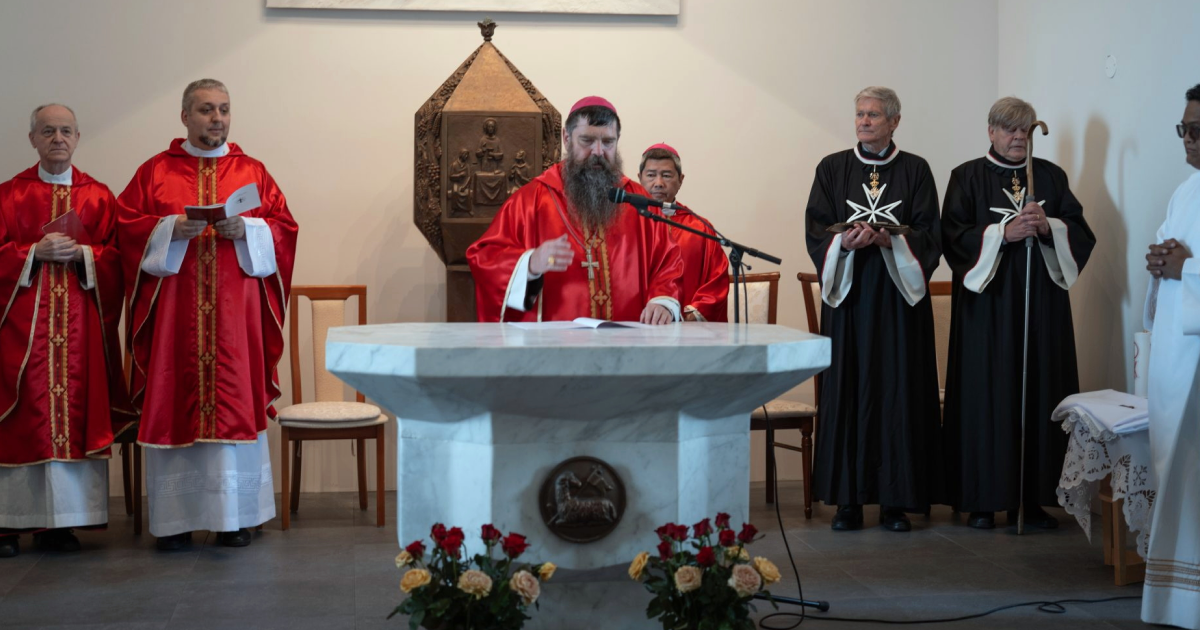
The remark in question, made by Archbishop Giuseppe Laterza, the Apostolic Nuncio to the Central African Republic and Chad, has been treated as a cultural provocation. Originally part of a homily delivered on 20 December, the words have since been stripped of their context and repurposed as evidence of misogyny. Yet what is most evident from commentary in The Times and GB News is how little effort has been made to understand what the Archbishop actually meant. The issue here is not cultural but metaphysical.

At stake is a far older and more serious question: what it means to be free, and who gets to define that freedom. The controversy surrounding Archbishop Laterza’s Advent sermon has exposed a fundamental clash between the Catholic understanding of freedom as moral orientation and the modern assumption that freedom consists in unlimited self-assertion.

Freedom since the Enlightenment, to which both the modern political left and right subscribe, is often treated as an abstract slogan rooted in man-made notions of supposedly innate rights. By contrast, the authentic meaning of freedom, grounded in the nature of the human person, is something the Church must continue to articulate. This framing matters, because it shapes how we understand dignity, responsibility, obedience, and ultimately happiness.

When media commentators seek to diminish the Archbishop’s remarks, what they reject is not merely a bishop’s phrasing but an entire moral anthropology. The uproar over Archbishop Laterza’s words reveals less about sexism or insensitivity than about a widespread inability to grasp this distinction.

This is a theological claim about freedom being dragged into a political framework that cannot comprehend it. Archbishop Laterza, reflecting on the Virgin Mary at the Annunciation, spoke of freedom as the capacity to consent to God’s will. That is neither a novel idea nor a personal provocation. It is central to Christian tradition. Yet once this language is filtered through contemporary ideological assumptions, it is heard as an attack rather than an invitation.

Catholic teaching has always distinguished true freedom from being able to do whatever one wishes. From Saint Augustine through Saint Thomas Aquinas, freedom is understood as the alignment of the will with the good, not the absence of restraint. The modern fixation on autonomy, by contrast, treats any form of authority or given order as a threat.

Appeals to Enlightenment understanding of negative and positive liberty fall flat in a Catholic context. The Church does not divide freedom into competing categories of interference and entitlement. Instead, it asks whether an action conforms to truth and to the nature of the human person. As Pope John Paul II insisted, “Freedom consists not in doing what we like, but in having the right to do what we ought.” For this reason, freedom cannot be reduced to the ability to do whatever one wishes, a claim that remains unintelligible to a culture trained to see obligation as violence and limits as oppression.

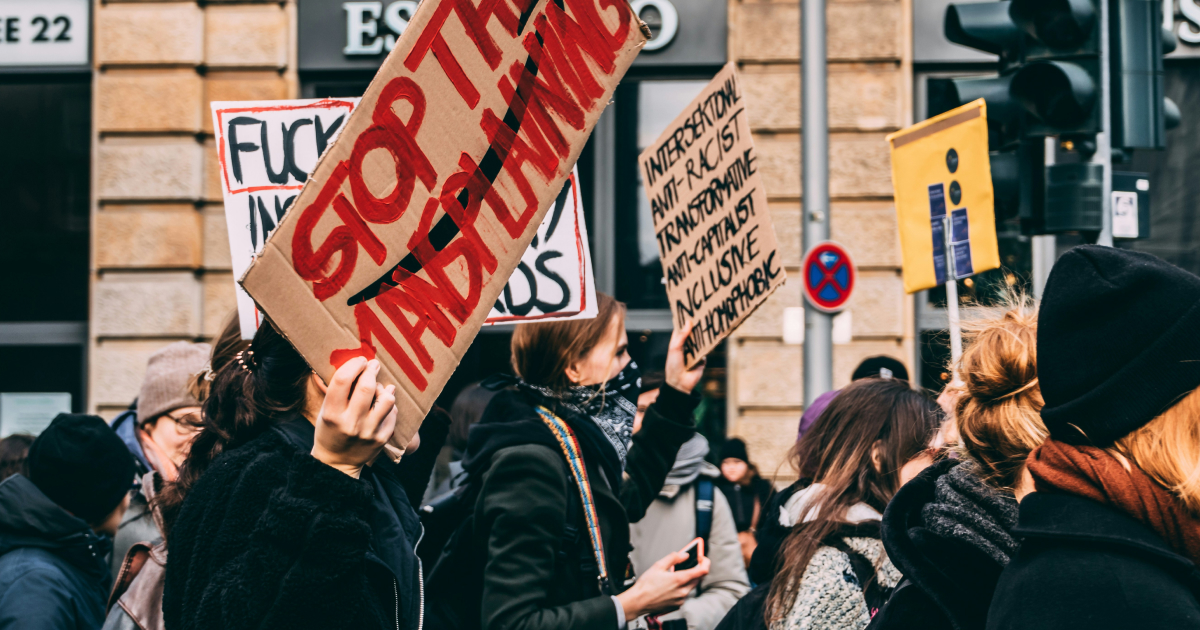
The question, then, is not whether Archbishop Laterza should have phrased his remark differently, but why such remarks now provoke instant scandal. Feminism, in both its classical and later forms, rests on an anthropology that views difference as hierarchy and dependence as diminishment. Catholicism begins elsewhere, within natural law and rooted in truth.

The human person, in Catholic thought, is not a solitary will but a relational being ordered towards truth and love. Detach freedom from that order, and it collapses into anxiety and compulsion. It is no accident that cultures most committed to radical autonomy often produce not contentment but restlessness and resentment. The figure of Mary stands at the centre of this vision. She is not presented by the Church as passive or erased, but as active in her consent and complete in her joy. Her obedience is not coerced but chosen. For this reason, the tradition has consistently described her as the freest and happiest of human beings. That claim offends only if freedom is reduced to self-determination and happiness to self-expression.

The Archbishop’s conditional apology may have been prudent, but it was not necessary in theological terms. What is truly regrettable is the ease with which a central Christian concept was recast as a moral failing. The episode serves as a reminder that society has forgotten how to speak about freedom without detaching it from truth. Catholics need not retreat from this language, nor apologise for it. If anything, the confusion surrounding Archbishop Laterza’s words demonstrates precisely why the Church must continue to articulate a coherent vision of freedom.
“You see, Mary is truly the freest person in the world because she knows how to obey… You should tell this to some feminists.”

Over Christmas it seemed that every mainstream newspaper, media outlet, and social media page under the sun reported this remark, as though it were some authoritative magisterial comment time-travelled from the medieval period into the modern progressive era. This is hardly surprising, however, as anything that sits uneasily within the Enlightenment framework of flattened progressive equality is immediately framed as reactionary or Luddite. The comment was not merely reported; it was moralised, packaged, and delivered to the masses as yet another example of religion lagging behind history.

The remark in question, made by Archbishop Giuseppe Laterza, the Apostolic Nuncio to the Central African Republic and Chad, has been treated as a cultural provocation. Originally part of a homily delivered on 20 December, the words have since been stripped of their context and repurposed as evidence of misogyny. Yet what is most evident from commentary in The Times and GB News is how little effort has been made to understand what the Archbishop actually meant. The issue here is not cultural but metaphysical.

At stake is a far older and more serious question: what it means to be free, and who gets to define that freedom. The controversy surrounding Archbishop Laterza’s Advent sermon has exposed a fundamental clash between the Catholic understanding of freedom as moral orientation and the modern assumption that freedom consists in unlimited self-assertion.

Freedom since the Enlightenment, to which both the modern political left and right subscribe, is often treated as an abstract slogan rooted in man-made notions of supposedly innate rights. By contrast, the authentic meaning of freedom, grounded in the nature of the human person, is something the Church must continue to articulate. This framing matters, because it shapes how we understand dignity, responsibility, obedience, and ultimately happiness.

When media commentators seek to diminish the Archbishop’s remarks, what they reject is not merely a bishop’s phrasing but an entire moral anthropology. The uproar over Archbishop Laterza’s words reveals less about sexism or insensitivity than about a widespread inability to grasp this distinction.

This is a theological claim about freedom being dragged into a political framework that cannot comprehend it. Archbishop Laterza, reflecting on the Virgin Mary at the Annunciation, spoke of freedom as the capacity to consent to God’s will. That is neither a novel idea nor a personal provocation. It is central to Christian tradition. Yet once this language is filtered through contemporary ideological assumptions, it is heard as an attack rather than an invitation.

Catholic teaching has always distinguished true freedom from being able to do whatever one wishes. From Saint Augustine through Saint Thomas Aquinas, freedom is understood as the alignment of the will with the good, not the absence of restraint. The modern fixation on autonomy, by contrast, treats any form of authority or given order as a threat.

Appeals to Enlightenment understanding of negative and positive liberty fall flat in a Catholic context. The Church does not divide freedom into competing categories of interference and entitlement. Instead, it asks whether an action conforms to truth and to the nature of the human person. As Pope John Paul II insisted, “Freedom consists not in doing what we like, but in having the right to do what we ought.” For this reason, freedom cannot be reduced to the ability to do whatever one wishes, a claim that remains unintelligible to a culture trained to see obligation as violence and limits as oppression.

The question, then, is not whether Archbishop Laterza should have phrased his remark differently, but why such remarks now provoke instant scandal. Feminism, in both its classical and later forms, rests on an anthropology that views difference as hierarchy and dependence as diminishment. Catholicism begins elsewhere, within natural law and rooted in truth.

The human person, in Catholic thought, is not a solitary will but a relational being ordered towards truth and love. Detach freedom from that order, and it collapses into anxiety and compulsion. It is no accident that cultures most committed to radical autonomy often produce not contentment but restlessness and resentment. The figure of Mary stands at the centre of this vision. She is not presented by the Church as passive or erased, but as active in her consent and complete in her joy. Her obedience is not coerced but chosen. For this reason, the tradition has consistently described her as the freest and happiest of human beings. That claim offends only if freedom is reduced to self-determination and happiness to self-expression.

The Archbishop’s conditional apology may have been prudent, but it was not necessary in theological terms. What is truly regrettable is the ease with which a central Christian concept was recast as a moral failing. The episode serves as a reminder that society has forgotten how to speak about freedom without detaching it from truth. Catholics need not retreat from this language, nor apologise for it. If anything, the confusion surrounding Archbishop Laterza’s words demonstrates precisely why the Church must continue to articulate a coherent vision of freedom.
share

subscribe to the catholic herald today

Our best content is exclusively available to our subscribers. Subscribe today and gain instant access to expert analysis, in-depth articles, and thought-provoking insights—anytime, anywhere. Don’t miss out on the conversations that matter most.
Subscribe