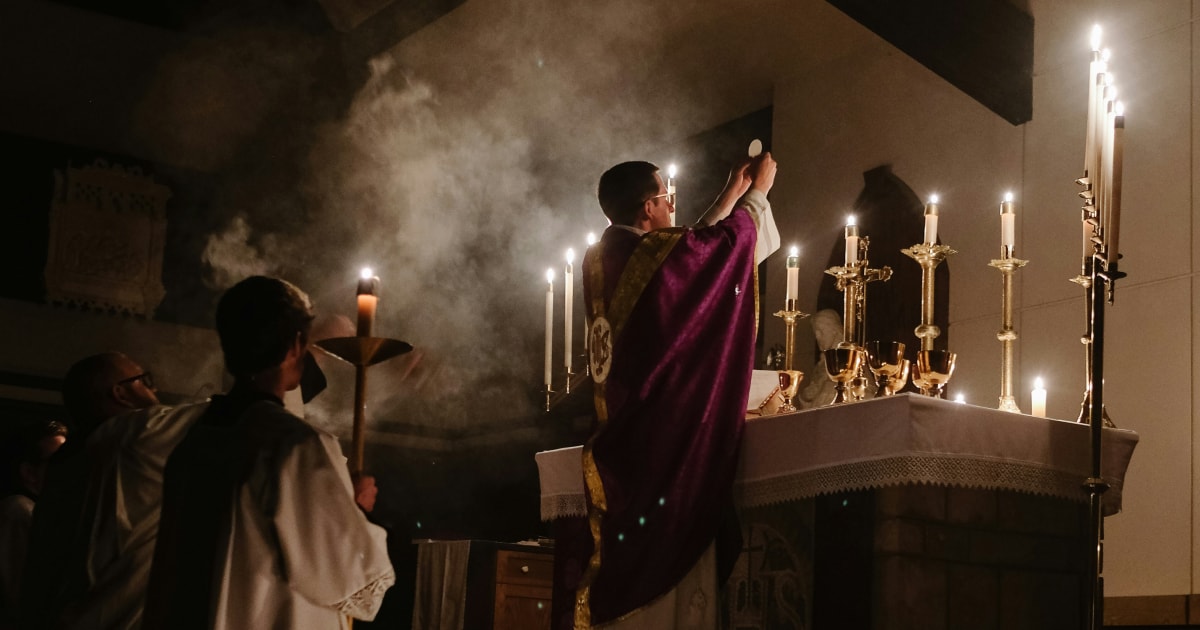



Jeremias Schröder said the Traditional Latin Mass retains a “rightful place in the Church” and cannot be fully suppressed, citing developments since Pope Benedict XVI’s 2007 reforms and the lived practice of Benedictine monasteries worldwide.
Speaking in an interview with German Catholic media, the Abbot Primate stated that within the Benedictine Confederation – an international network of autonomous monasteries – both the pre-1970 liturgy and the post-conciliar Missal are in regular use. “I don’t see a conflict there,” he said. “Among us Benedictines, the traditional liturgy and the modern liturgy coexist in perfect harmony.”

He noted that approximately 10 Benedictine abbeys, predominantly in France, celebrate according to the older liturgical books, particularly within the Solesmes Congregation. Among them, the Abbey of Fontgombault has played a prominent role in sustaining and transmitting the traditional rite, with several daughter houses adopting the same practice. Schröder also referred to the monastery of Le Barroux, which regularised its canonical status after the 1988 episcopal consecrations associated with Marcel Lefebvre and now falls directly under the authority of the Abbot Primate.
“We all treat one another with respect,” Schröder said, describing how different liturgical forms are accommodated within the same monastic framework. He added that when invited to celebrate in communities attached to the older rite, he has done so using the reformed Missal, and “it was, of course, accepted”.
His remarks come in the context of ongoing Church-wide regulation of the liturgy following *Traditionis Custodes*, issued by Pope Francis, which restricted the use of the Traditional Latin Mass and reaffirmed the normative status of the post-Vatican II liturgy. Subsequent guidance from the Dicastery for Divine Worship and the Discipline of the Sacraments has further specified conditions for its celebration, including limits on parish use and sacramental rites.
Schröder nevertheless pointed to the longer-term impact of *Summorum Pontificum*, in which Benedict XVI affirmed that the older Missal had never been abrogated and could be used more widely. “Now that Pope Benedict has opened doors here, it will no longer be possible to completely push out the old rite,” he said.
He added that the older form continues to shape religious life for some communities and individuals. “We have fellow brothers and sisters who have built their religious lives on this form of prayer and celebration of the Mass,” he said, concluding that it “should at least be permitted in some areas”.
The Benedictine Confederation, established in 1893 under Pope Leo XIII, operates as a federation of monasteries following the Rule of St Benedict, with each house retaining significant autonomy in liturgical practice. This structure has historically allowed for variation in rites and observances, including the continued use of Gregorian chant and Latin.
Schröder’s intervention comes as attention turns to how Pope Leo XIV may address ongoing liturgical questions, particularly amid appeals and disputes in several dioceses concerning the application of post-2021 norms.