January 9, 2026
January 8, 2026

Can animals have Catholic funerals? One of the Herald’s chaplains answers your questions

Min read
share

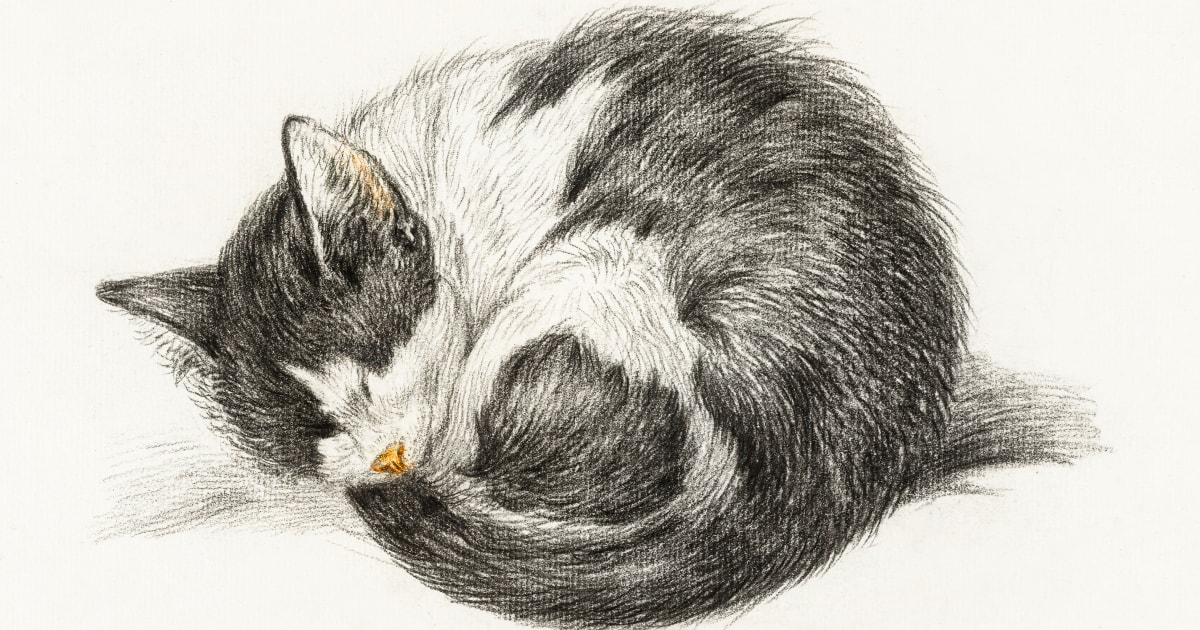
A concerned Catholic: ‘I am shocked and angry. Serena, my beloved Burmese cat and companion of 13 years, died last week. I called the local parish and spoke to the priest. I wanted him to take Serena’s funeral and to bury her in my garden. He refused. I am through with the Catholic Church. How can it have any credibility if it refuses to care for all God’s creatures?’

Chaplain: I am sorry to hear of your recent loss. Pets bring great comfort and companionship. Their death can result in real pain and a sense of separation. I do not know exactly what the priest said to you, or how the conversation unfolded. I hope that he had the time and courtesy to explain the Church’s position.
You are quite right: Serena, and all animals, are God’s creatures. The Book of Genesis expressly states that He created all living things. Birds, fish, and animals all come high in the order of Creation. Their very existence gives praise and glory to God.

The Book of Genesis continues by stating that God gave dominion, or stewardship, over animals and all living creatures to us as humans. Pope Francis, like his predecessors, has insisted that this stewardship is not absolute. It is entrusted to us by God. We have a duty to exercise it responsibly and to hand on the created order to future generations in at least as good a condition as we received it ourselves. We also have a duty to respect the integrity of all creation. It diminishes us as humans to treat animals cruelly. Great saints, such as St Francis of Assisi and St Philip Neri, had a deep love of animals.

There is, however, a profound difference between humans and the rest of the animal kingdom. God created the rest of the universe and saw that it was ‘good’. He created you and me and saw that we were ‘very good’. This is because only men and women are created in the image and likeness of God. Only we have this spiritual dimension, reflected in our capacity for free choice, creativity, and love. Of course, humans can behave much worse than animals, but this is due to the misuse of that freedom, which is a uniquely human characteristic.

The Church insists that animals, as God’s creatures, be treated with kindness. At the same time, we must retain a sense of proportion. The Catechism states that it is ‘unworthy to spend money on them that should as a priority go to the relief of human misery. One can love animals; one should not direct to them the affection due only to persons.’ No one has spoken more urgently than Pope Francis on the need to care for all Creation, but he too has pointed out the importance of proper priorities. In 2022, he said: ‘Today we see a form of selfishness. We see that some people do not want to have a child. Sometimes they have one, and that is it, but they have dogs and cats which take the place of children. This may make people laugh, but it is a reality. It is a denial of motherhood and fatherhood which diminishes us and takes away our humanity.’

However, there was also excited comment in the media in November 2014 when it was reported that Pope Francis had said: ‘Paradise is open to all God’s creatures.’ The only problem was that he had not actually said this.

Will there be pets, or other animals, in heaven? This remains an open theological question. It is an article of faith that our bodies will be raised at the end of time, so there must be some degree of physicality to heaven. Various passages of Scripture support such a view. St Paul wrote to the Romans that ‘the whole of creation itself might be freed from slavery to corruption and brought into the same glorious freedom as the children of God’. In this world, we cannot know fully what heaven will be like. Another verse of St Paul, written to the Corinthians, encourages us to hope that it will be beyond our greatest imagining: ‘Eye has not seen, nor heard, nor can the mind visualise, what God has prepared for those who love Him.’

This brings us to your specific query concerning the possibility of a Catholic funeral and burial. The Church’s funeral liturgy is specifically for humans and, in most cases, envisages that the deceased has been baptised. The Requiem Mass, and every funeral rite, speaks of the immortal soul of the person who has died. By definition, this concerns humans alone, who are created in the image and likeness of God. Although not always stressed as much as it might be, the Church’s funeral rites are also about the forgiveness of sin gained for us by the Cross and Resurrection of Christ. Sin is a human attribute. Serena does not stand in need of this aspect of the funeral service.

I am sure that you will bury Serena with great dignity. As you do so, say a prayer to God, thanking Him for the great blessing that she has been to you. I will keep you in my prayers.

A concerned Catholic: ‘I am shocked and angry. Serena, my beloved Burmese cat and companion of 13 years, died last week. I called the local parish and spoke to the priest. I wanted him to take Serena’s funeral and to bury her in my garden. He refused. I am through with the Catholic Church. How can it have any credibility if it refuses to care for all God’s creatures?’

Chaplain: I am sorry to hear of your recent loss. Pets bring great comfort and companionship. Their death can result in real pain and a sense of separation. I do not know exactly what the priest said to you, or how the conversation unfolded. I hope that he had the time and courtesy to explain the Church’s position.
You are quite right: Serena, and all animals, are God’s creatures. The Book of Genesis expressly states that He created all living things. Birds, fish, and animals all come high in the order of Creation. Their very existence gives praise and glory to God.

The Book of Genesis continues by stating that God gave dominion, or stewardship, over animals and all living creatures to us as humans. Pope Francis, like his predecessors, has insisted that this stewardship is not absolute. It is entrusted to us by God. We have a duty to exercise it responsibly and to hand on the created order to future generations in at least as good a condition as we received it ourselves. We also have a duty to respect the integrity of all creation. It diminishes us as humans to treat animals cruelly. Great saints, such as St Francis of Assisi and St Philip Neri, had a deep love of animals.

There is, however, a profound difference between humans and the rest of the animal kingdom. God created the rest of the universe and saw that it was ‘good’. He created you and me and saw that we were ‘very good’. This is because only men and women are created in the image and likeness of God. Only we have this spiritual dimension, reflected in our capacity for free choice, creativity, and love. Of course, humans can behave much worse than animals, but this is due to the misuse of that freedom, which is a uniquely human characteristic.

The Church insists that animals, as God’s creatures, be treated with kindness. At the same time, we must retain a sense of proportion. The Catechism states that it is ‘unworthy to spend money on them that should as a priority go to the relief of human misery. One can love animals; one should not direct to them the affection due only to persons.’ No one has spoken more urgently than Pope Francis on the need to care for all Creation, but he too has pointed out the importance of proper priorities. In 2022, he said: ‘Today we see a form of selfishness. We see that some people do not want to have a child. Sometimes they have one, and that is it, but they have dogs and cats which take the place of children. This may make people laugh, but it is a reality. It is a denial of motherhood and fatherhood which diminishes us and takes away our humanity.’

However, there was also excited comment in the media in November 2014 when it was reported that Pope Francis had said: ‘Paradise is open to all God’s creatures.’ The only problem was that he had not actually said this.

Will there be pets, or other animals, in heaven? This remains an open theological question. It is an article of faith that our bodies will be raised at the end of time, so there must be some degree of physicality to heaven. Various passages of Scripture support such a view. St Paul wrote to the Romans that ‘the whole of creation itself might be freed from slavery to corruption and brought into the same glorious freedom as the children of God’. In this world, we cannot know fully what heaven will be like. Another verse of St Paul, written to the Corinthians, encourages us to hope that it will be beyond our greatest imagining: ‘Eye has not seen, nor heard, nor can the mind visualise, what God has prepared for those who love Him.’

This brings us to your specific query concerning the possibility of a Catholic funeral and burial. The Church’s funeral liturgy is specifically for humans and, in most cases, envisages that the deceased has been baptised. The Requiem Mass, and every funeral rite, speaks of the immortal soul of the person who has died. By definition, this concerns humans alone, who are created in the image and likeness of God. Although not always stressed as much as it might be, the Church’s funeral rites are also about the forgiveness of sin gained for us by the Cross and Resurrection of Christ. Sin is a human attribute. Serena does not stand in need of this aspect of the funeral service.

I am sure that you will bury Serena with great dignity. As you do so, say a prayer to God, thanking Him for the great blessing that she has been to you. I will keep you in my prayers.

share

subscribe to the catholic herald today

Our best content is exclusively available to our subscribers. Subscribe today and gain instant access to expert analysis, in-depth articles, and thought-provoking insights—anytime, anywhere. Don’t miss out on the conversations that matter most.
Subscribe