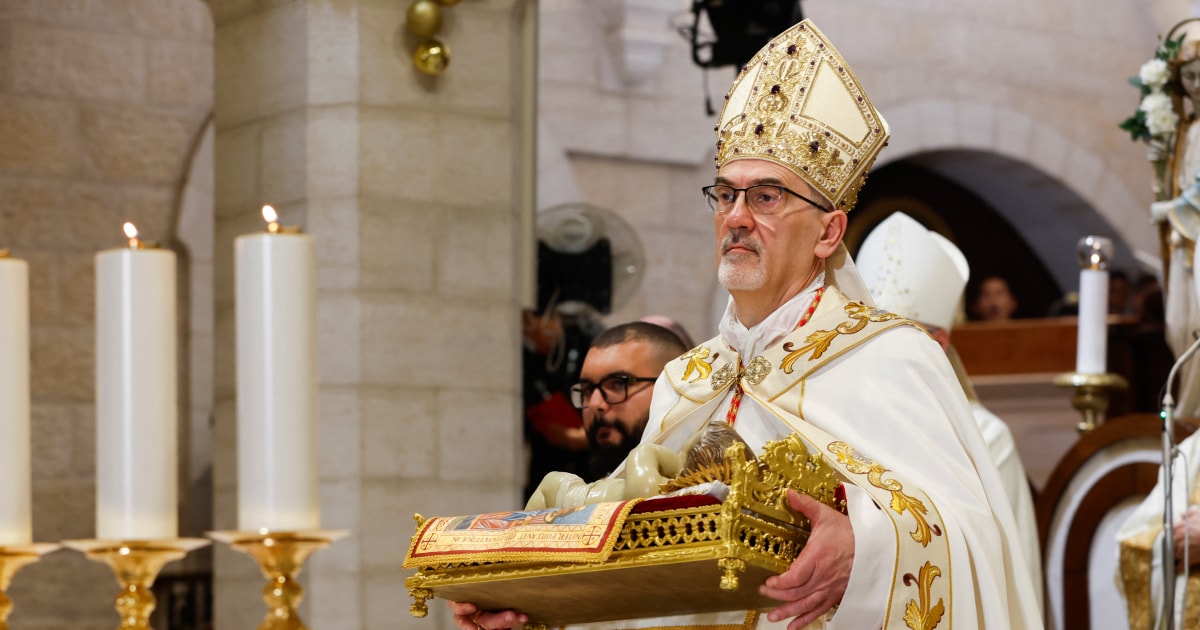



The cancellation of major Holy Week events in Jerusalem has forced Church leaders into an improvised and uncertain approach to the liturgical calendar at its most significant moment.
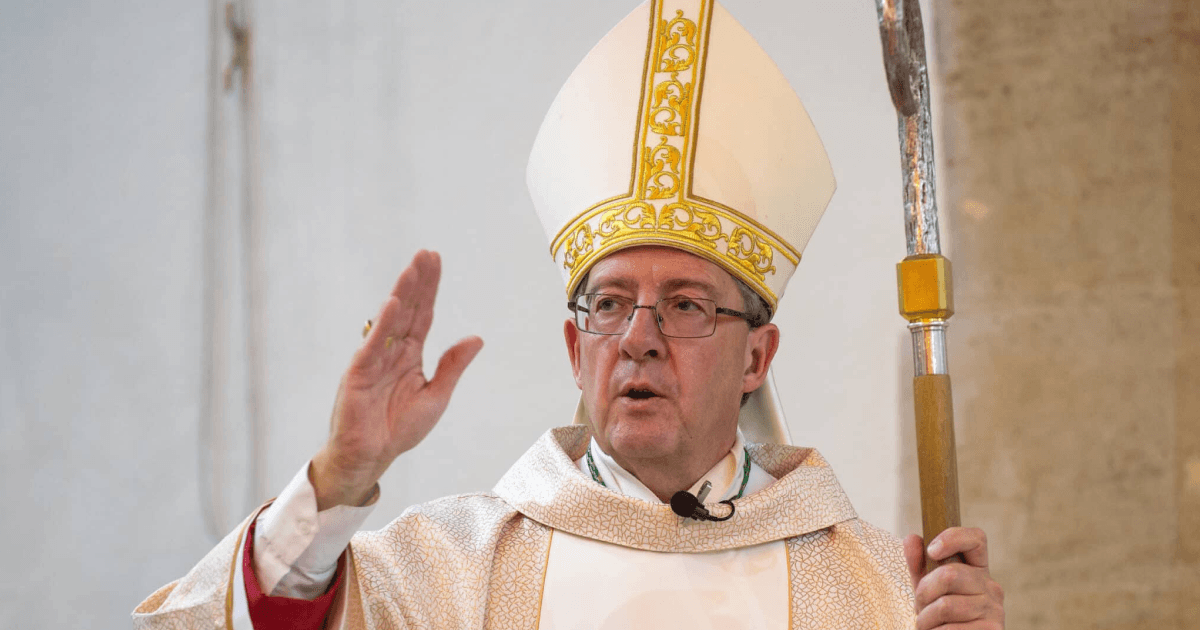
In a letter dated March 22, Pierbattista Pizzaballa confirmed that the traditional Palm Sunday procession from the Mount of Olives has been cancelled and that the Chrism Mass will be postponed, while indicating that wider public celebrations may not be possible under current conditions.
“Due to the war, this year we were unable to experience the traditional Lenten journey in Jerusalem, with the solemn celebrations at the Holy Sepulchre and in the Holy Places of the Passion,” he wrote, adding that although personal preparation had continued, “we felt the loss of the community journey towards Easter.”
The Patriarch acknowledged that the situation remains fluid and that even short-term planning is difficult, stating plainly that “it is not possible to provide definitive indications for the days to come” and that arrangements will have to be coordinated “on a day-to-day basis”.
What can already be said with certainty, however, is that the normal pattern of Holy Week has been broken. “It is already clear… that ordinary celebrations open to all cannot take place,” he said. The Palm Sunday procession, one of the most visible and internationally recognised Christian events in Jerusalem, will instead be replaced by “a moment of prayer for the city of Jerusalem, at a location to be determined”. The Chrism Mass, ordinarily a focal point of diocesan unity, has been deferred “to a date to be determined, as soon as the situation allows”.
Despite these restrictions, churches will remain open where possible, and clergy have been instructed to do what they can to sustain the liturgical life of their communities. The Patriarch emphasised that the deprivation felt by the faithful is itself part of the present trial. “The harshness of this time of war… bears the added burden of not being able to celebrate Easter together and with dignity. This is a wound that adds to the many others inflicted by the conflict.” Yet he coupled this with an appeal to perseverance: “We must not allow ourselves to be discouraged… let us not give up prayer.”
In a gesture intended to preserve some sense of unity, he called for a coordinated moment of devotion, inviting the faithful to recite the Rosary on March 28 “to implore the gift of peace and serenity, especially for those suffering because of the conflict”. Even in dispersion, he suggested, the Church can remain spiritually united: “Our prayer, even while we are physically distant, is capable of drawing upon the strength of God’s love, which unites us in a spirit of hope and trust.”
A parallel statement from the Custody of the Holy Land reinforces both the continuity and the limits of what is currently possible. While access to the Church of the Holy Sepulchre has been restricted “for security reasons”, the Franciscans insist that the essential rhythm of prayer has not ceased.
“The community of Franciscan friars present at the Holy Sepulchre has never ceased, day or night, to carry out the scheduled celebrations, the rites, the daily processions and the liturgical prayers according to the provisions of the Status Quo,” the statement said.
At the same time, it confirmed the wider uncertainty surrounding Easter. “At the present time, it is not possible to make any predictions regarding the celebrations of Holy Week,” the Custody noted, adding that it remains in “constant dialogue with the competent authorities and with the other Churches responsible for the Holy Sepulchre”. The emphasis, as in the Patriarch’s letter, is on endurance rather than resolution, with a call for prayer “that the war and violence may cease” and that “dialogue, diplomacy and responsible political action” might prevail.
The Church of the Holy Sepulchre, the traditional site of Jesus’s crucifixion, burial and Resurrection, has been closed to the public since February 28, 2026, by Israeli authorities. The closure forms part of broader restrictions on major holy sites in Jerusalem’s Old City, including the Western Wall and Temple Mount, due to the risk of strikes, debris or attacks.
The closure of the church forms part of wider restrictions on religious sites in Israel, which is home to sacred buildings for Christians, Jews and Muslims. A statement from the head of Israel’s Civil Administration said: “All holy sites in the Old City of Jerusalem, including the Western Wall, the Temple Mount and the Church of the Holy Sepulchre, will remain closed … for security reasons in light of the current tensions in the region.”