

Since the re-election of Donald Trump, much has been said – or rather screamed – about multiculturalism. Most countries in the West are facing record levels of immigration from non-Western nations, and a seismic demographic shift has taken place.
On the one hand, some consider it indisputably good that many people in the same place speak many languages. Others consider it an affront and an attack on the native culture of the receiving nations.
I would like to avoid accusations of centrism, but as a Catholic, that may prove impossible. Goods are being sought on both sides. Catholicism itself is universal and therefore multicultural, so I cannot help but sympathise with those championing multiculturalism in the West. That said, those champions have made a grave error.

The Church has always held two goods in tension: welcoming the stranger and preserving the integrity of the peoples to whom the Gospel is preached.
The current moment has collapsed that tension into a single good, and the result is neither a true welcome nor a true diversity, but a flattening of both. The modern liberal value of diversity fails to give proper respect to the integrity of a nation, what makes “this nation” distinct from “that nation”. In so doing, it risks the salvation of those immigrants it purports to protect.
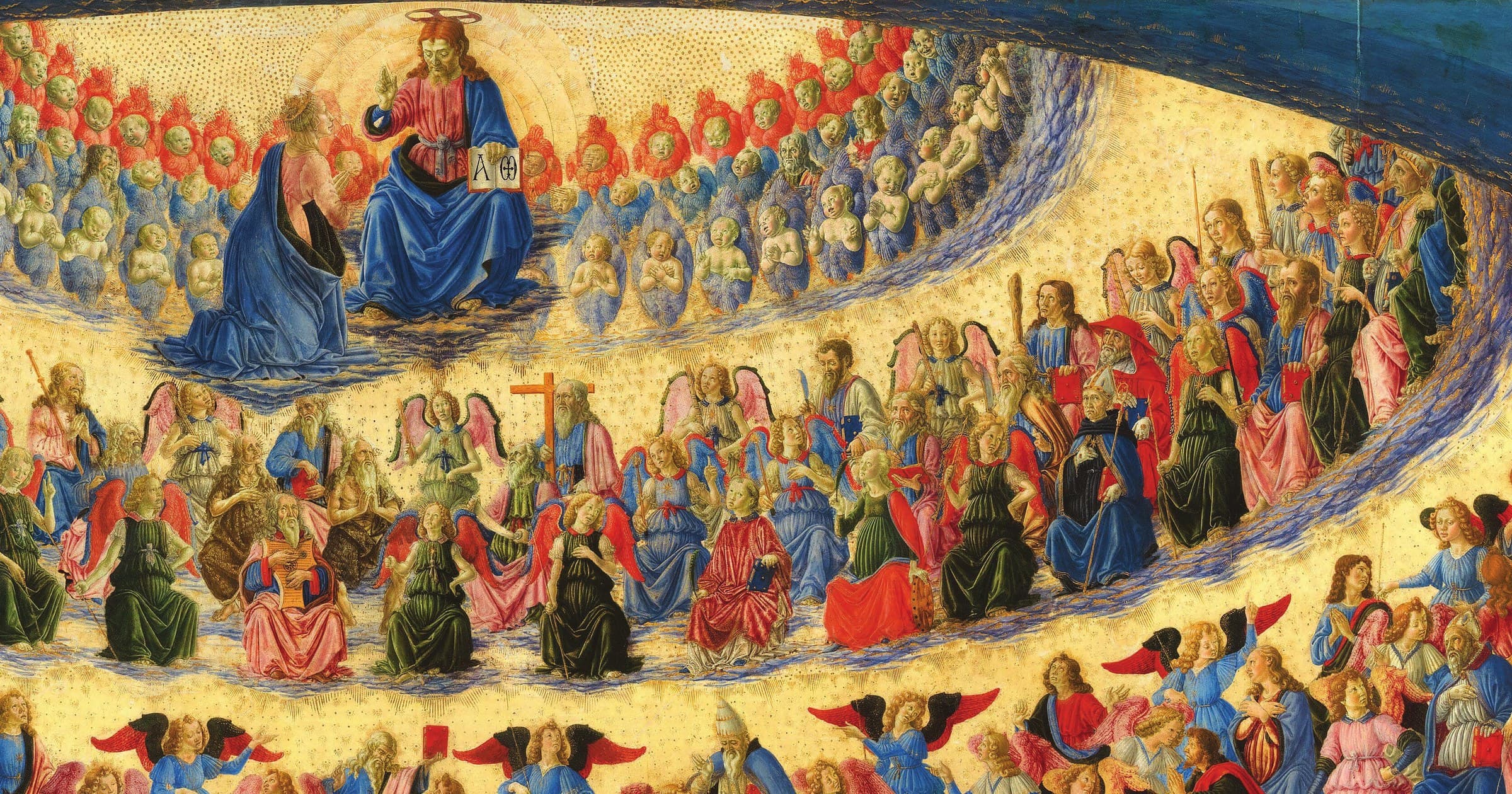
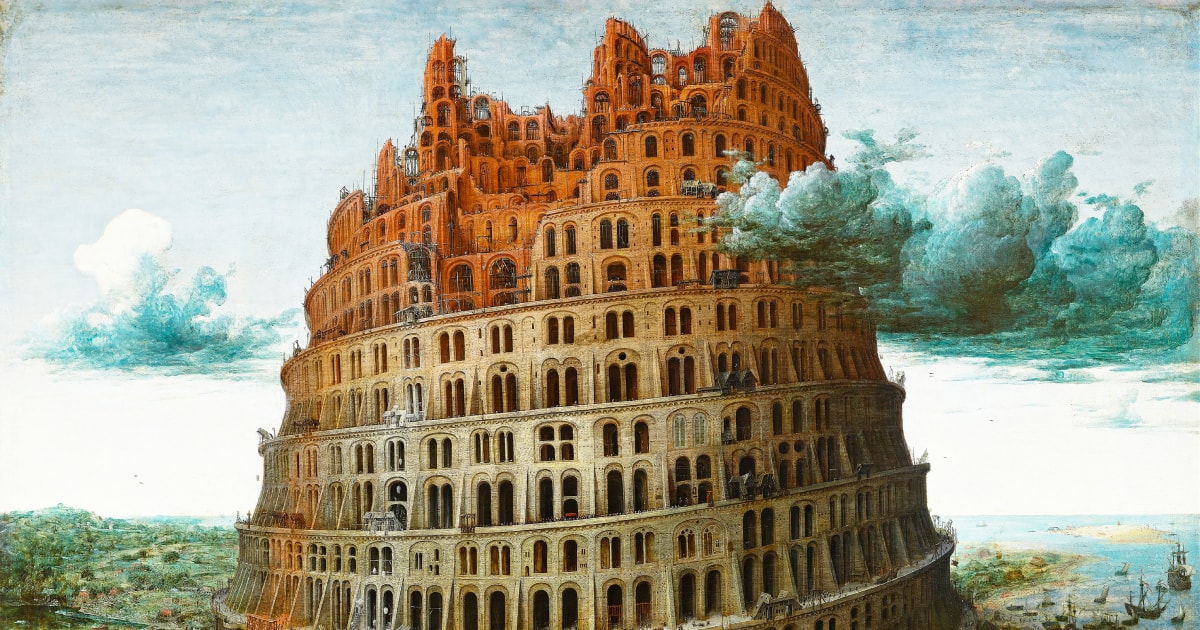
The events of Babel and Pentecost are instructive on this point. The Tower of Babel was a project of the City of Man to unite the nations and build a civilisation that reached heaven and challenged God’s divinity. To correct mankind’s error, the Lord confused their language.
Pentecost is traditionally seen as the divine inversion of the Babel event. Instead of man reaching heaven, God descends to man. Instead of man’s language being confused, each man hears in his own language.
One notes, however, that God’s intervention at Pentecost did not remove the punishment rendered at Babel. He did not intervene to help Gentiles understand Hebrew. One could say He deepened the divide (as Rocco Buttiglione suggests in Modernity’s Alternative), ensuring His Church would include a multiplicity of peoples – with different languages, nations and cultures – distinct from one another, but united in Him.
The Church is one Body of many parts. A body is one thing, greater than the sum of its parts, but parts themselves have their own integrity. We often speak of the “many parts one Body” as many individual Christians in one Body, but the same is true of the nations. The Church is many nations in one Body, each nation maintaining its integrity.
Pentecost deepened the divisions of Babel but gave those divisions Christ, the true principle of unity. Liberalism wants a false diversity and, like Babel, seeks unity not through Christ but through a mutual pursuit of selfish ends.
In God’s plan for the new society of the Church, the division of nations remains. Since the Church is God’s final, perfect plan for humanity, this indicates the goodness of the nation. A man’s native tongue, culture and nation remain intact even when he joins the Church.
Each man hears in his own native tongue. Put another way, the medium through which a man receives the Gospel is his own culture, his own people, his own nation. Paul preaches at the Areopagus by appealing to their culture’s Unknown God in their language. This is why it is so important for Catholics to respect the integrity of a nation’s identity and culture. A nation’s culture is how its members receive the Gospel.
Christ Himself entered history as a particular man in a particular culture speaking a particular language. The Incarnation is not abstract but particular, and the Church’s continuation of His mission is likewise particular.
An error occurs when we emphasise one doctrine at the expense of another. Catholics have largely downplayed the good of national identity for some time now, perhaps out of a desire to heed God’s command to welcome the stranger – or perhaps out of fear of being associated with a certain 20th-century German leader.
Scripture itself holds the tension: strict laws regarding intermarriage and the long-term settlement of foreigners appear alongside a clear command to welcome the stranger and bring him into the covenant. Pentecost itself happened in Jerusalem, populated by foreigners who remained distinct in their tongues. The tension is inherent to Catholicism, not a problem to be resolved by abandoning one side.
Unfortunately, modern Catholics have abandoned one side of this tension. We see nothing wrong with taking a man out of the context of his native land and placing him in another land on the other side of the world for the sake of his material prosperity. But there is a poverty in this prosperity. It hinders a man’s receptivity to the Gospel. He cannot “hear in his native tongue”.
If you only watch cable news, this may come as a surprise, but Pope Francis’s teaching supports this tension. Universal solidarity was an important value to Francis, but he warned that this value, taken to the extreme, causes us to fall into an “abstract globalised universe” that hinders the Gospel.
One cannot love or be open to the foreigner unless he loves his own land. One cannot give a gift he does not possess. The failure of many in the West to recognise their own nation as theirs and not someone else’s hinders their very ability to share their nation’s gifts when that “other” presents himself.
Liberalism does not see the world as a communion of families, neighbourhoods, cities and nations. It sees the world as a collection of atomised individuals living within arbitrary borders. In that anthropology, the nation has no ontological status. This is why liberals on both the Left and the Right cannot defend the nation as their own. They do not believe nations are real in the first place. And what looks like an embrace of diversity is the erasure of the very particularity that makes diversity possible.
Pentecost is primarily a mystery of evangelisation, the spread of the Gospel across the world. In His wisdom, the Lord desired His Gospel to be received by a multitude of nations distinct in their human life but unified in His Divine Life.
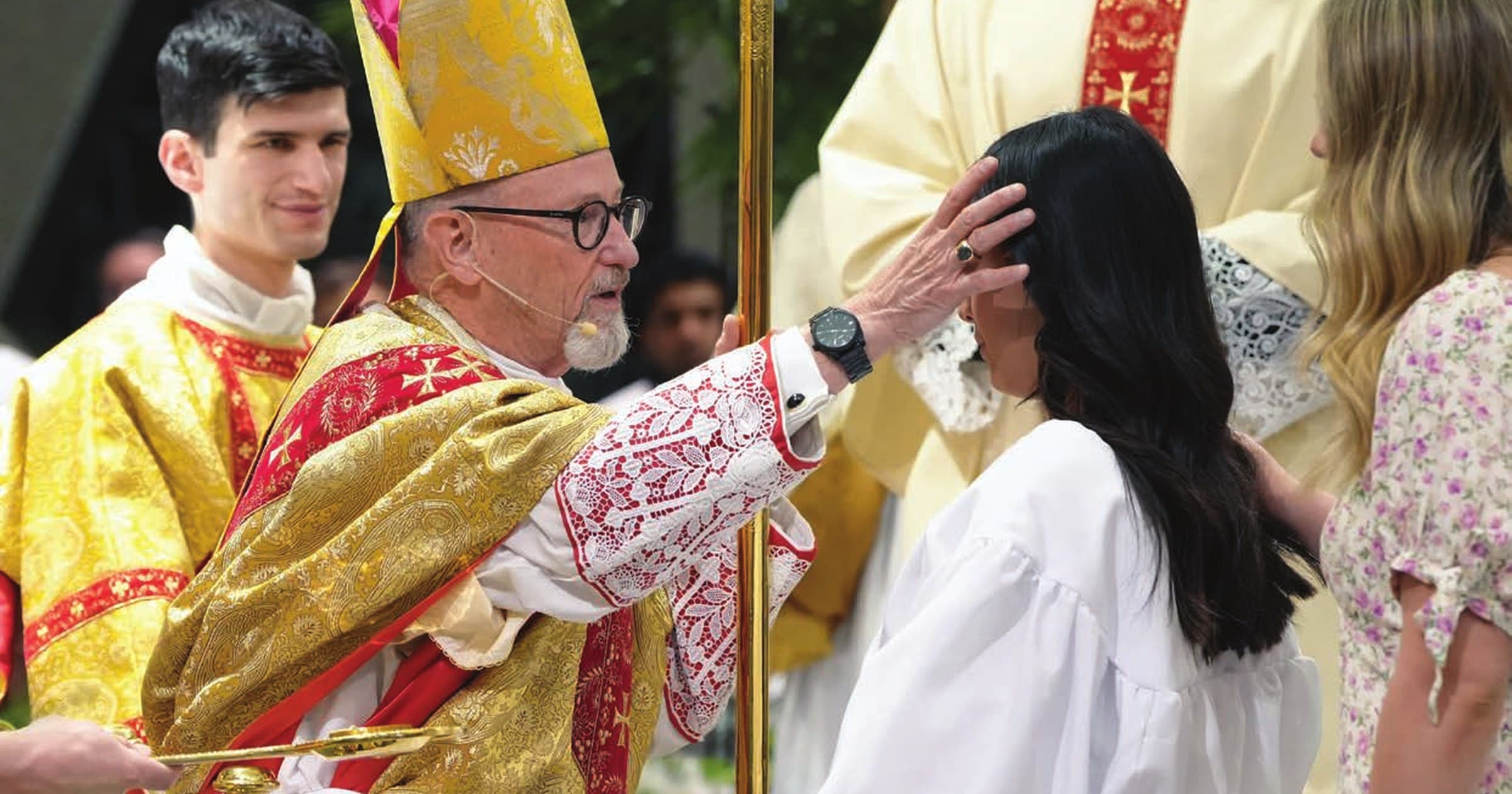
The Holy Spirit descended onto the Apostles and enabled them to go preach to these nations. Similarly, the Church – whether through its hierarchy, Religious missionaries or lay people – descends into a culture, speaks its language and transforms it into a Christian one. Each nation hears the Gospel in its own language, namely, in its own cultural context.
The current Catholic approach to immigration risks abandoning this truth of the Faith and the tension between unity and diversity. It is, in fact, a liberal anthropology dressed in Catholic clothing. The cost of the Western Churches welcoming the stranger without respect for the nation is losing the integrity of both our nations. This cost is borne first and foremost by the immigrant who has lost access to his culture.
We cannot heed Christ’s call to “baptise all nations” if we forget the integrity of the nation itself.