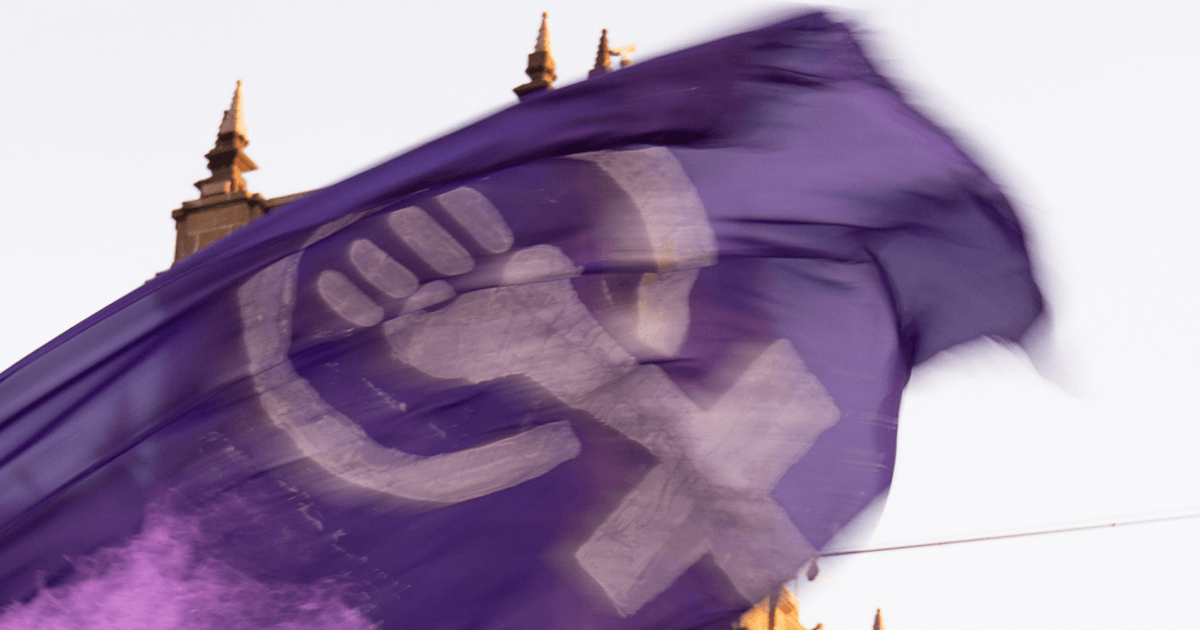

The Diocese of Malaga hosted a two-day gathering of the Revuelta de Mujeres en la Iglesia del Sur, a women’s Catholic group calling for changes to the Church’s teaching and practice on Holy Orders.
The meeting took place on June 6 and 7 at the diocese’s Casa Diocesana, where more than 60 Catholics gathered to call for an end to the Church’s male-only priesthood and urge Pope Leo XIV to reconsider established doctrine on Holy Orders.
The event, publicised on the diocese’s website, was the second regional meeting of the network and took place under the banner “Disciples of the Gospel, Artisans of Renewal”.
Organisers described it as a space for “reflection, spirituality, dialogue and commitment around the challenges that women face today within the Catholic Church”, with the theologian Carme Soto Varela delivering the keynote lecture on “Women in the Renewal of the Church: Gospel and Synodality”.
Sessions included formation, shared experiences, celebrations and the drafting of proposals for “ecclesial renewal” through synodality and what organisers describe as “baptismal equality”.
The gathering followed the group’s open letter to Pope Leo XIV, published on June 1, in which participants challenged the Church’s teaching on the sacrament of Holy Orders.
“If we lift our gaze toward the Church, we feel invisible, ignored, separated and discriminated against,” the letter said.
It continued: “We do not feel united with our male brothers; rather, we feel separated simply because we are women... Baptism has full consequences for men. It gives them the possibility of participating fully in the seven sacraments, placing them in a hierarchy above half of humanity. And for us women, simply by virtue of being women, there is one sacrament forbidden to us: Holy Orders.”
The women claimed their Baptism “is not complete; it is of water, not of the Spirit, not of Ruah”, employing the Hebrew term for spirit, or breath, often used by feminist theologians because of its feminine grammatical gender.
They addressed God with the neologism “Dixs” and spoke of “a God who is Father-Mother”.
The letter concluded: “We will continue to raise our voices ‘until equality becomes the norm in the Church’”, and urged the Pope to act as the Good Samaritan: “Repair the damage, get involved in restoring the place to which we are called as daughters of the same God, and do not make excuses or pass by our wounds as the Levite and the priest did.”
The Revuelta de Mujeres en la Iglesia emerged around 2020 and has established networks across multiple Spanish regions. Its first southern gathering took place in 2024.
The movement presents itself as a space of “faith lived in freedom, sorority and evangelical commitment” that seeks “structural changes” to overcome what it regards as gender-based discrimination.
Recent social media activity by the group has coincided with Pope Leo XIV’s visit to Spain, repeating the call for greater “inclusion”.
The Church has, however, consistently taught that priestly ordination is reserved to men. Pope St John Paul II’s 1994 apostolic letter Ordinatio Sacerdotalis stated that the Church has “no authority whatsoever” to confer priestly ordination on women, and that the teaching is to be “definitively held” by the faithful.
The Congregation for the Doctrine of the Faith has reaffirmed the teaching on several occasions, including under Pope Francis.
Bishop José Antonio Satué of Malaga, who has previously said that homosexual inclination is “not a sin” and described blessings for same-sex couples under Fiducia Supplicans as “a step forward”, has not issued a public statement distancing the diocese from the event.
The diocese’s decision to host the gathering was maintained despite the group’s open challenge to Church teaching earlier in June.

.png)


.jpg)
.png)
.png)