July 14, 2026

Eduard Habsburg: Why Christianity remains Europe’s foundation

Jan C. Bentz
More
Related
Min read
share

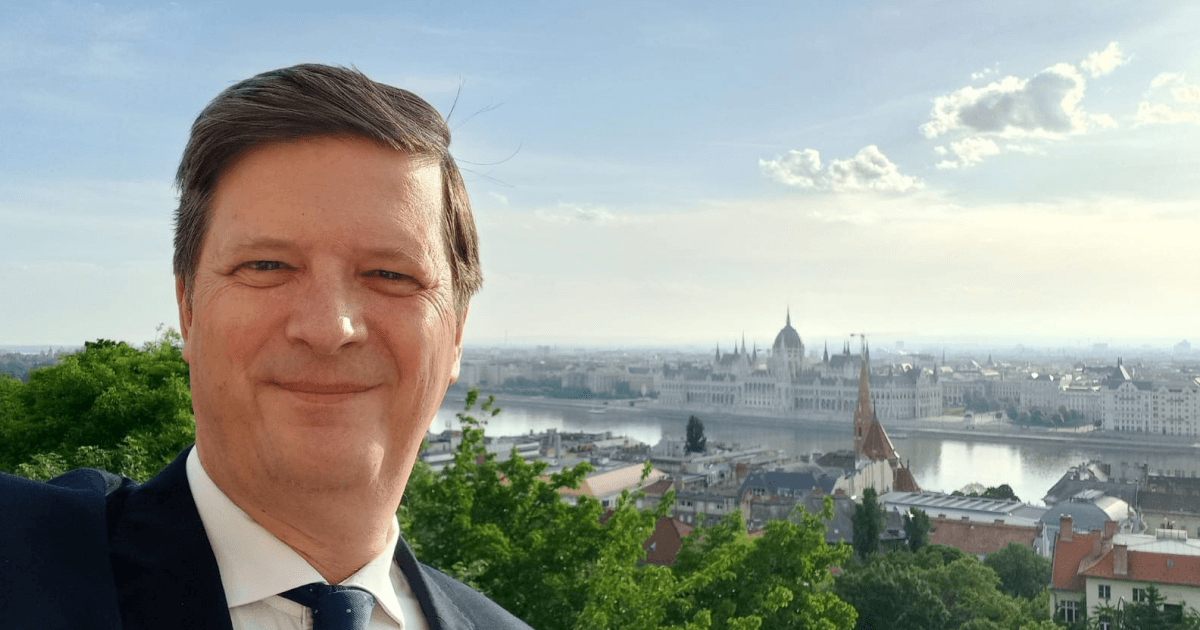
Eduard Habsburg-Lothringen has become one of the most articulate advocates for Christianity, family life and Central Europe’s cultural inheritance. A member of the House of Habsburg, diplomat, author and public commentator, from 2015 until earlier this year he served as Hungary’s Ambassador to the Holy See and the Sovereign Order of Malta. Beyond diplomacy, he is known for a series of widely read books, including the bestselling The Habsburg Way, which explores the virtues that shaped the Habsburg dynasty; Building a Wholesome Family in a Broken World; and, most recently, his spirited defence of the traditional Roman liturgy in Discovering the Latin Mass, where he reflects on the enduring cultural and spiritual significance of the Church’s liturgical heritage.

At the recent ARC conference in London, Habsburg spoke about the distinctive contribution of Central Europe to the future of Europe, the relationship between faith and conservatism, and the growing desire among younger generations for a more rooted political and cultural vision.

The Catholic Herald: You spoke about Central Europe and its contribution to Europe. What can Central Europe offer the rest of the continent?

Eduard Habsburg-Lothringen: What is distinctive about Central Europe is that its nations know a great deal about the complicated balance between national sovereignty and belonging to something larger than oneself.

They learned this under the Habsburg monarchy.

For centuries, very different peoples lived within a larger political framework while retaining their own identities, languages and traditions. Later, after the collapse of the Empire and through the painful experiences of the 20th century, they learned those lessons again in different forms.

As a result, countries such as Hungary, Austria, Slovakia, Slovenia, the Czech Republic and even parts of the western Balkans possess a particularly refined understanding of the relationship between central authority, subsidiarity, sovereignty and national identity.

There is a remarkable cultural continuity across the region. Whether one travels through Hungary, Slovakia, parts of Croatia or even western Ukraine, one still encounters traces of a common cultural language that developed over centuries.

At the same time, many of these nations fought hard for their own independence – sometimes against the very Habsburgs who had governed them. That experience gave them a particularly strong instinct for maintaining sovereignty while participating in larger political structures.

This is why Central Europe has become such an important voice within Europe today. These countries understand both the value of national self-government and the benefits of broader cooperation.

CH: Is Europe willing to listen to that voice?

EHL: There is always a temptation towards greater centralisation.

Whenever a large bureaucracy exists, it naturally tends to expand its authority. Bureaucracies are susceptible to that temptation. Against this tendency, several Central European countries have become important advocates for subsidiarity and national responsibility. They serve as a reminder that Europe is strongest when sovereign nations contribute freely to a common project rather than being reduced to administrative units.

I believe the importance of this voice will continue to grow because political developments increasingly seem to be moving in that direction.

CH: What has been your impression of ARC so far?

EHL: I must say that I am genuinely enthusiastic.

For me, it is a completely new experience to be together with four thousand people in a setting like this.

I have spent a great deal of time asking people what they think unites everyone here. After all, attendees come from different countries, different religions, different political traditions and even different understandings of what it means to be conservative.

The answer I have found most convincing is hope.

There is a strong sense that people want to move in a positive direction. There is a hopeful vision for the future of society. I see very little doom and gloom. Instead, I see people asking what can be built, what can be strengthened and what can be renewed. One of the most important aspects of ARC is not merely the lectures but the conversations taking place between them. People are constantly meeting old friends, making new acquaintances and discussing projects for the future.

What also strikes me is that the conference does not revolve around a handful of charismatic personalities. There is a sense of equality and shared purpose. That allows the focus to remain on the ideas rather than on individual figures.

CH: Throughout the conference there has been much discussion of Christian values. As a Catholic, what particular contribution can Catholics make to that conversation?

EHL: The first thing I would say is that the mission of the Catholic Church is not to improve society.

That may sound surprising, but the Church exists above all to help people come to know God, live with Him and ultimately reach heaven. Of course Catholics can make an important contribution to conservative discussions. In fact, I think our most important contribution is to remind conservatives that values separated from faith inevitably erode.

Conservative values cannot survive indefinitely without the religious convictions that sustain them. Take the family. The idea of a large family does not make much sense if one has no faith. Very few people are willing to accept the sacrifices, burdens and responsibilities that come with raising children simply as an abstract political principle. People make those sacrifices because they believe something deeper.

That is why I would like to see a stronger and more confident Catholic voice within the broader conservative movement. Catholics can remind everyone of the foundation without which everything eventually begins to fall apart.

CH: ARC brings together Catholics, Protestants, Orthodox Christians and even people of other faiths. How do you see that aspect of the conference?

EHL: One of the things I appreciate most is precisely that.

Pope Francis often spoke about an “ecumenism of blood.” His point was that those who persecute Christians do not usually ask whether their victims are Catholic, Protestant or Orthodox. In a different way, ARC creates a space for meaningful cooperation between Christians from different traditions and even between believers of different religions.

That does not mean pretending that our differences do not exist. I do not believe ecumenism works by blurring doctrinal distinctions. Rather, it means recognising where we share common concerns and where we can work together. At ARC I can speak with an Anglican bishop, then with an Evangelical leader, then with someone from an entirely different Christian tradition, and yet still recognise a shared inheritance and a shared concern for the future.

That, I think, is genuine ecumenism.

CH: Finally, what would be your civilisational message to younger Christians?

EHL: I sense a growing attraction towards conservative values among younger generations.

In many areas – within the Church, within politics and within the wider culture – the younger generation is actually becoming more conservative than those who came before it. I think something important is beginning.

Conferences like ARC provide places where people can recognise that fact, discuss it openly and gain confidence from one another. After many of the conversations I have had here, I find myself more hopeful about the political future than I was before arriving. My greatest hope is that young people with genuine Christian convictions will enter politics. Perhaps our political systems do not yet make that easy. Politics inevitably requires compromise, and many Christians are understandably hesitant. But I would love to see young men and women with deep faith and clear convictions entering public life and working courageously for the family, for human life and for Christian values.

At the moment that may sound almost unrealistic. But perhaps that, too, can change.

Continue reading with a free account

Create a free account to read up to five articles each month
Create free account

You have # free articles remaining this month.

Subscribe to get unlimited access.
Sign up

subscribe to the catholic herald today

Our best content is exclusively available to our subscribers. Subscribe today and gain instant access to expert analysis, in-depth articles, and thought-provoking insights—anytime, anywhere. Don’t miss out on the conversations that matter most.
Subscribe