


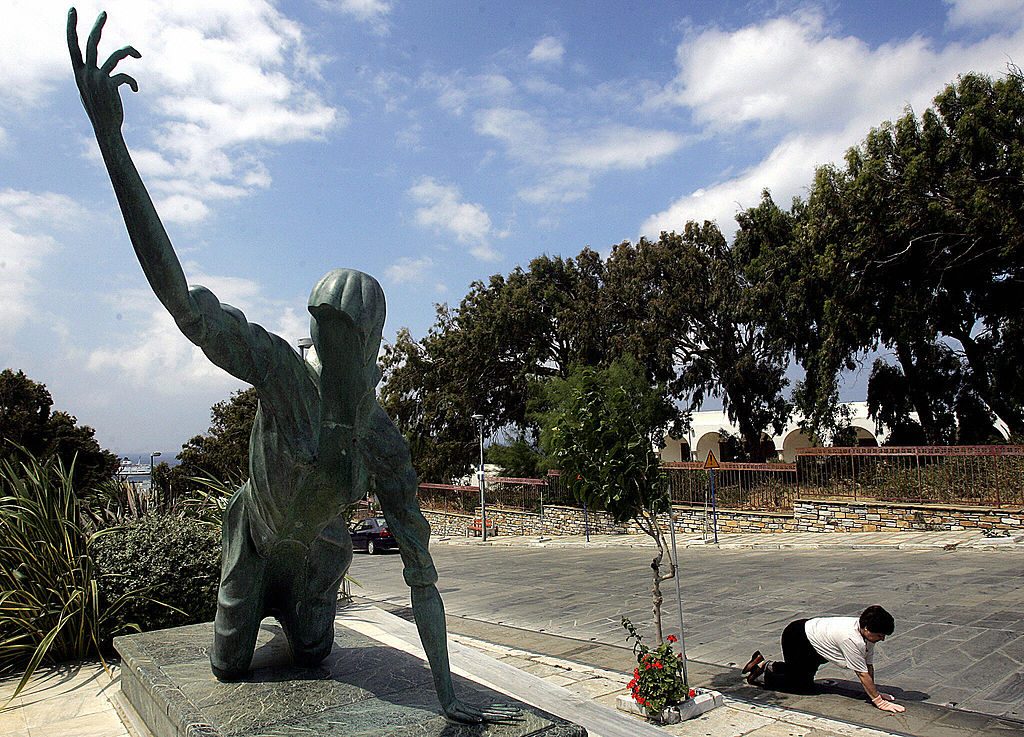
The Global God Divide is the Pew Research Foundation’s new report on religion. Most of us, without reading a word of it, would probably guess quite correctly what it says. Europeans, and people in related Anglophone countries (Canada and Australia) are less religious than anywhere else. Poorer countries care more about God than rich ones. More educated societies set less store by prayer than less well educated. The old care more about their relationship with God than the young (though if you’re Swedish, the generations are equally indifferent). Muslims care more about religion than Christians (except in Africa where they’re equal). But it’s the exceptions and aberrations that are interesting – and Pew reports, being based on a large cohort of respondents, 38,426 people in 34 countries in 2019, are especially thought-provoking. But who on earth thought up the primary question in this survey, whether belief in God is necessary to be moral and to have good values? Most Catholics in Western countries would hesitate to agree. Most of us are familiar with virtuous pagans – or the modern equivalent, perfectly nice agnostics who are completely unchurched. If the question was whether belief in God made it more likely we would love our neighbour, or whether religion gives us a reason to be good, it would be another matter. But the suggestion that religion equates to morality will always provoke a sneery response from respondents who hasten to point out examples of famously religious individuals whose conduct fell short of conventional morality. Nonetheless, a significant minority of respondents across the world, 45 per cent, did agree with the statement, possibly because many of them live in societies where actual atheists are a rarity. More interesting questions followed: is God important in your life and is prayer important in your life? (God is more important than prayer.) Several countries felt that God was very important: Indonesia (98 per cent), the Philippines (92), Tunisia (91), Brazil (84), India (77), Turkey (71), Lebanon (70) and all African countries surveyed – 93 in Nigeria, 92 in Kenya and 86 in South Africa. Some of these are predominantly Catholic. Interestingly, in Mexico a majority of religiously unaffiliated people – of no particular religion – said that God was important to them. In Europe it was striking how many people say religion is “not at all” important in their lives. In some countries – the Czech Republic (though not Slovakia), France, the Netherlands, Sweden and the United Kingdom – people are more likely to choose this than any other option. But the picture is not entirely bleak. More than six in 10 respondents in Greece, Poland and Italy say religion is very or somewhat important in their lives. More people in Greece say religion is at least somewhat important to them (80 per cent) than in any other European country, a little behind Turkey. Smaller majorities in Germany, Slovakia, Lithuania (each at 55 per cent) and Bulgaria (59) say religion is at least somewhat important to them, though in the case of Germany some of that will be attributable to Muslims who are invariably more religious than other groups. In the former Soviet Union there has been a movement towards religion. In Russia since 1991 there has been an increase of 16 per cent in the numbers of people finding God important – now 56 per cent of people say so – and there’s a similar trend in Bulgaria and Ukraine. It is at least possible that the 30 years since the fall of communism has given time for people to recover old religious impulses; certainly atheism has zero glamour for those for whom it was for 70 years the state ideology. And what about the Greeks, the great majority of whom embrace religion, who still, in fact, see religion as part of their way of life? It’s not possible to attribute their religiosity to backwardness – economic hardship hasn’t made Greeks less educated or articulate. Greek Orthodoxy is grounded in the national life in a way that would have been intelligible in Ireland or Italy until a couple of generations ago. It’s still a default identity. In Greece, Orthodoxy literally does bind people together, the very meaning of the word religion. The hierarchy makes little effort to engage with modernity, but the church is popular, grounded in collective customs and traditions – pilgrimages, processions, shrines, icons, common fasts and feasts that embed themselves into the pattern of life. There’s a lesson here for Western Christendom, isn’t there?
6:28 PM
Europe is getting more secular – with some striking exceptions
Melanie McDonagh

4 min read



Already a subscriber? Sign in
5freearticles every month
Continue reading with a free account. No card needed.
- Five free articles every thirty days, on any device you sign in on
- The Catholic Herald newsletter, every morning
- Subscribe whenever you like for everything: every article and the magazine
Related articles
 Analysis
Catholics were in America long before 1801
From Spanish Jesuit missionaries in Virginia to Maryland’s Catholic settlers, the history of Catholicism in America stretches back to the colonial era
Christine Rousselle Analysis
The extreme violence behind the international trade in drugs
Simon Caldwell Analysis
Assessing Pope Francis's most controversial decisions
Elise Ann Allen/ Crux Analysis
As Francis marks 12th anniversary of his election in hospital, we should recall his words during first days as Pope
Charles Collins/Crux Analysis
Trump's critics should consider parallels with another German leader
Charles Collins/Crux
subscribe to the catholic herald today
Our best content is exclusively available to our subscribers. Subscribe today and gain instant access to expert analysis, in-depth articles, and thought-provoking insights—anytime, anywhere. Don’t miss out on the conversations that matter most.
Subscribe



