

May 29, 2026

European court rules Turkey discriminated against Orthodox priests

Thomas Colsy
More
Related
Min read
share

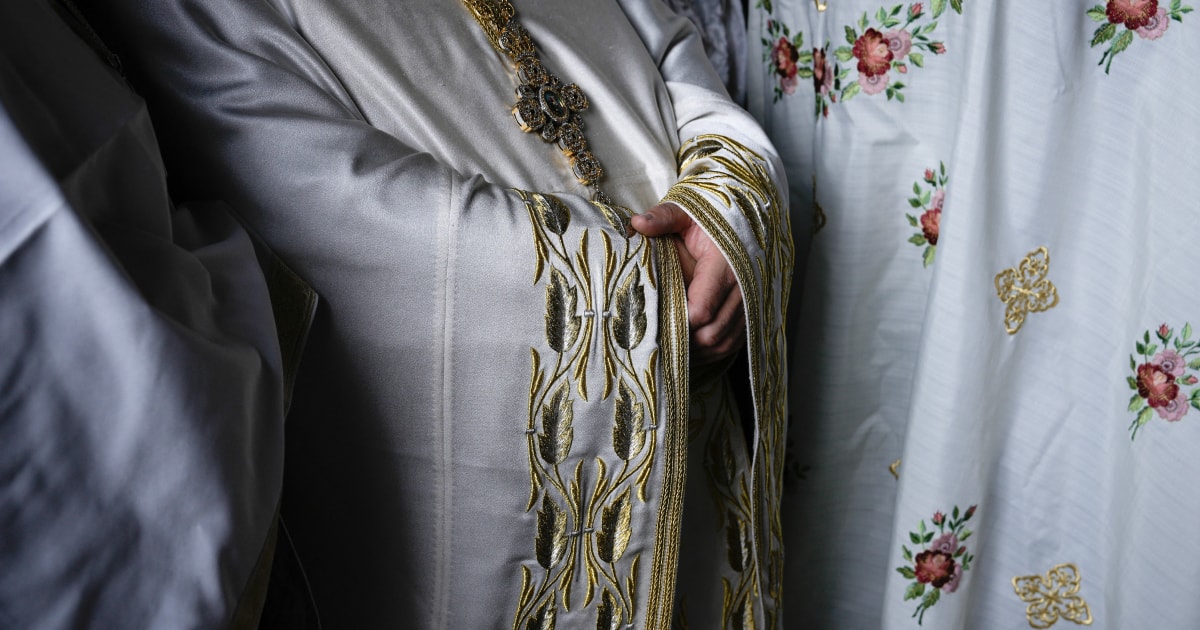
The European Court of Human Rights has ruled that Turkey violated the rights of two Greek Orthodox priests by preventing them from participating in the administration of foundations belonging to their own religious community.

In Mavrakis and Others v Turkey, the Court considered complaints by Greek Orthodox clergymen who had been refused permission by the Turkish authorities to become members of the boards of Greek Orthodox foundations in Istanbul. The case concerned two church foundations and a high school foundation belonging to the Greek Orthodox minority.


The judgment represents a significant rebuke to Ankara and has renewed debate about religious freedom and the status of Christian minorities in a country that was once one of the main centres of Christianity.

The European Centre for Law and Justice, which was granted permission to intervene in the case, said the dispute illustrated state interference in the organisation of Greek Orthodox religious foundations. The Strasbourg-based Christian legal group said the applicants, Niko Mavrakis and Corç Kasapoğlu, had been elected to the boards of Greek Orthodox community foundations before being removed by Turkey’s General Directorate of Foundations on the grounds that they were clerics.

The ECLJ argued that, unlike their Muslim counterparts, Christian clergymen in Turkey are not permitted to manage their religious foundations, and that the restriction affected freedom of association, freedom of religion and equality before the law.

The ruling highlights the precarious situation of Turkey’s historic Christian communities. Christians made up a much larger share of the population of Asia Minor at the beginning of the 20th century, when Anatolia was home to large and ancient Greek, Armenian, Assyrian and other Christian communities dating back to the apostolic age. Today, Christians form only a small minority in Turkey.

The decline followed successive waves of persecution, massacres, expulsions and restrictive policies, including the events of 1915-1923, widely recognised by many governments and historians as the Armenian Genocide. Turkey rejects the term “genocide”, describing the events as wartime relocations and inter-communal violence.

Even today, several obstacles weigh on Christian life in Turkey. The Ecumenical Patriarchate of Constantinople, Armenian churches and the Catholic Church do not enjoy the same legal status as religious communities in some other European states. Christian communities often rely on a system of community foundations whose operation is closely regulated by the authorities.

The ECLJ has said that frequent regulatory changes and state supervision have prevented Christian minorities from maintaining their institutions, and that foundations risk being labelled “inactive” or “disaffected”, which can place them under state control.

Incidents of violence and vandalism also persist. In January 2024, Santa Maria Catholic Church in Istanbul was attacked during Sunday Mass in an assault claimed by Islamic State. One man was killed, and Turkish authorities later said two suspects linked to Islamic State had been detained.

The international charity Open Doors ranks Turkey 41st on its 2026 World Watch List of countries where Christians face the most extreme persecution. Its country dossier says Christians in Turkey face institutional discrimination and cultural pressure, with converts particularly vulnerable to family and social hostility.

The European Court’s judgment has also renewed attention on the status of major Christian sites, particularly Hagia Sophia. In July 2020, President Recep Tayyip Erdoğan issued a decree converting the sixth-century basilica – one of the greatest architectural achievements of Christendom and a former patriarchal cathedral – back into a mosque. The move drew criticism from Pope Francis, Unesco and Christian leaders worldwide.

The conversion reversed the building’s status as a museum, which it had held since 1935, and was widely viewed by many Catholics and Orthodox Christians as a symbolic reversal of centuries of Christian presence in Constantinople. It was followed by the conversion of the Chora Church into a mosque later that year.

The Strasbourg ruling comes months after Pope Leo XIV visited Turkey in 2025 to mark the 1,700th anniversary of the Council of Nicaea, one of the foundational events of Christian doctrine, held in what is now Turkish territory. During the visit, the Pope prayed with Christian leaders at Nicaea, modern-day Iznik, and called for Christians to follow the path of “fraternal encounter, dialogue and cooperation”.

Speaking at Istanbul’s Cathedral of the Holy Spirit during the same visit, Pope Leo described Turkey as a “holy land” where the story of Israel met the birth of Christianity, and recalled that the first eight Ecumenical Councils were held there.

The European Court’s decision reaffirms that religious communities must be free to administer their own institutions without arbitrary state interference.

Continue reading with a free account

Create a free account to read up to five articles each month
Create free account

You have # free articles remaining this month.

Subscribe to get unlimited access.
Sign up

subscribe to the catholic herald today

Our best content is exclusively available to our subscribers. Subscribe today and gain instant access to expert analysis, in-depth articles, and thought-provoking insights—anytime, anywhere. Don’t miss out on the conversations that matter most.
Subscribe