


August 15, 2026

Historic Catholic church upgraded to Grade II* listed status

Corrie Douglas-Young
More
Related
Min read
share

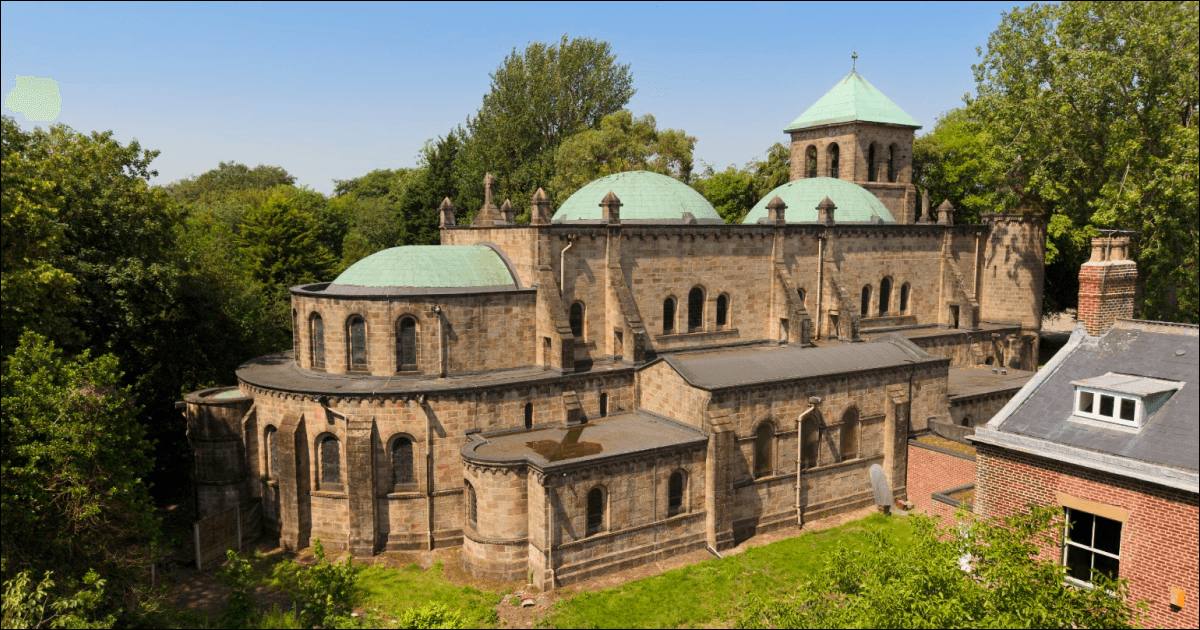
A historic Catholic church, considered “one of the finest early-20th-century churches in England”, has been upgraded to Grade II* listed status in recognition of its architectural and historic significance.

The Church of St Oswald & St Edmund Arrowsmith in Wigan, built between 1925 and 1930, is considered to be the masterwork of the architect J Sydney Brocklesby. The building also contains a collection of stained glass by Harry Clarke which Historic England called “unrivalled”, stating that his influence on early modernist religious glass was “profound”.

Grade II* listed status is awarded to fewer than six per cent of listed buildings in England that are considered particularly important and of more than special interest. The move ensures that the church will receive the “highest level” of consideration in any future planning decisions.

Emma Squire and Claudia Kenyatta, co-chief executive of Historic England, said: “This remarkable church with its spiky stone conical tower and jewel-like stained glass by celebrated artist Harry Clarke thoroughly deserves its elevation to Grade II*. Inspired by the Romanesque churches in the south of France, it is widely considered to be J Sydney Brocklesby’s masterpiece.”

The parish priest of St Oswald & St Edmund Arrowsmith, Canon John Gorman, said the parish community was “delighted” at the upgraded listing of the building and that it was now “considered to be of more than special interest”.

He said: “We are, of course, only custodians of what has been handed down to us, and this church is a testament to the faith of those who have gone before us, both those who held on to the faith during penal times, like St Edmund Arrowsmith, and those whose faith led them to build such a magnificent building to the glory of God in the midst of the 1920s depression. Our task now is to care for and enhance what we have been given in order to hand on to future generations.”

The church was built to house the Holy Hand of St Edmund Arrowsmith, a relic of the Jesuit priest born near Haydock around 1585, who was executed at Lancaster in 1628 and canonised in 1970. A shrine to house the relic was designed in 1934 by FX Velarde, one of the leading Catholic church architects of the 20th century.

The exterior church walls are of pink Darley Dale and Parbold stone which are carved with Norman-style detail, including individually unique grotesque faces of angels and demons and decorated arches. At the top of the building there is a spiky stone conical roof of the circular stair tower.

The church holds 19 intensely coloured stained-glass windows by Harry Clarke, the Dublin-born artist celebrated for his jewel-like colours and wide-eyed, sharp-chinned painted faces. The Expressionist style-stained glass was installed between 1930 and 1937. 

Eight of the windows were installed before Clarke's early death in 1931, with others completed by his studio. It represents the largest and most significant collection of his work in the UK.

Continue reading with a free account

Create a free account to read up to five articles each month
Create free account

You have # free articles remaining this month.

Subscribe to get unlimited access.
Sign up

subscribe to the catholic herald today

Our best content is exclusively available to our subscribers. Subscribe today and gain instant access to expert analysis, in-depth articles, and thought-provoking insights—anytime, anywhere. Don’t miss out on the conversations that matter most.
Subscribe