
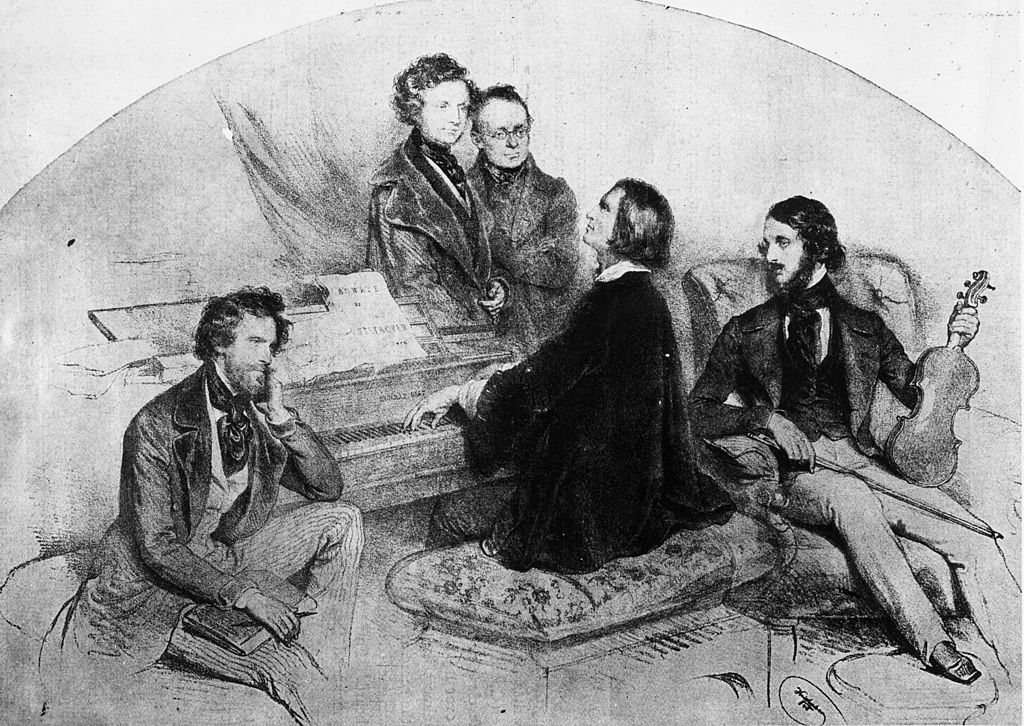
Of the first-rank composers within the generally accepted pantheon, three took holy orders in the Roman Catholic Church: Monteverdi, Vivaldi and – more incongruously perhaps – Franz Liszt, the 210th anniversary of whose birth falls this October. Celebrated as a young man for his brilliant technique and showmanship at piano recitals (a form of concert which he invented) and for forming relationships with other men’s wives, he retired from both pursuits at the age of 35. The second half of his life was markedly more creative and contemplative than the first. Although he had joined the third order of St Francis in 1858, it was eight years later (after the death of two of his children) that he received the tonsure and the four minor orders of porter, lector, exorcist and acolyte. Thereafter, he was often called Abbé Liszt.
2:23 PM
Ever so slightly off-key
of the first-rank composers within the generally accepted pantheon, three took holy orders in the roman catholic church: monteverdi, vivaldi...
Jonathan Gaisman

4 min read



Already a subscriber? Sign in
5freearticles every month
Continue reading with a free account. No card needed.
- Five free articles every thirty days, on any device you sign in on
- The Catholic Herald newsletter, every morning
- Subscribe whenever you like for everything: every article and the magazine

subscribe to the catholic herald today
Our best content is exclusively available to our subscribers. Subscribe today and gain instant access to expert analysis, in-depth articles, and thought-provoking insights—anytime, anywhere. Don’t miss out on the conversations that matter most.
Subscribe



