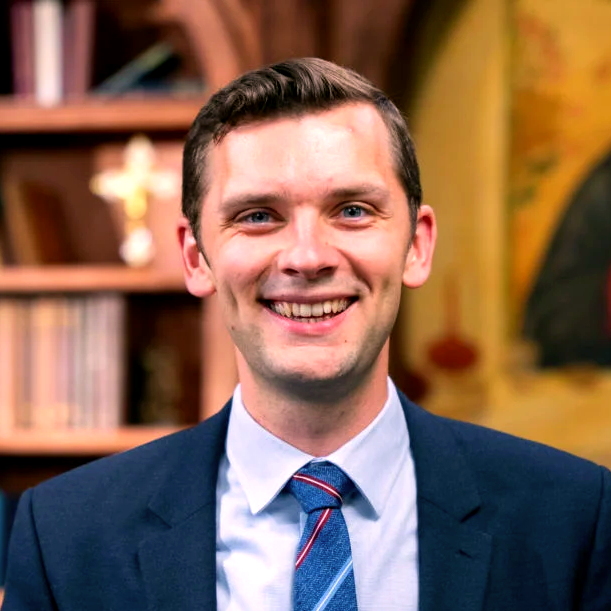


On July 20, Andy Burnham entered Number 10 Downing Street as the UK’s first lifelong Catholic Prime Minister.
Raised by an Irish mother, Burnham attended a Catholic school and served as an altar boy at his local parish. These days, he describes himself as “Catholic by upbringing” but “not particularly religious”, while admitting that he attends Mass only “occasionally”.
Even so, Burnham has credited his Catholic formation with helping to inspire his overall political outlook and his vision for social justice. Given this, it seems appropriate to consider what policies a distinctly Catholic approach to his premiership might include.
1. Keep the Sabbath
It wasn’t very long ago that most shops in England and Wales were banned from selling anything on Sunday. This all changed in 1994, when John Major’s Conservative Government pushed through the Sunday Trading Act, which stated that larger shops were required to close only on Easter Sunday and Christmas Day.
During the parliamentary debates that preceded this legislation, a majority of Labour MPs voted in favour of the “Keep Sunday Special” motion, which would have prevented larger stores from opening on Sundays. These days, the unions are the first to fight any further liberalisation of Sunday trading. It wouldn’t be out of place for Burnham to start a new campaign to recover the observance of the Lord’s Day within our civic life.
From a Catholic perspective, legislators have a duty to uphold the common good, and the Third Commandment – “Remember the Sabbath day, to keep it holy” – is part and parcel of that common good. Indeed, the decision to let shops remain open on Sundays is a tacit endorsement of precisely the kinds of crass individualism and exploitative capitalism that do so much damage to the worker, the family and the polity.
By contrast, when a government has the conviction to say that business must cease on Sunday, this sends a powerful message to the entire nation that there is more to life than money. Once a week, every week, the shuttered shop windows are a tangible reminder that the market is not the highest good, for the market is still subservient to the God who ordains rest, leisure and worship for even the poorest of His creatures.
2. Boost the family
Over the past decade, UK politics has been consumed by debates over legal and illegal immigration. What nobody in public life is willing to admit, however, is that the underlying reason for these debates is the fact that we are not having enough children.
In 2025, the birth rate in England and Wales dropped to 1.39, well below the replacement rate of 2.1 required for a stable population. What this means, in other words, is that our native population is not merely ageing; it is dying out. This is why successive governments have felt the need to weather the political cost of continuing to permit high levels of immigration.
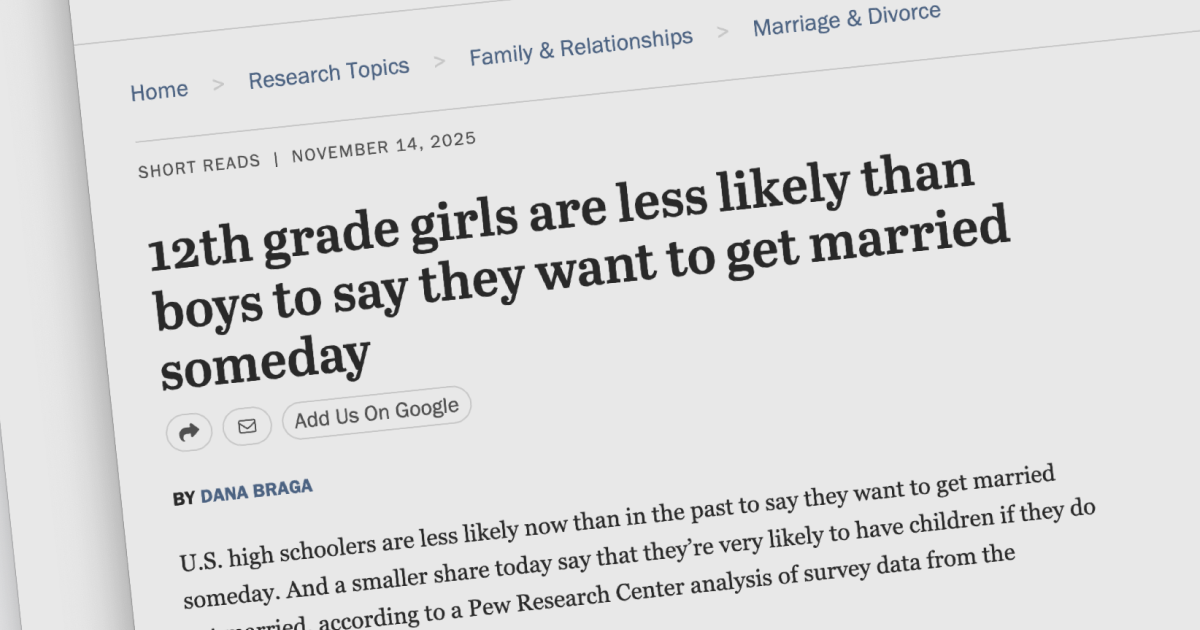
Burnham has the opportunity to help reverse these negative trends by putting forward pro-family policies that incentivise people to get married and have more babies. If we are serious about overcoming economic stagnation and becoming a prosperous nation again, then we must be proactive in prioritising traditional marriage over and above all other forms of relationship.
At the same time, our education system needs a stronger emphasis on the beauty of married life and the adventure of forming a family. Studies show that secular societies are virtually incapable of escaping the downward spiral of demographic decline. The only way for Britain to climb out of its current social and economic predicament is for us once again to place God at the centre of our civic discourse.
3. Treat every life as worth living
In 2025, the UK Parliament approved an amendment to the law that meant women would no longer be prosecuted for killing, or trying to kill, their unborn baby at any point up to birth.
The change in the law was inspired by the case of Carla Foster, who took pills to end the life of her 32-week-old baby. This is an infant who could open and close its eyes, dream, stretch, suck its thumb and easily survive outside the womb. And yet, under the new legislation, a woman like Foster can no longer be prosecuted for murdering her child.
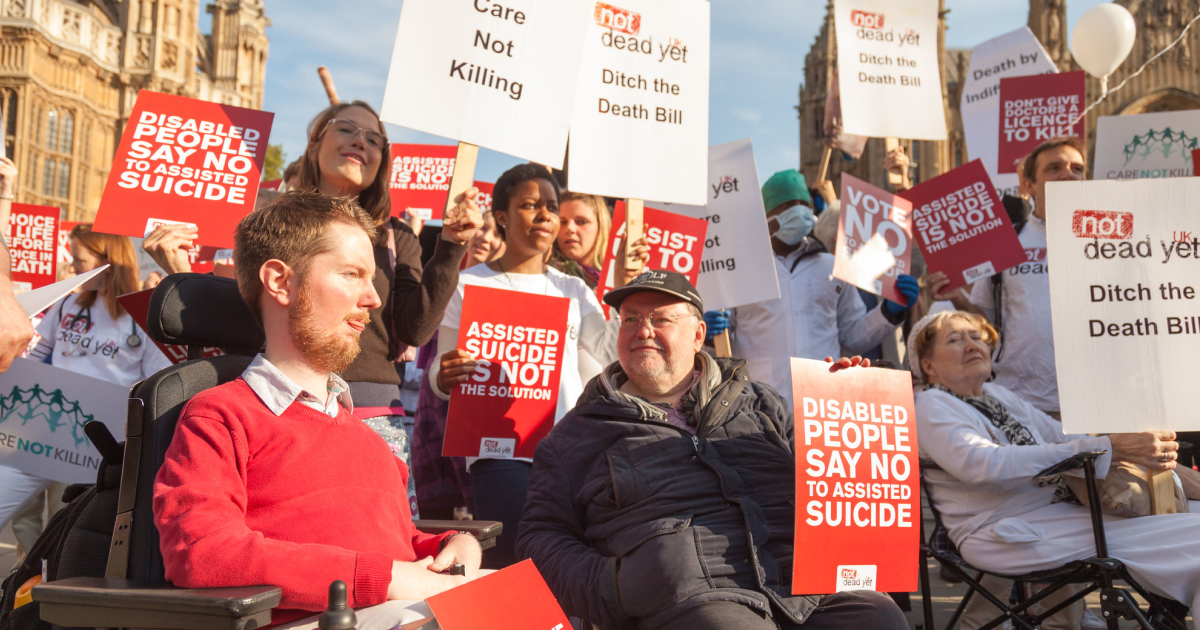
Like every politician, Burnham will eventually stand before the judgement throne that passes sentence on all earthly rulers. On that fateful day, he will be called to give an account of whether he had the courage to speak out against the evil laws that have defiled this nation. While our barbaric abortion legislation provides one example of such laws, the assisted-suicide Bill recently reintroduced to Parliament may soon be another.
If I could offer a word of advice to the Prime Minister, it would be that he begin each workday by reading Matthew 25. In those sobering verses, we receive a powerful reminder of the dignity of the most vulnerable among us, as well as a forceful corrective to the hubris of men.
4. Protect our basic freedoms
In 2024, the UK took the lead in the race to become Europe’s first banana republic when it introduced 150-metre “buffer zones” around every abortion clinic in the country. The legislation led to pro-life campaigners such as Isabel Vaughan-Spruce being prosecuted for literal thought crime after she was arrested for praying silently outside a clinic.
Such blatant totalitarianism should be a source of outrage to patriots everywhere. Indeed, it does not take a religious person to see that abortion is a morally fraught issue that deserves to be debated and discussed. Presumably even a politician like Diane Abbott possesses sufficient intellectual gifts to see that the child in the womb very plausibly might be a human being and, therefore, that abortion very plausibly might be gravely wrong.
This was apparently of no consequence to the Mother of All Parliaments. Instead, in her arrogance, she deemed abortion to be such a clear-cut moral issue that citizens must now be positively banned – under pain of arrest and an unlimited fine – from encouraging their fellow citizens to explore alternatives to having their baby poisoned, dismembered and suctioned through a tube in the sterile confines of a BPAS clinic.
It should greatly concern Burnham that the land of Magna Carta has been reduced to a police state of the sort that would make George Orwell blush. Nor are our neo-pagan abortion laws the only instance of tyrannical overreach. In 2025, the comedian Graham Linehan was arrested at Heathrow Airport after making jokes about transgender people.
Meanwhile, in 2023, well over 12,000 people in England and Wales were arrested for online comments. Figures reveal that this led to more than 1,100 convictions, compared with just 882 similar convictions in Russia, a country with double our population.
The fact that Burnham began his premiership by scrapping plans for a national digital ID is a promising sign. Now he needs to go further by upholding our freedoms across the board and reversing the creeping totalitarianism that has characterised our politics of late.
5. Cut down on petty laws
As the foregoing proposals attest, a properly Catholic approach to politics is neither strictly “big government” nor “small government”. When it comes to upholding the dignity of the person, supporting the family, protecting workers, preserving natural landscapes and promoting right religion, the Catholic finds himself broadly in favour of positive legislation aimed at preserving the common good.
At the same time, the Catholic recognises, with St Thomas Aquinas, that the law is often a clumsy instrument for achieving its desired ends. An overly pedantic or invasive statute does more harm than good, and there are many situations in which custom is a more effective teacher. In these ways, the politically minded Catholic eschews libertarianism and socialism in equal measure.
We have already seen how modern Britain faces critical areas in which new laws are needed to restore justice and ensure economic and moral prosperity. Yet what is equally clear is that there are many other areas in which our teetering polity suffers from a glut of overbearing legislation that worsens the lives of its citizens.
Two areas in which we see this most acutely are our approach to the environment and our roads. Requiring supermarkets to charge a fee for disposable plastic bags is a measure the Catholic constituent can probably get behind. But surely we have gone too far when we find ourselves forced to use straws that disintegrate into our milkshakes, or plastic caps that are more tightly wedded to their bottles than Ed Miliband is to his windmills.
We might also question the way in which all these policies are pursued in the name of a scientifically dubious green agenda fuelled by an ideological fervour bordering on religious hysteria. It is not at all clear how the consistency of our straws will make one scrap of difference to the pace or scale of global climate change.
British motoring has likewise suffered at the hands of the environmental cult, with many cities introducing low-emission zones in which violators can expect to receive a hefty fine. In practice, these measures are a tax on the poor, who are much more likely to own older vehicles that produce higher emissions.
Other examples of out-of-control traffic laws abound. We need only look at the case of the former Archbishop of Canterbury, who in 2023 was fined £510 and received three points on his licence after driving at 25 mph in a 20 mph zone. No doubt the prelate could afford the fine, but such a sum could be crippling for somebody less privileged than he.
I would wager that every motorist in the country can offer an anecdote involving a friend or family member who faced a traffic-related penalty in which the punishment clearly did not fit the crime. If Burnham wishes to make Britain a fairer, happier and richer nation – and earn plenty of political goodwill in the process – then he would be well advised to scale back the small-minded law-making of recent decades.