
August 18, 2026

Florida bishops defend religious freedom in dispute over school vaccine exemptions

Christine Rousselle
More
Related
Min read
share

Florida’s Catholic bishops defended their schools’ existing vaccine exemption policies in a response to the state attorney general’s threats to withhold state funding and scholarships.

“Respectfully, any insinuation that a government official can dictate to the Catholic Church (or any religion) how to apply her tenets and dogma violates well-established constitutional religious freedom rights,” said the letter signed by Michael B Sheedy, the executive director of the Florida Conference of Catholic Bishops (FCCB). The FCCB is a non-partisan public policy organisation representing the views of the state’s Catholic bishops.

The letter was dated August 7, but was not shared publicly by the FCCB until August 17.

Sheedy continued: “It is beyond cavil that the bishops, not the state, decide how to interpret and apply Catholic principles and theology. For this reason, and the undisputed law below, we are prepared to protect our students, defend our rights, and preserve religious freedom.”

The bishops were responding to a July 31 letter from Attorney General James Uthmeier, warning that the schools were violating Florida law by denying exemptions from vaccine requirements due to religious beliefs.

“While we are confident in our position, we remain willing to meet with you or your staff to see if there is a productive and amicable way to resolve our differences,” said Sheedy.

Catholic parents who decline to vaccinate their children due to their consciences “are free to choose a different educational path for their children”, said Sheedy, noting that “Catholic virtual schooling and home schooling are among them”.

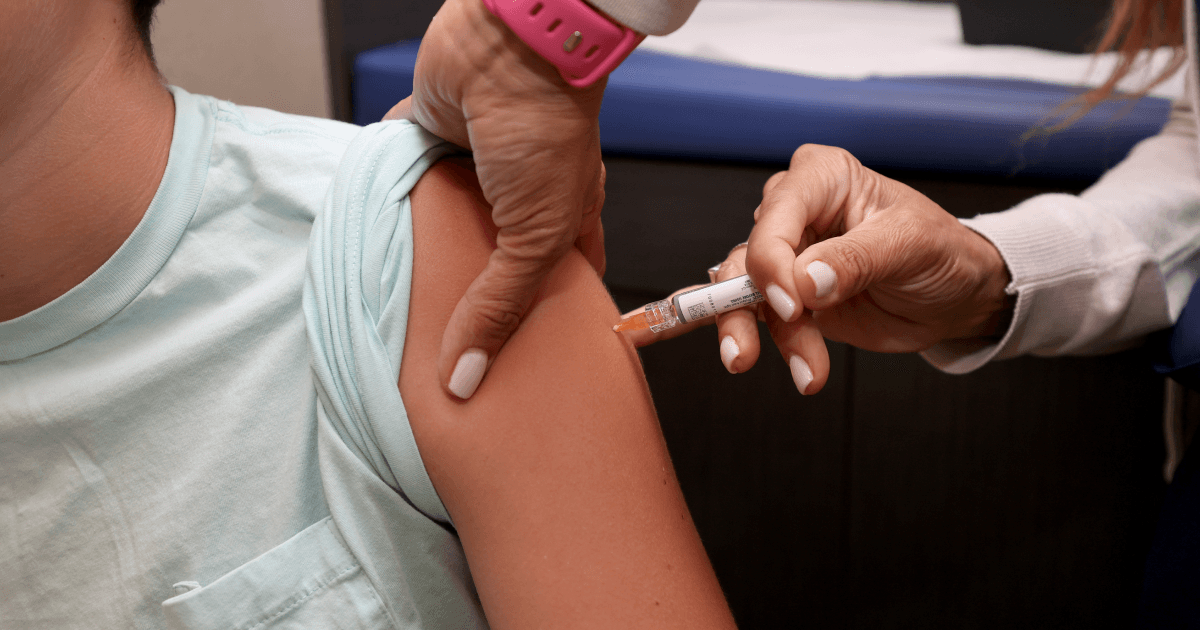
Florida presently requires pupils attending public schools to receive a number of routine vaccinations, including those against polio, pertussis, tetanus, chickenpox, hepatitis B, rubella, measles and mumps. The state does not require annual influenza vaccination or vaccination against Covid-19.

The National Catholic Bioethics Center states that, in the United States, vaccines for rubella, chickenpox and hepatitis A are produced using historic fetal cell lines derived from abortions, and that there are currently no alternative products for those vaccines.

The bishops, said Sheedy, “continue to advocate for alternative vaccines, but until those vaccines are developed, the bishops cannot ignore the safety of children and staff in our Catholic schools”.

“It is worth noting that among the persons placed at risk from a contrary policy include students who are not able to be vaccinated because of an existing medical condition. It is safe to say that Catholic schools might be one of the few safe havens for such children,” he said.

Sheedy further criticised the claims made in Uthmeier’s initial letter, saying that the Church, and the Church alone, gets to decide doctrine.

“The government may not decide that Church teaching is insufficiently religious, insufficiently consistent with Catholic doctrine, or insufficiently compelling to justify an ecclesiastical policy,” he said. “Nor may it require Church leaders to defend their interpretation of Catholic doctrine before civil authorities as a condition of operating religious schools.”

The First Amendment to the United States Constitution, which guarantees religious freedom, “prevents the State from proceeding to the next step and determining for itself what Catholic doctrine actually requires. The church autonomy doctrine exists precisely to prevent civil authorities from adjudicating such disputes,” said Sheedy.

In the July 31 letter, Uthmeier warned that Catholic parochial schools could lose access to various state educational scholarships and funding if they do not comply with Florida law regarding vaccine exemptions. Florida operates one of the largest school choice programmes in the United States, allowing eligible families to use publicly funded scholarships and education savings accounts to attend schools other than their local public school.

This, said Sheedy, is “legally incorrect”.

“The state cannot disqualify Catholic schools from the scholarship programme merely because a state official’s views differ from the bishops’ views. There are several reasons why such a position does not pass muster,” he said.

Sheedy offered to “engage in further discussions” with the attorney general on the topic, noting “sometimes a simple meeting can resolve differences.”

Continue reading with a free account

Create a free account to read up to five articles each month
Create free account

You have # free articles remaining this month.

Subscribe to get unlimited access.
Sign up

subscribe to the catholic herald today

Our best content is exclusively available to our subscribers. Subscribe today and gain instant access to expert analysis, in-depth articles, and thought-provoking insights—anytime, anywhere. Don’t miss out on the conversations that matter most.
Subscribe