February 12, 2026

Scholars ask bishops to back ‘four cardinals’

Staff writers
More
Related
Min read
share

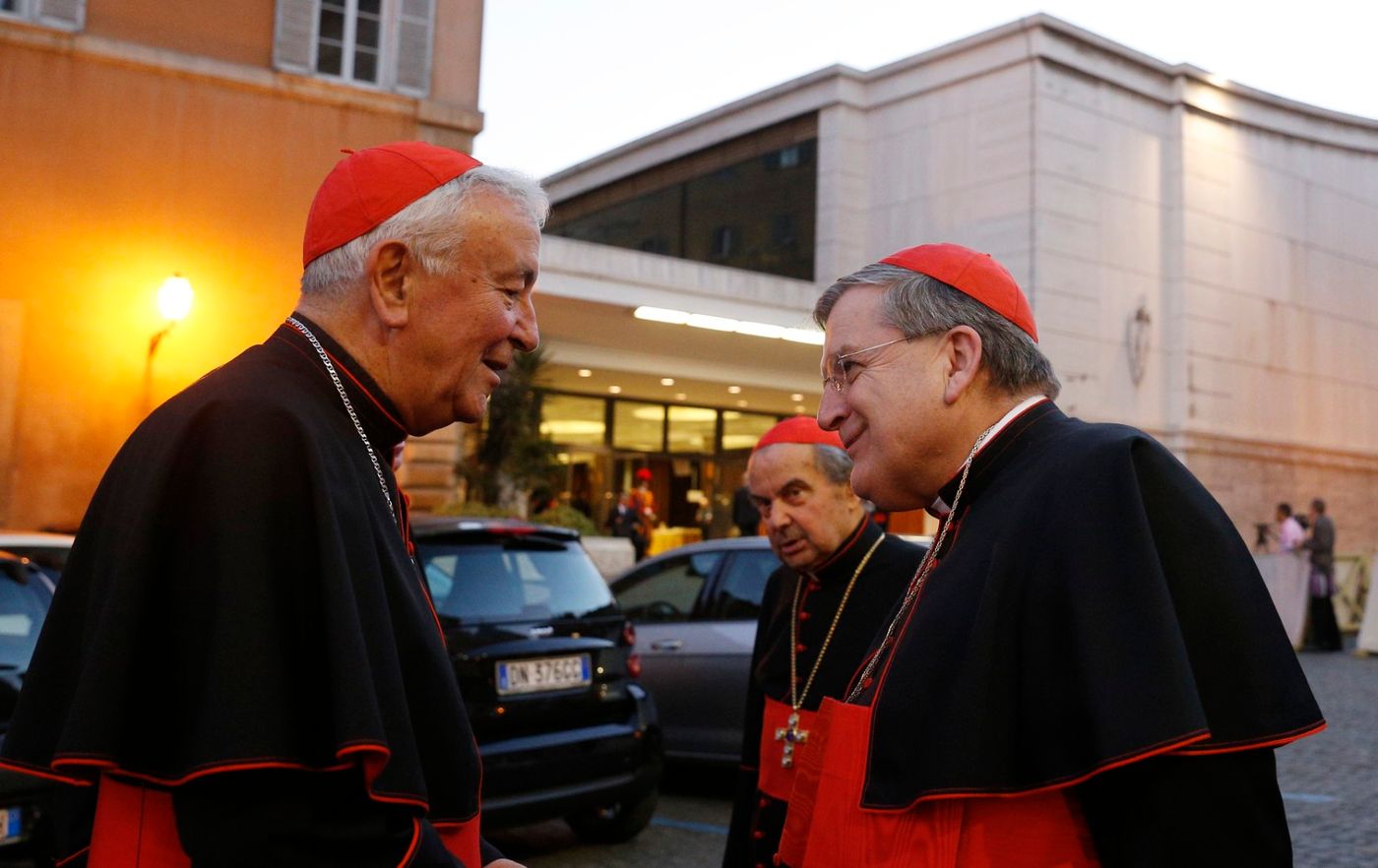
Twenty-three Catholic scholars and pastors, three of them Oxford University academics, have given their names to a statement in support of “the four cardinals”, after the cardinals’ request to Pope Francis to clarify his apostolic exhortation Amoris Laetitia.

The scholars include Dr Robert Beddard, the former vice-provost of Oriel College, Oxford, Professor Luke Gormally, a member of the Pontifical Academy for Life, and Dr Nicholas Richardson, sub-warden of Merton College, Oxford.

Most of the 23 signatories also signed a previous letter to the College of Cardinals, asking them to request clarification of Amoris Laetitia.
The statement says that the four cardinals raise “pertinent and searching questions” about whether Church teaching on the sacraments and the moral law is to be upheld. They say that if the Pope fails to reaffirm Church teaching, it may be necessary for the cardinals to “collectively approach him with some form of fraternal correction, in the spirit of Paul’s admonition to his fellow apostle Peter at Antioch”.

Cardinal Burke, one of the four cardinals, said he believes that that such a move might be necessary.

The Pope has so far declined to reply to the questions, which were sent in September.

The statement notes that Cardinal George Pell has described the contents of the four cardinals’ dubia as “significant”, and that other bishops have publicly supported the cardinals. It expresses the hope that more will join them, since bishops “have a grave and pressing duty to speak out clearly and strongly in confirmation of the moral teachings clearly expounded in the magisterial teachings of previous popes and the Council of Trent”.

In the eight months since Amoris Laetitia was published, some bishops have interpreted the document in line with traditional Church teaching, while others have suggested it changes this teaching, particularly over Communion for the remarried.

The signatories argue that attempts to find a “development of doctrine” have not succeeded: “we find that they fail to demonstrate their central claim that the novel elements found in do not endanger divine law, but merely envisage legitimate changes in pastoral practice and ecclesiastical discipline.”

The scholars’ statement says that the Church may be entering “a gravely critical moment” comparable with the Arian crisis. It says that when Arianism advanced, “the great majority of bishops, including even the Successor of Peter, vacillated over the very divinity of Christ. Many did not fully lapse into heresy; however, disarmed by confusion or weakened by timidity, they sought convenient compromise formulae in the interests of ‘peace’ and ‘unity’. Today we are witnessing a similar metastasising crisis, this time over fundamental aspects of Christian living.”

The statement says that “lip service” is still given to such teachings as “the indissolubility of marriage, the grave objective sinfulness of fornication, adultery and sodomy, the sanctity of the Holy Eucharist, and the terrible reality of mortal sin”. But it argues that many senior figures undermine such doctrine by an “exaggerated or one-sided emphasis on ‘mercy’, ‘pastoral accompaniment’, and ‘mitigating circumstances’ ”.

Other figures who have signed the statement include Fr John Hunwicke, an ordinariate priest, Dr Thomas Stark, and Dr Joseph Shaw, chairman of the Latin Mass Society.


Friars’ new mission: an internet radio station

A small community of Marian Franciscans in Gosport, Hampshire, is setting up an internet radio station.

With the tagline “Bringing forth Christ through Mary”, Radio Immaculata launched last week on the feast of the Immaculate Conception.

The radio station, which is non-profit and non-commercial, will broadcast a mixture of live programmes and audio on-demand, from music to talk shows, from interviews and stories to meditations and prayers. The station is at radioimmaculata.org.

The programming schedule is structured around the holy rosary, which will be prayed on air four times a day. There will also be narrations of the lives of the saints, roundtable discussions on faith and culture, catechetical programmes and live talk shows, so listeners can call in and speak with the friars live on air.

As well as the scheduled programmes, the station has an archive including recordings of renowned Catholic speakers such as Archbishop Fulton Sheen and Fr Hugh Thwaites.

“We are very keen on using the mass media for evangelisation,” said Fr Serafino Lanzetta, the superior of the community, which is currently nine-strong. Three or four friars “with technical knowledge” are running the project, with three priests helping with the programmes.

“It will take a lot of time,” said Fr Lanzetta. “It is very demanding.”

The Marian Franciscans have been in Gosport for about two years. “Bishop Egan invited us to the parish and encouraged us, and is supporting us in this project,” Fr Lanzetta said.

The Marian Franciscans – more formally the Franciscan Friars of the Immaculate – were founded in 1970, and were established as an Institute of Religious Life with Pontifical Right by Pope John Paul II in 1998.


Lottery windfall for Depaul

A Catholic youth homelessness charity has won a major grant from the Big Lottery Fund.

Depaul UK, which is inspired by St Vincent de Paul, will receive almost £400,000 from the Big Lottery’s Reaching Communities Programme.

The grant will fund the charity’s Get Up and Go project, which helps young people re-engage with education and find employment, and its new strand Get Volunteering, which encourages young people affected by homelessness to try volunteering.

Twenty-three Catholic scholars and pastors, three of them Oxford University academics, have given their names to a statement in support of “the four cardinals”, after the cardinals’ request to Pope Francis to clarify his apostolic exhortation Amoris Laetitia.

The scholars include Dr Robert Beddard, the former vice-provost of Oriel College, Oxford, Professor Luke Gormally, a member of the Pontifical Academy for Life, and Dr Nicholas Richardson, sub-warden of Merton College, Oxford.

Most of the 23 signatories also signed a previous letter to the College of Cardinals, asking them to request clarification of Amoris Laetitia.
The statement says that the four cardinals raise “pertinent and searching questions” about whether Church teaching on the sacraments and the moral law is to be upheld. They say that if the Pope fails to reaffirm Church teaching, it may be necessary for the cardinals to “collectively approach him with some form of fraternal correction, in the spirit of Paul’s admonition to his fellow apostle Peter at Antioch”.

Cardinal Burke, one of the four cardinals, said he believes that that such a move might be necessary.

The Pope has so far declined to reply to the questions, which were sent in September.

The statement notes that Cardinal George Pell has described the contents of the four cardinals’ dubia as “significant”, and that other bishops have publicly supported the cardinals. It expresses the hope that more will join them, since bishops “have a grave and pressing duty to speak out clearly and strongly in confirmation of the moral teachings clearly expounded in the magisterial teachings of previous popes and the Council of Trent”.

In the eight months since Amoris Laetitia was published, some bishops have interpreted the document in line with traditional Church teaching, while others have suggested it changes this teaching, particularly over Communion for the remarried.

The signatories argue that attempts to find a “development of doctrine” have not succeeded: “we find that they fail to demonstrate their central claim that the novel elements found in do not endanger divine law, but merely envisage legitimate changes in pastoral practice and ecclesiastical discipline.”

The scholars’ statement says that the Church may be entering “a gravely critical moment” comparable with the Arian crisis. It says that when Arianism advanced, “the great majority of bishops, including even the Successor of Peter, vacillated over the very divinity of Christ. Many did not fully lapse into heresy; however, disarmed by confusion or weakened by timidity, they sought convenient compromise formulae in the interests of ‘peace’ and ‘unity’. Today we are witnessing a similar metastasising crisis, this time over fundamental aspects of Christian living.”

The statement says that “lip service” is still given to such teachings as “the indissolubility of marriage, the grave objective sinfulness of fornication, adultery and sodomy, the sanctity of the Holy Eucharist, and the terrible reality of mortal sin”. But it argues that many senior figures undermine such doctrine by an “exaggerated or one-sided emphasis on ‘mercy’, ‘pastoral accompaniment’, and ‘mitigating circumstances’ ”.

Other figures who have signed the statement include Fr John Hunwicke, an ordinariate priest, Dr Thomas Stark, and Dr Joseph Shaw, chairman of the Latin Mass Society.


Friars’ new mission: an internet radio station

A small community of Marian Franciscans in Gosport, Hampshire, is setting up an internet radio station.

With the tagline “Bringing forth Christ through Mary”, Radio Immaculata launched last week on the feast of the Immaculate Conception.

The radio station, which is non-profit and non-commercial, will broadcast a mixture of live programmes and audio on-demand, from music to talk shows, from interviews and stories to meditations and prayers. The station is at radioimmaculata.org.

The programming schedule is structured around the holy rosary, which will be prayed on air four times a day. There will also be narrations of the lives of the saints, roundtable discussions on faith and culture, catechetical programmes and live talk shows, so listeners can call in and speak with the friars live on air.

As well as the scheduled programmes, the station has an archive including recordings of renowned Catholic speakers such as Archbishop Fulton Sheen and Fr Hugh Thwaites.

“We are very keen on using the mass media for evangelisation,” said Fr Serafino Lanzetta, the superior of the community, which is currently nine-strong. Three or four friars “with technical knowledge” are running the project, with three priests helping with the programmes.

“It will take a lot of time,” said Fr Lanzetta. “It is very demanding.”

The Marian Franciscans have been in Gosport for about two years. “Bishop Egan invited us to the parish and encouraged us, and is supporting us in this project,” Fr Lanzetta said.

The Marian Franciscans – more formally the Franciscan Friars of the Immaculate – were founded in 1970, and were established as an Institute of Religious Life with Pontifical Right by Pope John Paul II in 1998.


Lottery windfall for Depaul

A Catholic youth homelessness charity has won a major grant from the Big Lottery Fund.

Depaul UK, which is inspired by St Vincent de Paul, will receive almost £400,000 from the Big Lottery’s Reaching Communities Programme.

The grant will fund the charity’s Get Up and Go project, which helps young people re-engage with education and find employment, and its new strand Get Volunteering, which encourages young people affected by homelessness to try volunteering.

subscribe to
the catholic herald

Continue reading your article with a subscription.
Read 5 articles with our free plan.
Subscribe

subscribe to the catholic herald today

Our best content is exclusively available to our subscribers. Subscribe today and gain instant access to expert analysis, in-depth articles, and thought-provoking insights—anytime, anywhere. Don’t miss out on the conversations that matter most.
Subscribe