February 24, 2026

From Anglican priesthood to Catholic communion

Robin Ward
More
Related
Min read
share

‘Signo te signo crucis, et confirmo te chrismate salutis’ – nine words, and it was done: the seal of the Holy Spirit, given to me in the sacrament of Confirmation to strengthen me for the journey ahead; and the seal too on a journey concluding, one which began some forty years ago, and which has encompassed thirty-five years of ministry in the Church of England and nearly two decades of teaching in Oxford.

I was brought up in the habits of a Low-Church Anglicanism that hardly exists now: the last generation to know the Book of Common Prayer as the normal liturgy of the English parish church. It was liturgical without ceremonial, sacramental but Protestant, with earnest and lengthy preaching. Bible reading and a daily examination of conscience were at the heart of personal piety. I am still very grateful for it.
It was not until I arrived at Oxford to read medieval English at Magdalen College (C. S. Lewis’s subject and home, although he was not remembered fondly there after That Hideous Strength) that I discovered the rarified and recondite world of Anglo-Catholicism. To those outside it, especially perhaps to Catholics, this surviving fusion of 19th-century theology and romantic ritualism cannot but appear eccentric and marginal, but in the mid-1980s it still had the power to captivate and inspire me.

After Magdalen I trained for the priesthood at St Stephen’s House, Oxford, the most ‘extreme’ of the Church of England’s colleges, and went on to serve for fifteen years as a parish priest. During this time I worked in Romford, Willesden Green and Sevenoaks; completed a PhD in patristics; served for five years on the General Synod of the Church of England; and was made canon theologian of the diocese of Rochester by Bishop Michael Nazir-Ali, now himself a Catholic priest. It was a happy and fulfilling time.

I then returned to Oxford and St Stephen’s House for nineteen years as Principal. During my time there, I taught several generations of ordinands patristic, moral, sacramental and liturgical theology, and also contended for what I understood to be catholic faith and order in the Church of England, as a variety of developments seemed to occlude what I held most dear. These were busy years: movements by definition have to keep moving, and to be part of the Catholic Movement in the Church of England during these years was to be caught up in a whirligig of struggles over marriage discipline, women’s ordination and the seal of confession. But there was also much encouragement: the pontificate of Pope Benedict XVI, with his attention to the liturgy, to patristics and to the thought of John Henry Newman, seemed to be a vindication of much of what Catholics in the Church of England had claimed to value.

Despite all the contentious presenting issues, intractable as they were, the fundamental question posed by the Oxford Movement remained: how can we know ‘the church of the living God, the pillar and ground of the truth’? To run a seminary is at its most simple to propose three questions to those who come: ‘Who is Jesus Christ? What is a priest? What is the Church?’ As time passed I found that the answer I was able to give to the last question was less and less satisfactory, and that this was becoming more apparent not only to me but to my students, past and present. I was also struck by the energy and charity of Catholic life in Oxford: the Dominicans at Blackfriars, the Jesuits at Campion Hall and the Oratorians at St Aloysius’.

And of course behind all this was the constant presence of John Henry Newman. In the 1980s, Newman was ‘at the end of the beginning’ of his rediscovery, someone to whom justice had not been paid. I recall the indefatigable energy of Fr Ian Ker, who almost single-handedly preserved Newman’s legacy at the time. Forty years on, Newman is, as the Jesuit theologian Erich Przywara rightly discerned, the saint and Doctor of our age, as Augustine was for antiquity and Aquinas for the Middle Ages. As we have learned to understand him better, so I have learned to see, through his distinctive charism, so close to the Oxford I have known and loved for so long, the way into the One Fold of the Redeemer. I took John Henry as my confirmation name.

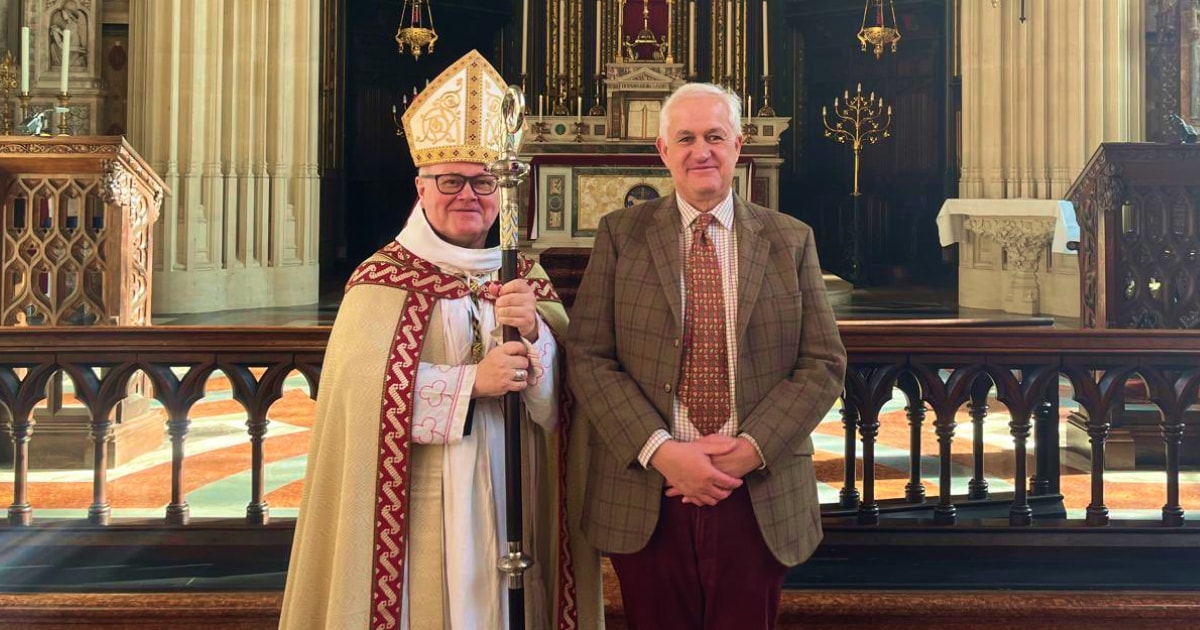
By the spring of 2025 I felt that the time had come for me to finish as Principal of St Stephen’s House and weigh up what my future should be. We moved to Cornwall, and although I continued to attend an Anglican parish – one which in fact I had known well for twenty years, as my mother lives in Truro – I no longer officiated as an Anglican priest. An Anglican bishop whom I met sitting outside a pub in the summer said to me: ‘This is your Littlemore time.’ I rather bristled, but he was quite right. So at the beginning of this year, everything came together rather suddenly: the conviction that I needed to be received into the Catholic Church led me to make contact with the Abbot of Farnborough, whom I had known from Oxford, and he and his community were most welcoming in arranging for my reception. I am very grateful to them.

For the future, I now need to learn how to live within the household, and to trust in God’s providence for the work and vocation he intends for me: ‘One step enough for me.’ I have been tremendously encouraged by the kindness of so many, not least those who for many years have been praying for me, and I rejoice without regret or hesitation to find myself in this place. Everything is very new; but I do feel a palpable sense of communion – substantive ecclesial communion – with the chief pastor of the Church and with him over a billion fellow Catholic Christians.

‘Signo te signo crucis, et confirmo te chrismate salutis’ – nine words, and it was done: the seal of the Holy Spirit, given to me in the sacrament of Confirmation to strengthen me for the journey ahead; and the seal too on a journey concluding, one which began some forty years ago, and which has encompassed thirty-five years of ministry in the Church of England and nearly two decades of teaching in Oxford.

I was brought up in the habits of a Low-Church Anglicanism that hardly exists now: the last generation to know the Book of Common Prayer as the normal liturgy of the English parish church. It was liturgical without ceremonial, sacramental but Protestant, with earnest and lengthy preaching. Bible reading and a daily examination of conscience were at the heart of personal piety. I am still very grateful for it.
It was not until I arrived at Oxford to read medieval English at Magdalen College (C. S. Lewis’s subject and home, although he was not remembered fondly there after That Hideous Strength) that I discovered the rarified and recondite world of Anglo-Catholicism. To those outside it, especially perhaps to Catholics, this surviving fusion of 19th-century theology and romantic ritualism cannot but appear eccentric and marginal, but in the mid-1980s it still had the power to captivate and inspire me.

After Magdalen I trained for the priesthood at St Stephen’s House, Oxford, the most ‘extreme’ of the Church of England’s colleges, and went on to serve for fifteen years as a parish priest. During this time I worked in Romford, Willesden Green and Sevenoaks; completed a PhD in patristics; served for five years on the General Synod of the Church of England; and was made canon theologian of the diocese of Rochester by Bishop Michael Nazir-Ali, now himself a Catholic priest. It was a happy and fulfilling time.

I then returned to Oxford and St Stephen’s House for nineteen years as Principal. During my time there, I taught several generations of ordinands patristic, moral, sacramental and liturgical theology, and also contended for what I understood to be catholic faith and order in the Church of England, as a variety of developments seemed to occlude what I held most dear. These were busy years: movements by definition have to keep moving, and to be part of the Catholic Movement in the Church of England during these years was to be caught up in a whirligig of struggles over marriage discipline, women’s ordination and the seal of confession. But there was also much encouragement: the pontificate of Pope Benedict XVI, with his attention to the liturgy, to patristics and to the thought of John Henry Newman, seemed to be a vindication of much of what Catholics in the Church of England had claimed to value.

Despite all the contentious presenting issues, intractable as they were, the fundamental question posed by the Oxford Movement remained: how can we know ‘the church of the living God, the pillar and ground of the truth’? To run a seminary is at its most simple to propose three questions to those who come: ‘Who is Jesus Christ? What is a priest? What is the Church?’ As time passed I found that the answer I was able to give to the last question was less and less satisfactory, and that this was becoming more apparent not only to me but to my students, past and present. I was also struck by the energy and charity of Catholic life in Oxford: the Dominicans at Blackfriars, the Jesuits at Campion Hall and the Oratorians at St Aloysius’.

And of course behind all this was the constant presence of John Henry Newman. In the 1980s, Newman was ‘at the end of the beginning’ of his rediscovery, someone to whom justice had not been paid. I recall the indefatigable energy of Fr Ian Ker, who almost single-handedly preserved Newman’s legacy at the time. Forty years on, Newman is, as the Jesuit theologian Erich Przywara rightly discerned, the saint and Doctor of our age, as Augustine was for antiquity and Aquinas for the Middle Ages. As we have learned to understand him better, so I have learned to see, through his distinctive charism, so close to the Oxford I have known and loved for so long, the way into the One Fold of the Redeemer. I took John Henry as my confirmation name.

By the spring of 2025 I felt that the time had come for me to finish as Principal of St Stephen’s House and weigh up what my future should be. We moved to Cornwall, and although I continued to attend an Anglican parish – one which in fact I had known well for twenty years, as my mother lives in Truro – I no longer officiated as an Anglican priest. An Anglican bishop whom I met sitting outside a pub in the summer said to me: ‘This is your Littlemore time.’ I rather bristled, but he was quite right. So at the beginning of this year, everything came together rather suddenly: the conviction that I needed to be received into the Catholic Church led me to make contact with the Abbot of Farnborough, whom I had known from Oxford, and he and his community were most welcoming in arranging for my reception. I am very grateful to them.

For the future, I now need to learn how to live within the household, and to trust in God’s providence for the work and vocation he intends for me: ‘One step enough for me.’ I have been tremendously encouraged by the kindness of so many, not least those who for many years have been praying for me, and I rejoice without regret or hesitation to find myself in this place. Everything is very new; but I do feel a palpable sense of communion – substantive ecclesial communion – with the chief pastor of the Church and with him over a billion fellow Catholic Christians.

subscribe to
the catholic herald

Continue reading your article with a subscription.
Read 5 articles with our free plan.
Subscribe

subscribe to the catholic herald today

Our best content is exclusively available to our subscribers. Subscribe today and gain instant access to expert analysis, in-depth articles, and thought-provoking insights—anytime, anywhere. Don’t miss out on the conversations that matter most.
Subscribe