

February 20, 2026

Back to 1988? SSPX confirms July consecrations

Niwa Limbu
More
Related
Min read
share

The Society of St Pius X has published a communiqué and the full text of a letter from its Superior General rejecting a proposal from the Holy See for renewed doctrinal talks under the proposed conditions and declining to suspend episcopal consecrations scheduled for July 1.

In a statement released today, the Society confirmed that a meeting took place on February 12 between Fr Pagliarani and Cardinal Víctor Manuel Fernández, Prefect of the Dicastery for the Doctrine of the Faith. The meeting followed the announcement that the Society intends to proceed with future episcopal consecrations.
According to the communiqué, Cardinal Fernández proposed “a path of specifically theological dialogue, according to a very precise methodology, […] to highlight the minimum requirements for full communion with the Catholic Church”. The proposal was made on the condition that the announced episcopal consecrations be suspended.

The Society stated that, at the request of the Prefect, Fr Pagliarani presented the proposal to the members of his General Council and took the necessary time to evaluate it. On February 18, he sent a written response to Cardinal Fernández, accompanied by several annexes and signed by the five members of the General Council.

The communiqué explains that, since the Holy See made public the fact of the meeting in a statement issued on February 12, the Society considers it appropriate also to publish the content of Fr Pagliarani’s letter and its annexes “in order to allow interested faithful to know precisely the response delivered”.

The Society added that the Superior General “entrusts this situation to the prayers of the members of the Society and all the faithful”, asking that the rosary and the sacrifices of Lent be offered “especially for the Holy Father, for the good of the Holy Church, and to prepare souls worthily for the ceremony of July 1”.

Fr Pagliarani’s letter, dated Ash Wednesday and addressed to Cardinal Fernández, begins by thanking him for receiving him on February 12 and for making the content of the meeting public, which he said “promotes perfect transparency in communication”.

He states that he welcomes “the openness to a doctrinal discussion, manifested today by the Holy See”, noting that he himself had proposed such a discussion seven years earlier in a letter dated January 17, 2019. At that time, he writes, the Dicastery had not expressed interest in such talks, on the grounds, stated orally, that “a doctrinal agreement between the Holy See and the Society of St Pius X was impossible”.

“For the Fraternity, doctrinal discussion was – and still remains – desirable and useful,” he writes, adding that even if agreement cannot be reached, “fraternal exchanges foster mutual understanding, allow us to refine and deepen our arguments, and better understand the spirit and intentions that inspire the interlocutor’s positions”.

He explains that his intention in 2019 had been to suggest a discussion “in a calm and peaceful moment, without the pressure or threat of possible excommunication that would have made the dialogue somewhat less free – something that, unfortunately, is happening today”.

Despite expressing satisfaction at what he describes as renewed openness to dialogue, Fr Pagliarani writes that he cannot “out of intellectual honesty and priestly fidelity before God and souls, accept the perspective and goals for which the Dicastery proposes a resumption of dialogue at this juncture; nor, at the same time, the postponement of the July 1 date”.

He says that both parties “know in advance that we cannot agree on doctrinal matters, particularly regarding the fundamental orientations adopted after the Second Vatican Council”. He describes the Society’s disagreement as stemming not from “a simple difference of opinion, but from a genuine issue of conscience, provoked by what appears to be a rupture with the Tradition of the Church”.

Referring to the proposal to identify “the minimum necessary for full communion with the Catholic Church”, Fr Pagliarani writes that he does not see how a common dialogue could lead to such a joint determination, since, as he says Cardinal Fernández recalled, “the texts of the Council cannot be corrected, nor the legitimacy of the liturgical reform called into question”.

He states that the interpretation of the Council is already provided in post-conciliar and subsequent documents of the Holy See and that the Council “has been received, developed, and applied over the course of sixty years by successive popes, according to precise doctrinal and pastoral guidelines”.

In this context, he cites documents including Redemptor hominis, Ut unum sint, Evangelii gaudium and Amoris laetitia, as well as the liturgical reform understood in light of Traditionis custodes, as expressions of what he calls the official reading within which the Holy See intends to place discussion.

He also refers to what he describes as the circumstances surrounding the renewed proposal. He notes that seven years passed after his 2019 proposal without a favourable reception and that more recently the Society wrote twice to the Holy Father, first to request an audience and then to explain its needs and situation.

He writes that it was only “when episcopal consecrations are mentioned” that the resumption of dialogue was proposed, which he describes as appearing “dilatory and conditional”, and “unfortunately accompanied by another hand ready to impose sanctions”. In the letter he refers to public references to a possible rupture of communion, to schism and to “grave consequences”, adding that such language creates pressure that is difficult to reconcile with what he describes as a genuinely free and constructive exchange.

Fr Pagliarani goes on to state that the Society does not consider it possible to enter into a dialogue aimed at defining the minimum requirements for ecclesial communion, arguing that such a task does not belong to the Society. Over the centuries, he writes, the criteria for belonging to the Church have been established and defined by the Magisterium. What must be believed in order to be Catholic has always been taught authoritatively in fidelity to Tradition.

Consequently, he says, it is not clear how these criteria could become the object of common discernment through dialogue, nor how they could be re-evaluated in a way that no longer corresponds to what the Tradition of the Church has always taught and which, he adds, the Society seeks to observe faithfully in its own place.

He states that the process concluded with what he describes as a unilateral decision by the then Prefect of the Congregation for the Doctrine of the Faith, Cardinal Gerhard Müller, who in June 2017 set out what he called “the minimum necessary for full communion with the Catholic Church”, explicitly including acceptance of the entire Council and the post-conciliar period.

Fr Pagliarani argues that if doctrinal dialogue is pursued in a manner that is too forced and without sufficient serenity, it risks worsening the situation rather than bringing about a satisfactory result.

“For these reasons,” he writes, “in the shared awareness that we cannot find agreement on doctrine, it seems to me that the only point on which we can meet is that of charity towards souls and towards the Church.”

Prior to the announcement of episcopal consecretions, the situation was similar to 1987, but now we are, unmistakably, back to 1988. Over the past two weeks the atmosphere has shifted from engagement to operation survival. The Society of St Pius X has rejected Rome’s current conditions for renewed doctrinal dialogue while confirming that episcopal consecrations will proceed.

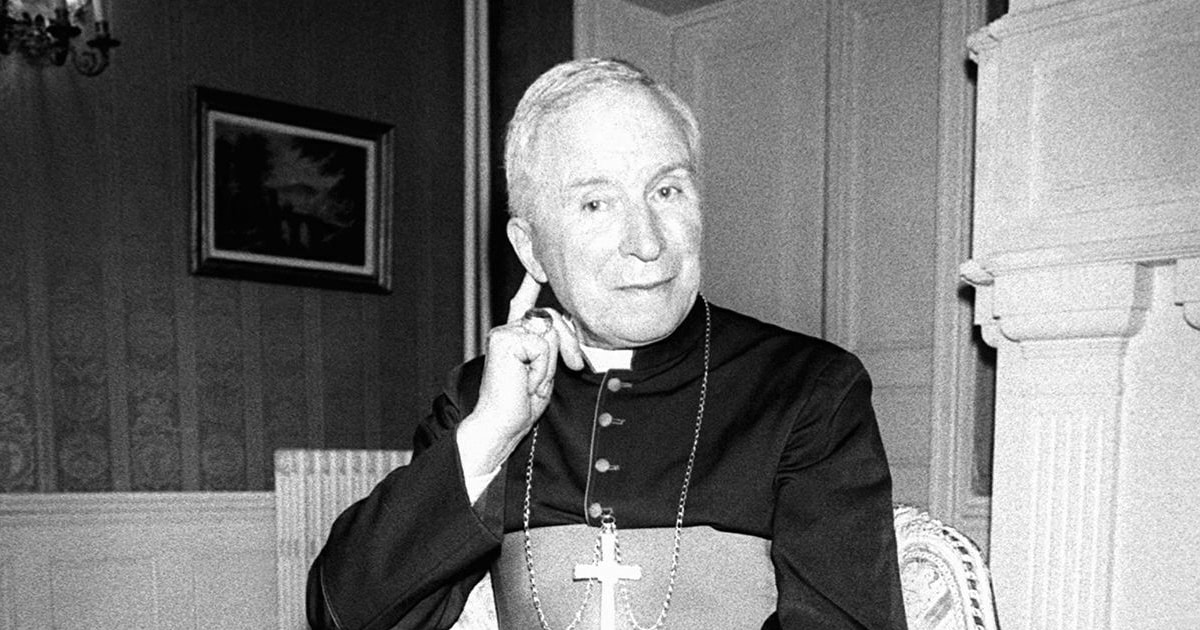
It was obvious to anyone who understands the history of the Society that it would not blink. Since the days of Archbishop Marcel Lefebvre, the Society of St Pius X has negotiated from a position of conviction or ideology rather than concession, whether that be judged good or bad.

The Society has always maintained that episcopal succession is not a bargaining chip but a necessity for its survival. Whether one accepts that judgement or not, it is the Society’s view. Under this logic, negotiations may continue, but the consecrations will not be used as leverage, as the Dicastery attempted to do.

Now, as the Society once again controls possession after the Dicastery’s communiqué presented on February 12, the real question is whether Rome is prepared to negotiate under conditions it does not control. By declining the proposal while keeping the door open to dialogue, the Society signals that talks may proceed, but only on terms that do not pre-empt its ecclesial position.

In 1988 Rome initially appeared firm before accelerating efforts to reach agreement and agreeing to a bishop, understanding that delay risked irreversible fracture. The same dynamic now seems plausible. The fact that the Dicastery’s communiqué on February 12 was pre-written and swiftly publicised suggests that neither side wishes to negotiate in obscurity. The coming weeks will determine whether this becomes another 1988 or, unlike 1988, a negotiated settlement under duress.

The Society of St Pius X has published a communiqué and the full text of a letter from its Superior General rejecting a proposal from the Holy See for renewed doctrinal talks under the proposed conditions and declining to suspend episcopal consecrations scheduled for July 1.

In a statement released today, the Society confirmed that a meeting took place on February 12 between Fr Pagliarani and Cardinal Víctor Manuel Fernández, Prefect of the Dicastery for the Doctrine of the Faith. The meeting followed the announcement that the Society intends to proceed with future episcopal consecrations.
According to the communiqué, Cardinal Fernández proposed “a path of specifically theological dialogue, according to a very precise methodology, […] to highlight the minimum requirements for full communion with the Catholic Church”. The proposal was made on the condition that the announced episcopal consecrations be suspended.

The Society stated that, at the request of the Prefect, Fr Pagliarani presented the proposal to the members of his General Council and took the necessary time to evaluate it. On February 18, he sent a written response to Cardinal Fernández, accompanied by several annexes and signed by the five members of the General Council.

The communiqué explains that, since the Holy See made public the fact of the meeting in a statement issued on February 12, the Society considers it appropriate also to publish the content of Fr Pagliarani’s letter and its annexes “in order to allow interested faithful to know precisely the response delivered”.

The Society added that the Superior General “entrusts this situation to the prayers of the members of the Society and all the faithful”, asking that the rosary and the sacrifices of Lent be offered “especially for the Holy Father, for the good of the Holy Church, and to prepare souls worthily for the ceremony of July 1”.

Fr Pagliarani’s letter, dated Ash Wednesday and addressed to Cardinal Fernández, begins by thanking him for receiving him on February 12 and for making the content of the meeting public, which he said “promotes perfect transparency in communication”.

He states that he welcomes “the openness to a doctrinal discussion, manifested today by the Holy See”, noting that he himself had proposed such a discussion seven years earlier in a letter dated January 17, 2019. At that time, he writes, the Dicastery had not expressed interest in such talks, on the grounds, stated orally, that “a doctrinal agreement between the Holy See and the Society of St Pius X was impossible”.

“For the Fraternity, doctrinal discussion was – and still remains – desirable and useful,” he writes, adding that even if agreement cannot be reached, “fraternal exchanges foster mutual understanding, allow us to refine and deepen our arguments, and better understand the spirit and intentions that inspire the interlocutor’s positions”.

He explains that his intention in 2019 had been to suggest a discussion “in a calm and peaceful moment, without the pressure or threat of possible excommunication that would have made the dialogue somewhat less free – something that, unfortunately, is happening today”.

Despite expressing satisfaction at what he describes as renewed openness to dialogue, Fr Pagliarani writes that he cannot “out of intellectual honesty and priestly fidelity before God and souls, accept the perspective and goals for which the Dicastery proposes a resumption of dialogue at this juncture; nor, at the same time, the postponement of the July 1 date”.

He says that both parties “know in advance that we cannot agree on doctrinal matters, particularly regarding the fundamental orientations adopted after the Second Vatican Council”. He describes the Society’s disagreement as stemming not from “a simple difference of opinion, but from a genuine issue of conscience, provoked by what appears to be a rupture with the Tradition of the Church”.

Referring to the proposal to identify “the minimum necessary for full communion with the Catholic Church”, Fr Pagliarani writes that he does not see how a common dialogue could lead to such a joint determination, since, as he says Cardinal Fernández recalled, “the texts of the Council cannot be corrected, nor the legitimacy of the liturgical reform called into question”.

He states that the interpretation of the Council is already provided in post-conciliar and subsequent documents of the Holy See and that the Council “has been received, developed, and applied over the course of sixty years by successive popes, according to precise doctrinal and pastoral guidelines”.

In this context, he cites documents including Redemptor hominis, Ut unum sint, Evangelii gaudium and Amoris laetitia, as well as the liturgical reform understood in light of Traditionis custodes, as expressions of what he calls the official reading within which the Holy See intends to place discussion.

He also refers to what he describes as the circumstances surrounding the renewed proposal. He notes that seven years passed after his 2019 proposal without a favourable reception and that more recently the Society wrote twice to the Holy Father, first to request an audience and then to explain its needs and situation.

He writes that it was only “when episcopal consecrations are mentioned” that the resumption of dialogue was proposed, which he describes as appearing “dilatory and conditional”, and “unfortunately accompanied by another hand ready to impose sanctions”. In the letter he refers to public references to a possible rupture of communion, to schism and to “grave consequences”, adding that such language creates pressure that is difficult to reconcile with what he describes as a genuinely free and constructive exchange.

Fr Pagliarani goes on to state that the Society does not consider it possible to enter into a dialogue aimed at defining the minimum requirements for ecclesial communion, arguing that such a task does not belong to the Society. Over the centuries, he writes, the criteria for belonging to the Church have been established and defined by the Magisterium. What must be believed in order to be Catholic has always been taught authoritatively in fidelity to Tradition.

Consequently, he says, it is not clear how these criteria could become the object of common discernment through dialogue, nor how they could be re-evaluated in a way that no longer corresponds to what the Tradition of the Church has always taught and which, he adds, the Society seeks to observe faithfully in its own place.

He states that the process concluded with what he describes as a unilateral decision by the then Prefect of the Congregation for the Doctrine of the Faith, Cardinal Gerhard Müller, who in June 2017 set out what he called “the minimum necessary for full communion with the Catholic Church”, explicitly including acceptance of the entire Council and the post-conciliar period.

Fr Pagliarani argues that if doctrinal dialogue is pursued in a manner that is too forced and without sufficient serenity, it risks worsening the situation rather than bringing about a satisfactory result.

“For these reasons,” he writes, “in the shared awareness that we cannot find agreement on doctrine, it seems to me that the only point on which we can meet is that of charity towards souls and towards the Church.”

Prior to the announcement of episcopal consecretions, the situation was similar to 1987, but now we are, unmistakably, back to 1988. Over the past two weeks the atmosphere has shifted from engagement to operation survival. The Society of St Pius X has rejected Rome’s current conditions for renewed doctrinal dialogue while confirming that episcopal consecrations will proceed.

It was obvious to anyone who understands the history of the Society that it would not blink. Since the days of Archbishop Marcel Lefebvre, the Society of St Pius X has negotiated from a position of conviction or ideology rather than concession, whether that be judged good or bad.

The Society has always maintained that episcopal succession is not a bargaining chip but a necessity for its survival. Whether one accepts that judgement or not, it is the Society’s view. Under this logic, negotiations may continue, but the consecrations will not be used as leverage, as the Dicastery attempted to do.

Now, as the Society once again controls possession after the Dicastery’s communiqué presented on February 12, the real question is whether Rome is prepared to negotiate under conditions it does not control. By declining the proposal while keeping the door open to dialogue, the Society signals that talks may proceed, but only on terms that do not pre-empt its ecclesial position.

In 1988 Rome initially appeared firm before accelerating efforts to reach agreement and agreeing to a bishop, understanding that delay risked irreversible fracture. The same dynamic now seems plausible. The fact that the Dicastery’s communiqué on February 12 was pre-written and swiftly publicised suggests that neither side wishes to negotiate in obscurity. The coming weeks will determine whether this becomes another 1988 or, unlike 1988, a negotiated settlement under duress.

subscribe to
the catholic herald

Continue reading your article with a subscription.
Read 5 articles with our free plan.
Subscribe

subscribe to the catholic herald today

Our best content is exclusively available to our subscribers. Subscribe today and gain instant access to expert analysis, in-depth articles, and thought-provoking insights—anytime, anywhere. Don’t miss out on the conversations that matter most.
Subscribe