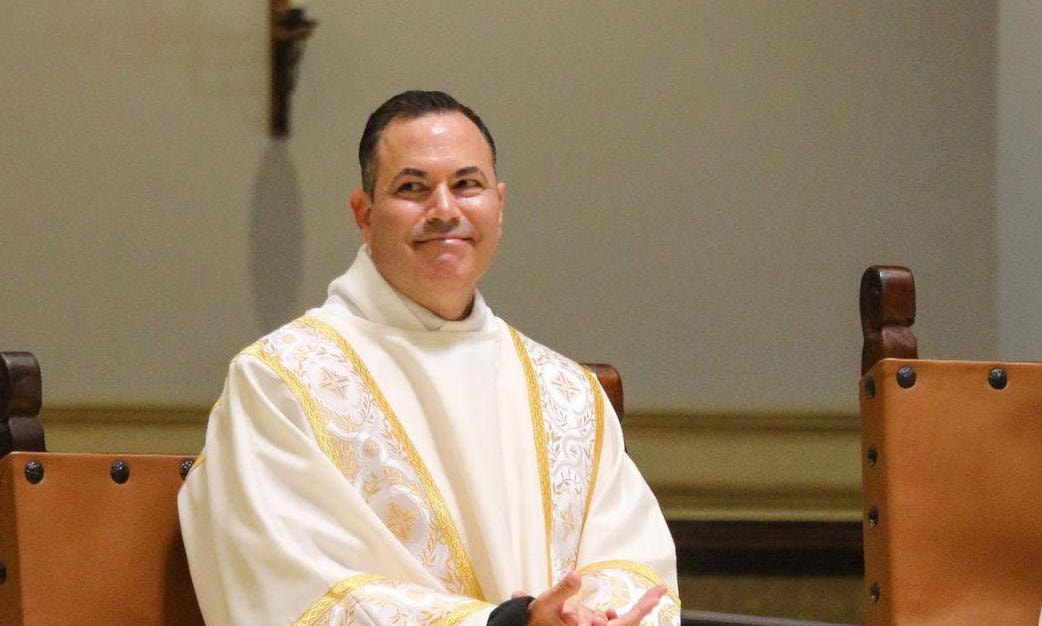


When the news broke that e.l.f Cosmetics founder Scott-Vincent Borba was becoming a Catholic priest, Catholics around America were understandably excited. The 52-year-old, who previously partied with the Kardashians and built an empire worth an estimated $3 billion, seemed like the perfect poster child for how Catholicism fills the void no material good can.
Yet before madly rushing to celebrate a new celebrity Catholic, it is worth noting that Borba’s company has come under fire for promoting transgender models, the LGBTQ agenda and abortion. The added factor of Borba’s placement in the far-Left Diocese of Fresno – which is currently facing bankruptcy after 153 claims of clergy sex abuse – additionally raised concerns that Borba is yet another far-Left activist whose celebrity will lead Catholic faithful astray: think Fr James Martin.

One key distinction, however, from Borba’s conversion story suggests that he is not in the Fr James Martin camp. More importantly, it differentiates Borba from many Catholics who tout their faith despite spurning basic Catholic teachings.
When discussing his conversion and vocation to the priesthood, Borba admitted that his life beforehand was extravagant and sinful. “I was a poster boy for luxury living,” he told ABC 7 Eyewitness News. “I was not in any which way humble. I was very prideful.”
According to Deseret News, however, Borba realised that he was living a “vapid” and “perverse” life and wanted to make a change. “We’re supposed to be living for our Lord and Lady,” he said. “I was living for myself. I was idolising myself. I was idolising everything else out there that was luxury.”
Inspired by this enlightenment, Borba donated his entire fortune and joined the seminary. Today, he lives in a tiny room with “nothing more than a crucifix as wall decor” and says that he has “never been happier in my life”.
“Once I started to reorient myself, recalibrate myself with God’s help to the focus to Him, the joy started coming.”
These words particularly struck me because of how boldly Borba denounced his lavish lifestyle before his conversion. In a world that praises fame, fortune and even celebrates sin, Borba’s words are a refreshing reminder that excessive luxury is not the goal of life, and that endorsing sinful behaviour out of “empathy” does not help the sinner.
Borba himself testified that when he had everything the world tells us we should desire, he still felt empty. It was only when he renounced his past lifestyle that Borba began to feel true joy. The key to Borba’s joy was ultimately recognising, rejecting and repenting of the sin that was enslaving him.
Ironically, many people today believe that the best way to help those struggling – whether with sin or in any other aspect of life – is essentially to affirm every choice they make, regardless of whether or not that choice is good or grounded in truth.
This is especially true when it comes to grave sins that the Catholic Church condemns. Prominent figures like former President Joe Biden or Jesuit Fr James Martin actively endorse or justify grave sins because they claim this is simply part of “loving” one another. In fact, people like this quite literally will refuse to acknowledge the sin at all. In doing so, they do not actually help those who are struggling – they simply perpetuate confusion while leaving those who may be struggling to drown in sins they believe that the Church endorses.
For example, Fr James Martin’s equivocation regarding homosexuality and same-sex unions has emboldened many gay Catholics who no longer believe that gay marriage is a sin, much less that transgenderism is an evil destruction of both the human body and truth itself.
While common sense and the natural law should provide clear answers, the confusion that leaders and celebrities like former President Biden and Fr James Martin spread has left many confused and trapped.
Of course, proponents of this “empathetic” approach, which denies the reality of sin, will be the first to justify their behaviour by telling you that Jesus came for sinners. They will always conveniently exclude the fact that Jesus’s approach to sinners was always the same – he showered them with love, while sternly commanding them to “repent and sin no more”.
With this in mind, I found it refreshing that Borba unabashedly condemns his former life. He acknowledges the fact that he was living in sin, that it was bad, that it made him unhappy, and that only through repentance did he find peace and joy.
Had Borba followed the alternative “empathetic” approach, he may have justified his sin by simply touting the tired talking points of “Jesus loves me” or “it’s not bad if it makes me happy”.
Instead, he followed the simple recipe for true conversion to Catholicism: accept the truth, repent and try to sin no more. Now, rather than relying on his own devices for happiness or peace, Borba seems to be relying totally on God.
“He has taken care of me all my life,” he said, “and now I am going to give it all back.”


.jpg)
.jpg)
.jpg)