

May 18, 2026

The new industrial revolution is already here

Patrick Neve
More
Related
Min read
share

Drive an hour outside almost any American city right now, and you will find a town that is quietly being remade. Property values are climbing in places they have no business climbing. Old neighbours are selling and moving on. A vast, low building with no windows is erected on what was once a family farm.

These are data centres. They are a driving force in the economy of the future, but we have yet to evaluate the goods they purport to provide.

When the Catholic mind evaluates anything like this, it reaches first for the principle of the common good. The common good is a good that is genuinely shared and benefits the whole society. It is distinct from the greater good, in which individuals are made to sacrifice for benefits they themselves never enjoy. That distinction is critical when evaluating these centres.

The industry will tell you that data centres serve the common good. They power the maps on your phone, the searches you run, the medical research being accelerated by artificial intelligence, and the entertainment you stream after dinner. Every American benefits, the argument goes, including the family in rural Tennessee whose new neighbour is a server farm five times the size of a Walmart.

But look closely at what is actually being exchanged. The free services we receive are free because we are the product. Our conversations, locations and purchases are being aggregated, processed and sold to advertisers for many times what it costs to give us “free” maps and “free” email. The good being produced here is, at root, a private good – capital accruing to a small number of very powerful firms – that has been dressed up to look common. What is genuinely shared, by contrast, is the cost: the noise, the strain on water and power, the soaring land prices, and most importantly, the displacement of working families who cannot simply pick up and move. The displacement of families should be a signal to us that these farms damage the common good rather than improve it.

The common good is something that, by definition, is enjoyed in community. Towns, parishes and neighbourhoods are the soil in which the common good grows. You cannot destroy that soil in pursuit of the common good without committing a contradiction. What you are really chasing is a greater good: a benefit so large, so abstract, and so disconnected from the people bearing the cost that it ceases to belong to them at all.

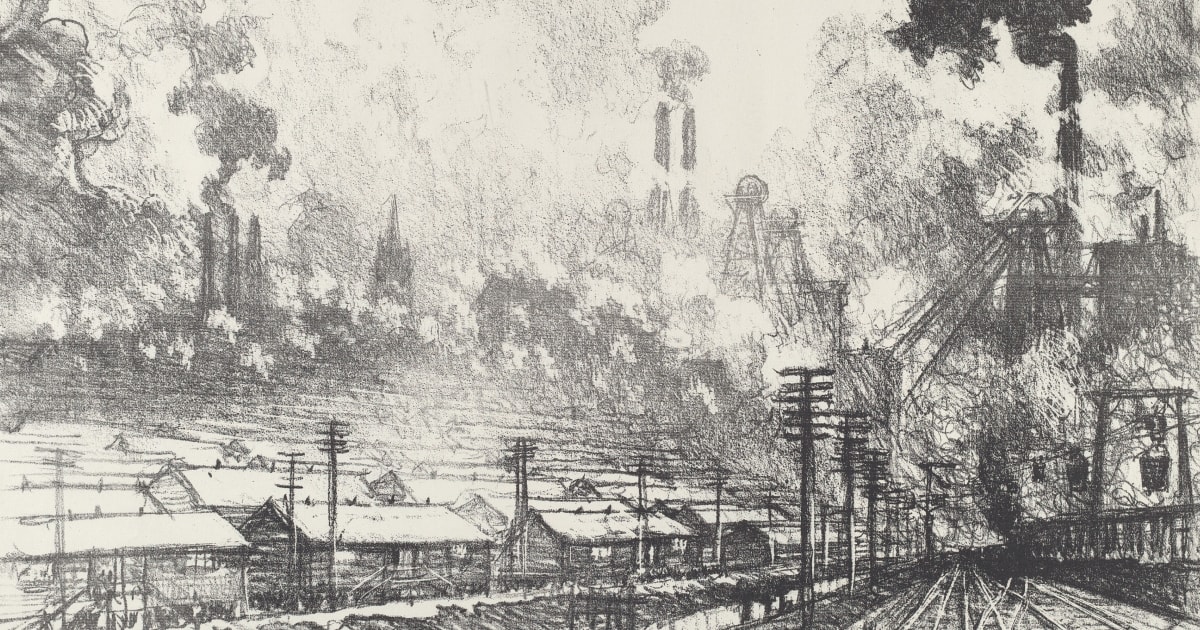
If any of this sounds familiar, it should. We have seen this pattern before. The Industrial Revolution also promised a common good and delivered, in time, real ones – medicine, transportation, food security at scales unimaginable to the past. However, it did not begin that way. It began as a private good masquerading as a public one. The early factories belched smoke into the lungs of children sent to work there, sold adulterated food to families who had no power to find alternatives, and concentrated ownership of the tools of production in fewer and fewer hands. The goods we now take for granted from that age arrived only after decades of bitter pushback: from journalists, from organised workers, from consumers, and crucially, from the Church, particularly Leo XIII’s Rerum Novarum.

The danger of data centres is not that they are worse than factories in the way smokestacks were worse than hand-looms. The danger is that they are more insidious. With a factory, you could see the harm. You could see the black smoke. You could see the children’s crushed fingers. The data centre hides the production. Our children’s bodies are not being sent down the mines this time, but their data is. So is their attention, their habits of mind. And since nobody can see it, nobody is fighting it the way our fathers fought.

There is a further, structural worry. The Industrial Revolution eventually expanded the middle class; somebody had to operate the factories. Data centres do not work that way. They create relatively few jobs, and the small towns that have welcomed them in the hope of prosperity will, in 40 or 100 years, be left with the same skeletons that haunt Ohio and western Pennsylvania: empty hulls of obsolete infrastructure that no one knows what to do with. The information age, like every age before it, will end. The communities that gave their land to host it will be left holding the bag.

Meanwhile, access to the tools of computing is quietly concentrated. Hard-drive prices for ordinary consumers have risen sharply as the inventory is bought up by hyperscalers. The age that promised to democratise computing may end with computation in the hands of a very small few. That exact grievance – the worker cut off from the means of production – is what the Church’s social teaching was forged to answer, and what, when ignored, gave rise to the worst revolutions of the last century.

None of this is fated. The abuses of the Industrial Revolution were curtailed not by any single force but by a society acting as a body: legislators, journalists, consumers, organised labour, and the Church, all pushing at once. That is how a healthy body expels disease. Catholics have a particular vocation to be part of that pressure now, before the data centre becomes as unquestioned a fact of American life as the factory once was.

The industrial revolution is happening again. We are just having a harder time seeing it. That is precisely why Catholics need to look.

Continue reading with a free account

Create a free account to read up to five articles each month
Create free account

You have # free articles remaining this month.

Subscribe to get unlimited access.
Sign up

subscribe to the catholic herald today

Our best content is exclusively available to our subscribers. Subscribe today and gain instant access to expert analysis, in-depth articles, and thought-provoking insights—anytime, anywhere. Don’t miss out on the conversations that matter most.
Subscribe