
May 16, 2026

Saturday Read: What did Pope St Leo the Great ever do for us?

Andrew Cusack
More
Related
Min read
share

If you think you’re living in an era of stagnation and decline, look back to 5th-century Rome, when the Western Roman Empire began to shift from mere decay to full-on disintegration. Borders became porous, emperors came and went with alarming rapidity, and provinces that had once known Roman law and order were overcome by barbarian armies. Moreover, theological controversy and strange teachings emerged and spread throughout the Christian world, both East and West. It was what we now call late antiquity, and the ancient world was ending.

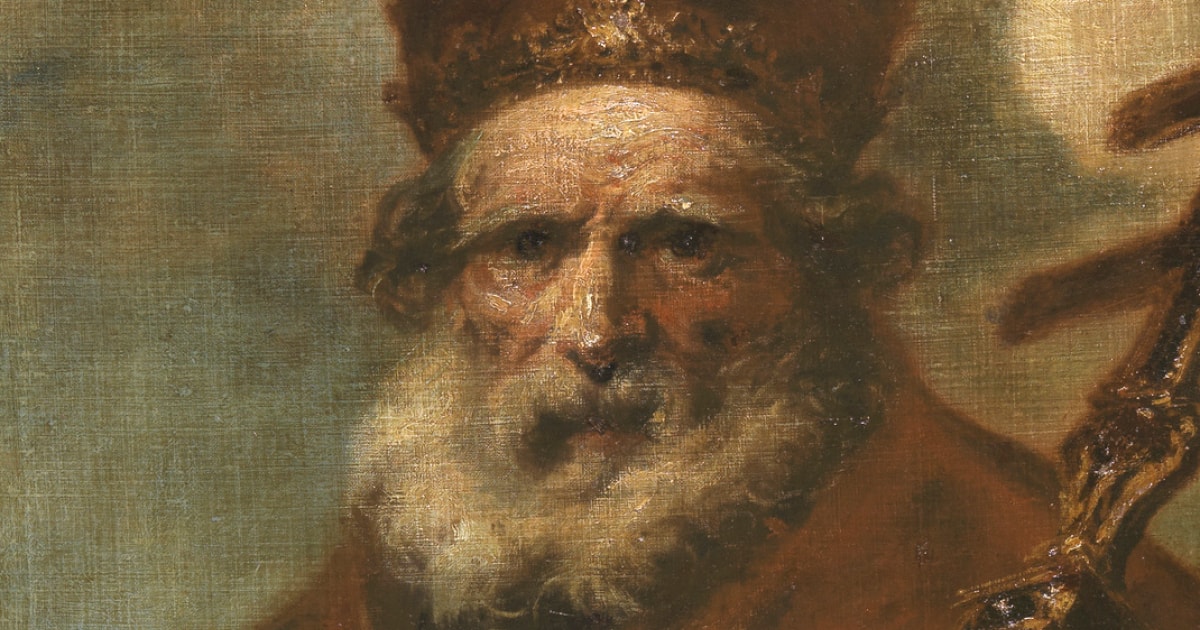
Into this maelstrom stepped a churchman of such formidable drive, integrity and intellect that he is still known to us as Leo the Great. What did he ever do for us? Well, apart from helping define Christian orthodoxy, shaping the model of the papacy and holding Rome together during the collapse of imperial authority, quite a lot.

From an aristocratic background, Leo was born in Tuscany towards the end of the 4th century and emerged during the pontificate of Pope Sixtus III (432-440) as one of the ablest administrators in the Roman Church. As such, Leo was entrusted with important diplomatic missions by the secular imperial authorities, who trusted both his competence and astuteness. Following the death of Pope Celestine I in 432, it was hardly any surprise that Leo was chosen to sit on the throne of Peter.

Leo’s papacy was one of the most important periods for defining and defending Christian orthodoxy against doctrinal novelties. The chief heresies of the day were Christological, dealing with the very nature of Jesus in a way that often seems too metaphysical for our modern minds. Disputes between theological factions became increasingly bitter, and Leo intervened decisively.

In 449, this erudite pontiff wrote what became known as the Tome of Leo, a doctrinal letter that he addressed to Flavian, Patriarch of Constantinople, affirming that Christ possessed two natures – fully divine and fully human – that were united in one person “without confusion or division”. The gathering of bishops that had met at Ephesus that year was condemned as a “robber council” for attempting to rehabilitate the heresiarch Eutyches who, while opposing Nestorianism, confected an equally extreme and heretical opposite view to it.

There was no solution but to convoke a proper ecumenical council of the Church, which the Emperor Marcian did in 451. This proved one of the largest and best-documented councils in antiquity and, while Leo did not attend himself, his Tome was read aloud to the assembled bishops. So clear was his elucidation of Christian teaching that the prelates are recorded as having risen from their seats and cried: “This is the faith of the fathers, the faith of the apostles: Peter has spoken through Leo!

This was not just some political manoeuvring in the theological realm: the Council of Chalcedon’s endorsement of Leo’s position became the foundation for orthodox Christology that is today accepted by Catholics, Eastern Orthodox and most Protestant bodies. Through his influence at the council, Leo helped define the theological language of Christianity.

Leo’s second great achievement was to strengthen and to clarify the nature of the papacy itself. Earlier bishops of Rome had of course exercised considerable authority, but Leo exercised the Petrine office with a new confidence and coherence even as the secular world in the West around him was collapsing. He consistently held that the Bishop of Rome had inherited a unique responsibility through the succession of St Peter – and acted accordingly.

Unlike the later medieval papacies of Gregory VII or Innocent III, Leo possessed no standing army, no palaces full of bureaucrats and had little direct coercive power. What he did have was respect, prestige, learning and a theology of Petrine authority that was proving increasingly persuasive. Leo used it to intervene directly in disputes across Gaul, Spain and the eastern Mediterranean. He corresponded frequently with emperors and bishops and countered attempts by Constantinople to claim parity with Rome.

Leo also left an important written record: nearly a hundred of his sermons survive, alongside more than a hundred letters. His correspondence helped standardise Christian practice in the Latin West with regard to the liturgical year, fasting and almsgiving disciplines, feast days and the obligations of the Christian life. Even now his prose retains a muscular clarity that seems remarkable for the time. His exhortation from a Christmas sermon – “Christian, remember your dignity!” – retains its strength over a millennium later.

The third great achievement we can credit Leo with is holding Rome together as the western empire collapsed. By the middle of the 5th century, imperial government was visibly weakening and inconsistently upheld. As more responsibilities were abandoned by the secular authorities, they were often taken up by bishops and the papacy. In the civil conflicts of the era, Leo organised relief for the poor, care for refugees, restored churches and acted as a civic as well as a spiritual leader. Perhaps one of the reasons Leo came to be seen as a stabilising force was precisely because other institutions were failing to live up to that role.

Attila the Hun’s invasion of Italy in 452 is little remembered today but struck fear into the peoples of the peninsula. The collapse of the once-great Roman defences was made very clear. Leo assumed the mantle of responsibility and personally mounted an embassy to Attila. There is, frustratingly, no record of the conversation between Leo the Great and Attila the Hun, but it was then that the chieftain decided to turn around and withdraw. Doubtless many factors would have influenced Attila – supply lines, disease, the military situation – but the contemporaries of the day saw something spectacular in a pope confronting the most fearsome warlord in Europe while emperors proved helpless.

By the time of Leo’s death in 461, the western empire barely existed. Within 15 years, it would disappear entirely until its restoration under Charlemagne nearly three centuries later. The papacy, on the other hand, emerged stronger, more coherent and with an increasingly central role.

Leo reigned at a critical point between the fading of the ancient world and the very earliest stirrings of medieval Christendom. His greatness was as a theologian who defended orthodoxy, as a prelate who strengthened the Roman see and as a pastor who helped to preserve civic order amid political collapse. He is one of only two supreme pontiffs to have been declared a Doctor of the Church. Thirteen of his successors on the Petrine throne were inspired to take his name as theirs – including the present Holy Father.

Every age of uncertainty has need of rediscovering the figures from the past who – however imperfectly – managed to preserve continuity between a collapsing old world and an unclear and ill-defined new one. Leo’s lessons are worth learning today.

Continue reading with a free account

Create a free account to read up to five articles each month
Create free account

You have # free articles remaining this month.

Subscribe to get unlimited access.
Sign up

subscribe to the catholic herald today

Our best content is exclusively available to our subscribers. Subscribe today and gain instant access to expert analysis, in-depth articles, and thought-provoking insights—anytime, anywhere. Don’t miss out on the conversations that matter most.
Subscribe