
May 20, 2026

St Joseph of Cupertino: the high-flying dunce

Fr Dwight Longenecker
More
Related
Min read
share

Our recent pilgrimage to Italy was a tour of high-flying miracles. After an overnight stop with the monks of Norcia, we travelled to Loreto where legend has it that the Virgin’s house in Nazareth was miraculously flown to an Italian town on the Adriatic. After touring the church and praying in the Holy House, we drove to Osimo where the incorrupt relics of the famous levitator and miracle worker, St Joseph of Cupertino, are housed.

When confronted with prodigies like flying houses and floating friars the Church expects us to be cautious. Yes, miracles – quite astounding miracles – are possible, but we are to use our reason and look for every natural explanation first. When it comes to the Holy House of Loreto, it would seem that there is some masonry that appears to match that of houses in Palestine, but it seems more likely that the masonry (if it is indeed from a village in Galilee) was transported by members of the Byzantine Angeli family around 1291 when the Holy Land fell to the Mamluks after the Crusader era, and was thus, by legend, assigned to “the angels”.

St Joseph of Cupertino’s flight, unlike that of the Holy House, cannot be attributed to natural causes. Born Giuseppe Desa in Cupertino in 1603, Joseph’s carpenter father was so poor that the boy, like Jesus, was born in a stable. Raised in poverty, Joseph was a dunce. Absent-minded and thick-headed, he was nicknamed “the Gaper” for his open-mouthed staring.

The dimwitted child struggled with frustration and distraction, flunking school and failing as a shoemaker’s apprentice. His parents treated him harshly and after failing in school and a trade he also failed in his efforts to join the Franciscans. He was rejected by Conventual Franciscans for lack of education and briefly accepted then dismissed by the Capuchins due to clumsiness and the now-recurring ecstasies that disrupted his menial duties.

He didn’t give up. He worked in the stables of a Franciscan convent finally impressing the friars with his devotion, humility and extreme asceticism. They admitted him as a novice in 1625, but he faced ordination hurdles. He could expound only one Scripture verse: “Blessed be the womb that bore Thee” (Luke 11:27). Miraculously, examiners opened to that passage or approved candidates en masse after strong performances by others, allowing his diaconate and priesthood to go forward.

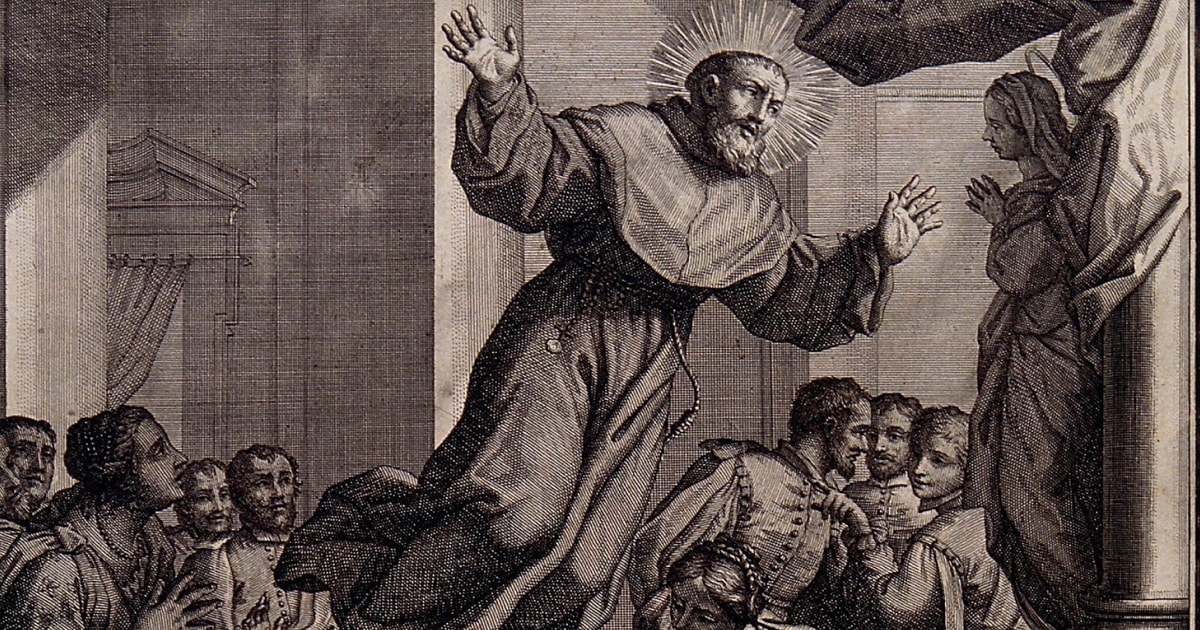
Once ordained, ecstatic visions consumed him. At the mere mention of God, the Virgin or saints he would lapse into ecstasy – often rising from the ground. His levitations were indisputable: documented in canonisation inquiries with dozens of eyewitnesses, including nobles, clergy and sceptics. At Mass or Divine Office, he would yelp and shriek with uncontrolled joy and rise, sometimes feet off the ground or soaring to church ceilings or perching in trees. Witnesses described him flying towards statues, crucifixes or the tabernacle, remaining suspended for minutes or hours in rapture.

One Christmas, hearing shepherds’ music, he danced, then flew to the high altar, hovering without disturbing candles. During a St Francis celebration, he rose above the pulpit with arms outstretched. A Spanish ambassador saw him fly over their heads to embrace a Marian image. Pope Urban VIII witnessed an ecstasy and levitation, and over 70 levitations were recorded at his convent in Grotella alone; hundreds or thousands may have occurred across his lifetime, becoming so routine that chroniclers stopped noting them.

The saint also healed the sick, read consciences, prophesied and bilocated. He practised severe mortifications – fasting, hair shirts and spiked chains – to combat temptations. Yet fame brought trouble. Crowds of the curious turned his Masses into spectacles. Suspected of witchcraft or demonic influence, he faced scrutiny by the Inquisition, but was cleared. Not knowing what to do with the flying friar, his superiors transferred him and demanded total seclusion, first to Assisi (1639–1653), then Pietrarubbia and Fossombrone before returning to Osimo, where he died on September 18, 1663.

In his 2023 book, They Flew, Yale historian Carlos M. N. Eire takes the life and levitations of St Joseph of Cupertino seriously. He uses them – as well as the bilocations and levitations of numerous other monks and nuns of the time – to probe the cultural, religious and intellectual revolutions happening in Europe during the 17th century. Reeling from the Protestant Reformation, the attack of rationalism and religious wars, Europe was in a state of religious and cultural upheaval. Eire explores how Europeans, on the cusp of modernity, understood the shifting boundaries between natural and supernatural.

Eire’s broader argument reframes the “impossible”. He challenges historians to rethink modern assumptions: did they fly? The evidence compels us to take reports as genuine. Dismissing them as superstition ignores what really happened. Eire’s title challenges easy sneering and casual dismissal of the events: “They flew,” he seems to say, “and what are you going to do about it?”

The fact that they flew – and that miraculous phenomena like healing, levitation and bilocation continued into more modern times – witness Padre Pio and St Charbel – demands a theory of reality more flexible than dull materialism. Eire invites us to imagine a world where prayer can suspend gravity – and that it was a dunce who flew makes us reassess our overvaluation of intellectual acuity and academic achievement. There are greater things in heaven and earth than dull Horatio’s philosophy has dreamt of.

Perhaps the modern world is catching up with the weirdness of St Joseph. With quantum theories and multiverse madness challenging classical physics – with increasing talk of UFOs, UAPs and paranormal oddities – rigid naturalism seems outdated and narrow-minded. Eire’s work suggests the boundary between natural and supernatural was never as fixed as Enlightenment narratives insisted. Reality is rubbery, and the flying friar’s legacy should mean more than a stupendous spiritual circus.

They flew. Gravity is not as serious as you thought it was. Chesterton, perhaps, should have the final word. He wrote: “Modern investigators of miraculous history have solemnly admitted that a characteristic of the great saints is their power of ‘levitation.’ They might go further; a characteristic of the great saints is their power of levity. Angels can fly because they can take themselves lightly…” And St Joseph of Cupertino too.

Continue reading with a free account

Create a free account to read up to five articles each month
Create free account

You have # free articles remaining this month.

Subscribe to get unlimited access.
Sign up

subscribe to the catholic herald today

Our best content is exclusively available to our subscribers. Subscribe today and gain instant access to expert analysis, in-depth articles, and thought-provoking insights—anytime, anywhere. Don’t miss out on the conversations that matter most.
Subscribe