Planning a private pilgrimage to Italy with my sister and brother-in-law, we decided to make our first stop in the town of Norcia – the birthplace of St Benedict.
I am a Benedictine oblate and a fan of the “Benedict Option” – Rod Dreher’s term for a return to the simple values of St Benedict’s 6th-century monastic Rule. Dreher does not recommend that we all head to the hills, grow long beards and herd goats.
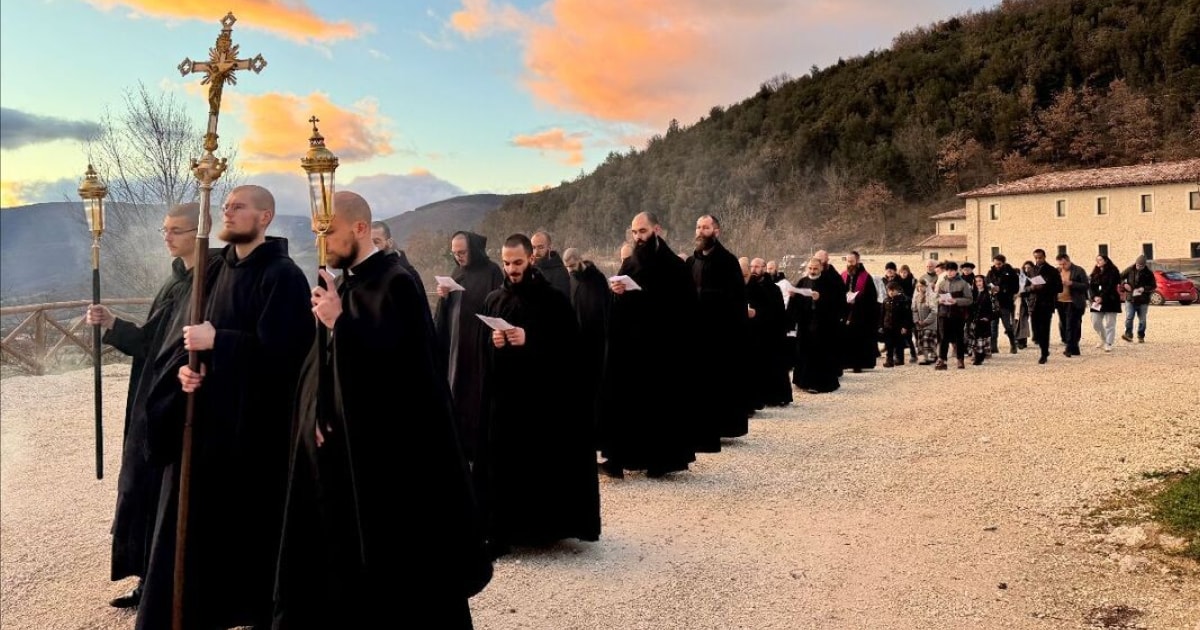
However, he does not rule it out, and my friends at the monastery in Norcia do not rule it out either. Visiting the monastery last week there were chickens and plenty of long beards, but no goats.
Norcia is a living example of the resilience of the Benedictine life. Some years ago, while visiting a monastery that had been rebuilt on the ruins of a medieval religious house, I commented on the perseverance of the Benedictine spirit. My monk friend smiled and said: “We’re like weeds. We come back.”
St Benedict was born around AD 480 in Norcia to a noble family, alongside his twin sister, St Scholastica. By the 8th century a chapel had been erected on the site of their grandparents’ home, and some 200 years later Benedictine monks had established a permanent presence in the town, tending the shrine that would evolve into the Basilica of St Benedict.
This medieval church preserved the remnants of the 5th-century Roman-era home in the crypt and for centuries the monastery thrived. Then, in 1810, when Napoleon suppressed religious orders across Europe, the Norcia monastery was closed. The Benedictines were expelled, their properties sold, and monastic life fell silent.
The basilica survived as a parish church, but without its resident monks. Over the years a few smaller religious orders had a presence in the town, but the modern revival began in the late 1990s. In 1998, a small group of American monks, led by Fr Cassian Folsom, arrived at the invitation of the local bishop. On June 15, 1999, they formally re-established the community under the Benedictine Confederation, and in the Jubilee Year of 2000 they received full Vatican approval. The community was English-speaking and international from the start – drawing members from the United States, Germany, Indonesia and beyond. With the bishop’s encouragement the monks reclaimed the basilica.
They restored its liturgical life with Gregorian chant and the traditional Roman Rite, drawing pilgrims to the crypt where St Benedict was born. By the early 2010s, the community numbered around 15 professed monks and had launched initiatives that captured global attention.
In 2012 they established a brewery, adhering to the Rule’s call to “live by the work of their hands”. Birra Nursia comes in three blends: blonde, dark and medium. Pope Emeritus Benedict XVI looked over their shoulder throughout the establishment of the monastery and in 2012 they met him at Castel Gandolfo to update him on their progress and share their beer with him. The ensuing publicity pushed Birra Nursia and the monks to worldwide attention.
In 2015, their album Benedicta, featuring Marian chants, topped Billboard’s classical chart, introducing their contemplative sound to a wider audience. Increasing numbers of visitors arrived in Norcia to attend Mass in the basilica, sample beer in the shop and make retreats.
In the meantime one of my own students, Philip Wilmeth from South Carolina, had graduated from Thomas Aquinas College in California and immediately entered the novitiate at Norcia. He is now Fr Augustine and is the community’s brewmaster.
We first visited Augustine soon after his arrival in 2015. Then came the earthquakes. On August 24, 2016, a 6.3-magnitude tremor damaged the basilica and surrounding structures. The monks, who had been chanting Lauds moments before a later foreshock, escaped unharmed. They relocated temporarily to tents and prefabricated housing while assessing the damage. The decisive blow struck on October 30: a 6.6-magnitude quake, Italy’s strongest in decades, reduced the 13th-century basilica to rubble. Miraculously, no one in Norcia died, but the town’s medieval heart was shattered.
The monks, already planning expansions, shifted focus to a 16th-century Capuchin grange on a hill two miles above the town overlooking the Valley of St Scholastica. What began as a temporary refuge became permanent. They poured resources into seismic retrofitting, restoring the Church of Santa Maria della Misericordia and rebuilding the Franciscan monastery that had fallen into ruins.
Stripped of their historic home, the monks embraced their new setting, viewing the disaster through the lens of Benedictine obedience and hope. “God promises to make all things new,” they reflected in later statements.
Restoration at Monte proceeded steadily, aided by beer sales and increasing support from international donors. By mid-2024, the project had reached completion: the church and monastery were fully restored, and the community was canonically elevated from priory to abbey status.
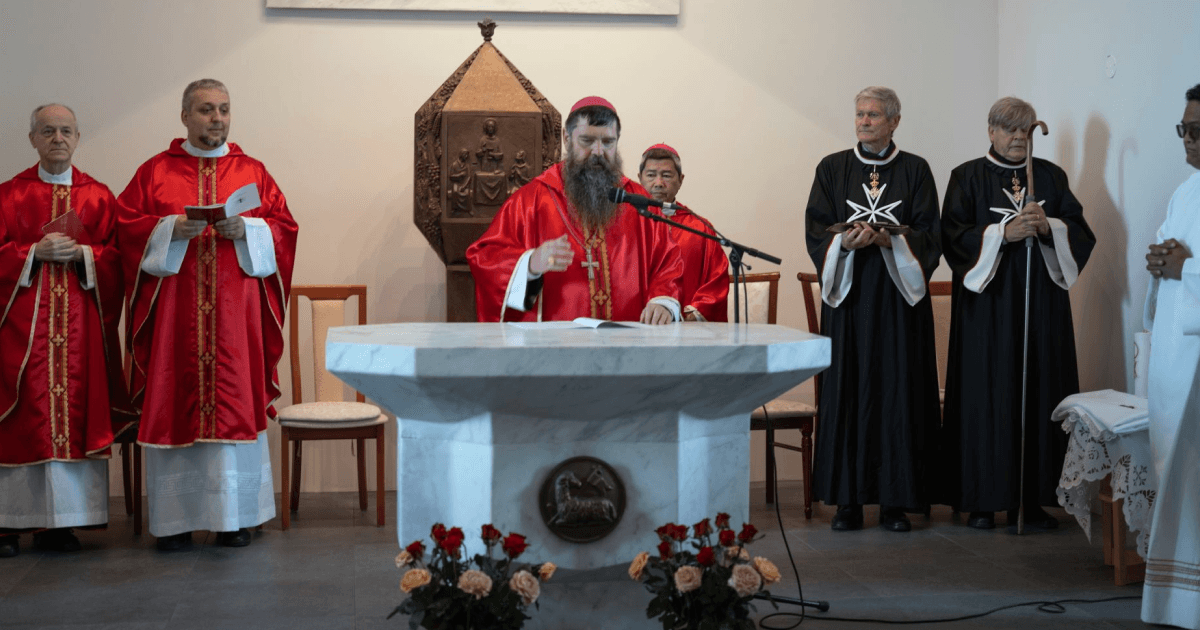
On May 28, 2024, during their 25th-anniversary celebrations, Prior Dom Benedict Nivakoff was elected the first abbot since 1792. Crowds from Norcia and around the world joined in thanksgiving, affirming the abbey’s role as a witness to enduring Benedictine life as well as a beacon of hope for the earthquake-scarred region.
I had visited Fr Augustine again in 2018 to see their new home and temporary monastery. On our visit this time I was amazed at the progress and delighted to find the monks firmly established in their mountainside monastery and my old student thriving as a priest and busy monk-brewmaster.
Their life remains rooted in a strict observance of the Rule: their liturgies are all chanted in Latin. Their manual work consists of gardening, landscaping and producing their now-famous beer, which is exported across Europe and to North America.
The abbey welcomes pilgrims and retreatants seeking silence in the beautiful surroundings of the Umbrian mountains. The community’s international character endures, with vocations reflecting a draw towards contemplative depth in a noisy world. As part of the broader Benedictine Confederation, they will participate in the 2029 Jubilee marking 1,500 years since St Benedict founded Montecassino.
Today, the monks of Norcia, officially the Abbazia di San Benedetto in Monte, carry forward Benedict’s Rule amid seismic upheavals, both literal and spiritual. The story of the Norcia monks is one of suppression, revival, destruction and renewal, culminating in a thriving abbey that sustains itself through prayer, chant, hard work and good beer.
Benedictines? Like weeds, they come back.
Fr Longenecker is on an extended private pilgrimage in Italy. Connect with his pilgrimage diary at his Substack.

.jpg)


.jpg)
.jpg)