
May 9, 2026

Saturday Read: Persia’s forgotten Christian queen

Andrew Cusack
More
Related
Min read
share

Iran is often imagined as an ancient and unmistakably Islamic civilisation – but Iran was not always Iran, and the Persia before it was not always Islamic. Before the Rashidun caliphate, and well before the current rule of the ayatollahs, the Sasanian empire of the 3rd to 7th centuries sheltered one of the least remembered but nonetheless remarkable Christian worlds in history. At the centre of it stood a Christian queen: Shirin.

Who was this Persian queen and what kind of Christianity did she profess? The Church of the East we have somewhat clumsily called “Nestorian” after the teachings of Nestorius, who was condemned and deposed at the Council of Ephesus in the 5th century. Telling your heretical Nestorian, Monophysite or Miaphysite apart from one another, let alone from your good, sound, orthodox Dyophysite, leaves me somewhat bewildered. Nonetheless, these arguments mattered profoundly to the understanding and early definition of Christian orthodoxy. They were also affected by politics in that from the time of Constantine there was a distinct interplay between the imperial state and the realm of the Church. Emperors and bishops alike were concerned to define correct teaching as well as suppress any deviation from it. The heresies that emperors sought to extirpate found homes beyond the confines of imperial jurisdiction.

Sasanian Persia offered a different world. The Sasanian empire was officially Zoroastrian and there were periods of severe persecution of those who deviated from the official faith. Constantine’s conversion gave Christianity a distinctly Roman colouring that left their old enemies the Persians distinctly suspicious of Christians. Over time, the shahs allowed broad tolerance of Christians, Jews and other religions – and saw the advantage of cultivating within their borders heretical varieties of Christianity that were independent of Rome and Constantinople and therefore a challenge to them. The doctrines condemned within Roman borders found much more liberty beyond them.

By the 5th and 6th centuries the “Nestorian” Church of the East had developed into a formidable institution centred on Seleucia-Ctesiphon near modern Baghdad. Syriac-speaking bishops, monks and merchants carried Christianity eastwards along the trade routes of Asia. We tend to view the ancient Near East through Byzantine eyes, and view the Byzantines themselves through the lens of the Latin West. The result is historical tunnel vision: the West Syriac churches rarely enter our consciousness except as curiosities and the East Syriacs as little more than footnotes.

Their contemporaries, it seems, were often little better informed. As the historian Wilhelm Baum observed: “In Constantinople and Rome people had no idea that the Persian church had already spread to India and by the 7th century had extended along the Silk Road to Central Asia and China.” Western Europe was only beginning its uncertain emergence into the flourishing of the early Middle Ages, but Persian Christianity was producing scholars, missionaries and physicians whose horizons stretched from Mesopotamia to the Tang court.

In this context we find the woman named Shirin: one of the wives of Shah Khosrow II – probably the most favoured of his wives. We know she existed, but the precise historical details of her life are elusive. It is not even clear whether she was among the Monophysites or the Miaphysites, but it is known that she exerted a great deal of influence in the Sasanian court and patronised Christian institutions to a degree never before seen in Persia.

Scribes and chroniclers record the generosity and favour she granted through her patronage of monasteries and churches. The Persia over which her husband ruled – not yet Islamic – defined itself in geopolitical opposition to the Christian Roman Empire but was inextricably linked with the world of the Christian East. Khosrow’s armies briefly conquered much of the Byzantine realm, including Jerusalem and Egypt. His court was a cosmopolitan circle of Persian aristocrats vying for influence beside Greek physicians, Syriac Christians and emissaries from rival empires. But his rule was arbitrary and influence was dependent upon the shifting favour of the shah.

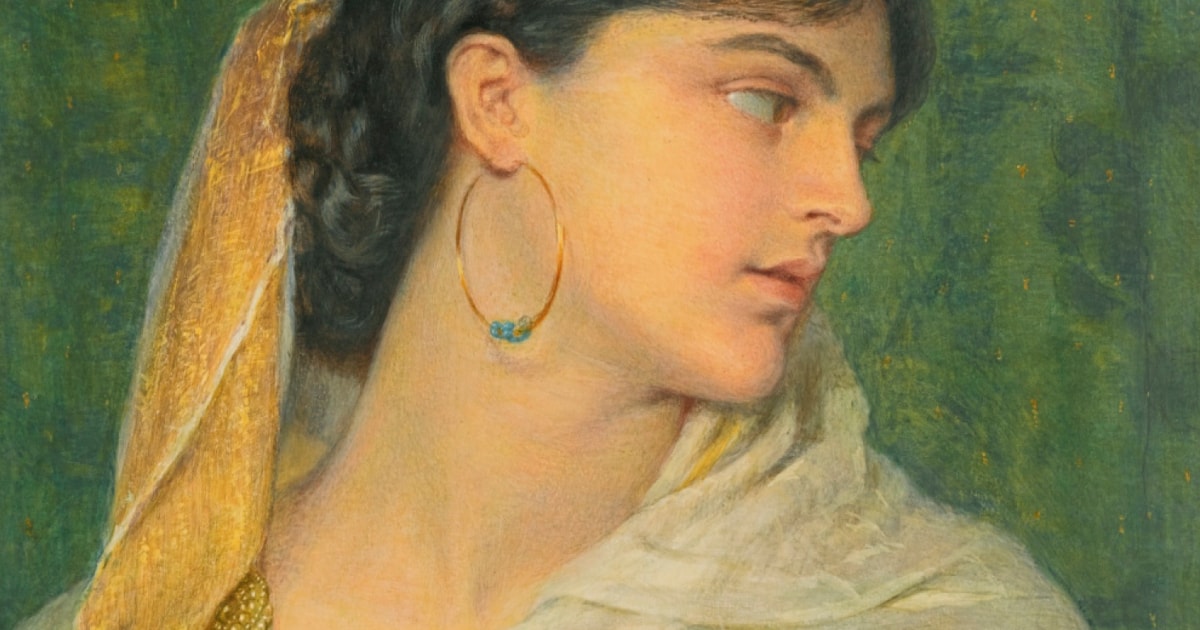
From what we can tell centuries later, Shirin’s distinct advantage was to have captured Khosrow’s heart, giving her prominence above and beyond his other wives and consorts. That love granted Shirin a remarkably enduring afterlife. Six centuries after Khosrow’s demise, the Persian poet Nizami Ganjavi transformed the love story between the shah and Shirin into one of the greatest epic poems of Persian literature. Here the queen emerges as intelligent, dignified and above all desired. Shirin became one of the great paragons of love, her memory surviving long after the world that produced her had vanished. In the Victorian era, the great romantic artist Sir Frederic William Burton painted her (as Shireen), and the Turkish poet, novelist and director Nâzım Hikmet wrote a play about her in the 20th century. Even Abbas Kiarostami’s curious 2008 film Shirin – an experimental work in which the audience watches women watching a dramatisation of the legend – demonstrates the queen’s continued hold upon the Persian imagination.

Separating the Shirin of history from that of romantic legend is impossible today, but her persistence across Persian culture and beyond reminds us that there is an Iran beyond Islam. Her husband Khosrow was to be the last Sasanian shah before Zoroastrian Persia was conquered by the Rashidun caliphate. The Church of the East precipitously declined. Part of it – the Chaldeans – are united in full communion with Rome. The separate remnant developed into a curiously hereditary patriarchate that faced internal challenges in the 20th century, including the murder of the patriarch Mar Eshai Shimun XXI in California in 1975. Ecumenical dialogue between the Holy See and the Assyrian Church of the East, as it now calls itself, is ongoing and has produced some useful statements even as the latter faces unprecedented challenges in its Iraqi heartland since the downfall of Saddam Hussein.

Iran’s Islamic conquerors and the native-born generations that followed them have varied between attempting to erase the pre-Islamic Persian legacy and emphasising it. The current Islamic Republic’s lack of sympathy for an Iran without Muhammad is well known, but the many layers of Iran’s history are inescapable. Few things better illustrate the persistence of this buried past than 12th-century Persian poetry, 20th-century Turkish theatre and 21st-century Iranian cinema all haunted by the memory of a seventh-century Christian queen at the Sasanian court.

Continue reading with a free account

Create a free account to read up to five articles each month
Create free account

You have # free articles remaining this month.

Subscribe to get unlimited access.
Sign up

subscribe to the catholic herald today

Our best content is exclusively available to our subscribers. Subscribe today and gain instant access to expert analysis, in-depth articles, and thought-provoking insights—anytime, anywhere. Don’t miss out on the conversations that matter most.
Subscribe