

It has been revealed that Germany’s most senior Catholic cardinal has moved to standardise the blessing of same-sex couples in his archdiocese after an April 20 report in Die Tagespost, a step that underscores widening divisions within the German Church over the limits of pastoral reform and the interpretation of recent Vatican guidance.
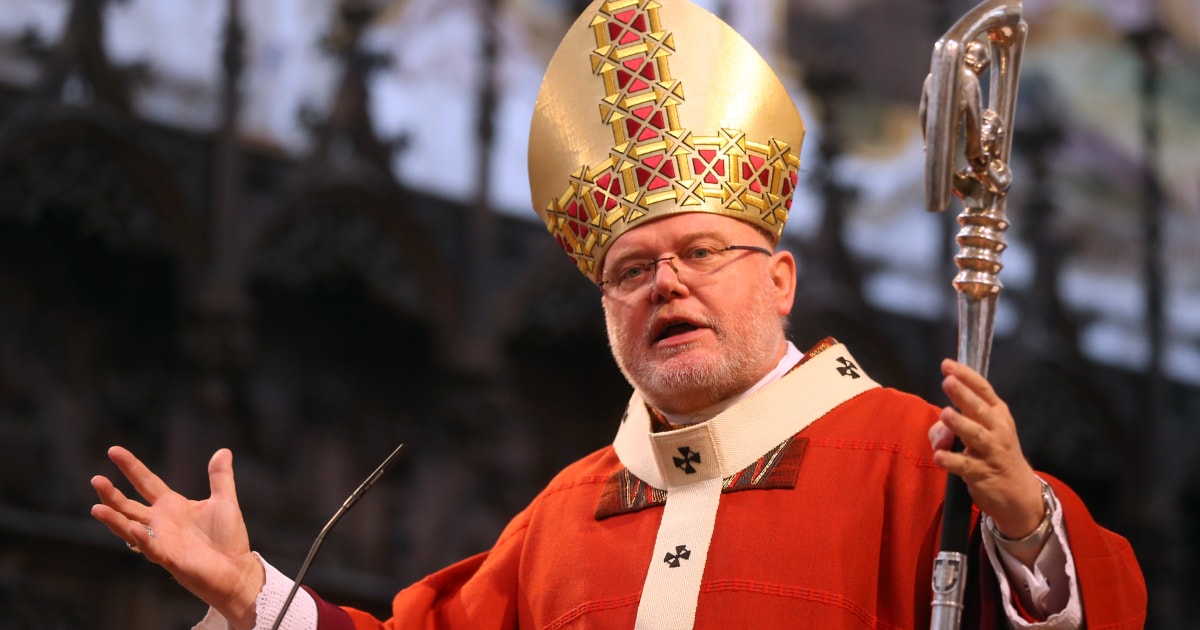
In a directive to clergy, Cardinal Reinhard Marx instructed that a pastoral framework developed through Germany’s reform process should serve as the basis for future practice in the Archdiocese of Munich and Freising.

The guidance allows blessings for couples who cannot receive sacramental marriage, including same-sex couples and those who are divorced and remarried, though within the confines of Fiducia supplicans, which instructed that the blessings could not be conferred in any way that appeared to grant “moral legitimacy” or approval to a gravely sinful homosexual relationship. Perceiving contradiction, and in an unprecedented act of resistance, entire ranks of clergy, including bishops’ conferences in regions such as Africa and the Netherlands and national confraternities of clergy in nations such as England and Wales, rejected the document’s recommendations, claiming there were no possible scenarios in which such blessings could be conferred without a subsequent risk of their being interpreted as approval.
Cardinal Marx’s document – titled Segen gibt der Liebe Kraft (“Blessing Strengthens Love”) – emerged from the controversial reform initiative known as the Synodal Path, which has debated issues ranging from Church governance to sexual ethics. Under the new arrangements, clergy who are unwilling to perform such blessings themselves are encouraged to refer couples to other priests, while diocesan training sessions are expected to begin later this year to ensure consistent pastoral practice.
Cardinal Marx has emphasised that the ceremonies do not constitute marriage. However, critics argue that formalising and organising blessings risks creating confusion about the Church’s teaching on the nature of matrimony, particularly if the ceremonies appear structured or ceremonial in ways resembling wedding rites.
The development builds on the 2023 Vatican declaration Fiducia supplicans, issued during the pontificate of Pope Francis. The document permitted non-liturgical blessings for individuals in “irregular situations”, including same-sex couples, but explicitly cautioned against establishing formal rituals or practices that could be interpreted as equivalent to marriage.
Fiducia did, however, acknowledge and restate: “The Church does not have the power to confer its liturgical blessing when that would somehow offer a form of moral legitimacy to a union that presumes to be a marriage or to an extra-marital sexual practice.”
Opposition within Germany has been immediate. Cardinal Rainer Maria Woelki announced that his archdiocese would not implement the new guidance, maintaining that any such blessings must remain brief, informal and clearly distinct from matrimonial ceremonies in order to remain consistent with Vatican instructions.
The disagreement is part of a wider rift in Catholic life in Germany which has been growing for more than a decade, as bishops seek to respond to declining church attendance and shifting social attitudes while asking questions about the utility of preserving doctrinal continuity. Some dioceses have reported sustained losses in membership in recent years, alongside growing pressure from lay groups for changes in pastoral practice, particularly regarding marriage and sexuality.
Under Pope Leo XIV, observers have detected signals of a more cautious approach to doctrinal development, especially on questions relating to sexual ethics and sacramental theology. While the Vatican has not yet issued a direct response to the Munich directive, senior officials have repeatedly stressed that pastoral flexibility must not undermine the Church’s teaching on marriage as a lifelong union between a man and a woman.
The situation is increasingly viewed within ecclesiastical circles as a test case for the balance between local pastoral initiatives and universal Church discipline – and as an indicator of how far national churches may move in adapting long-standing practices without prompting formal intervention from Rome.