
February 11, 2026

Horses and Senators and Curial Appointments

Christopher Altieri
More
Related
Min read
share
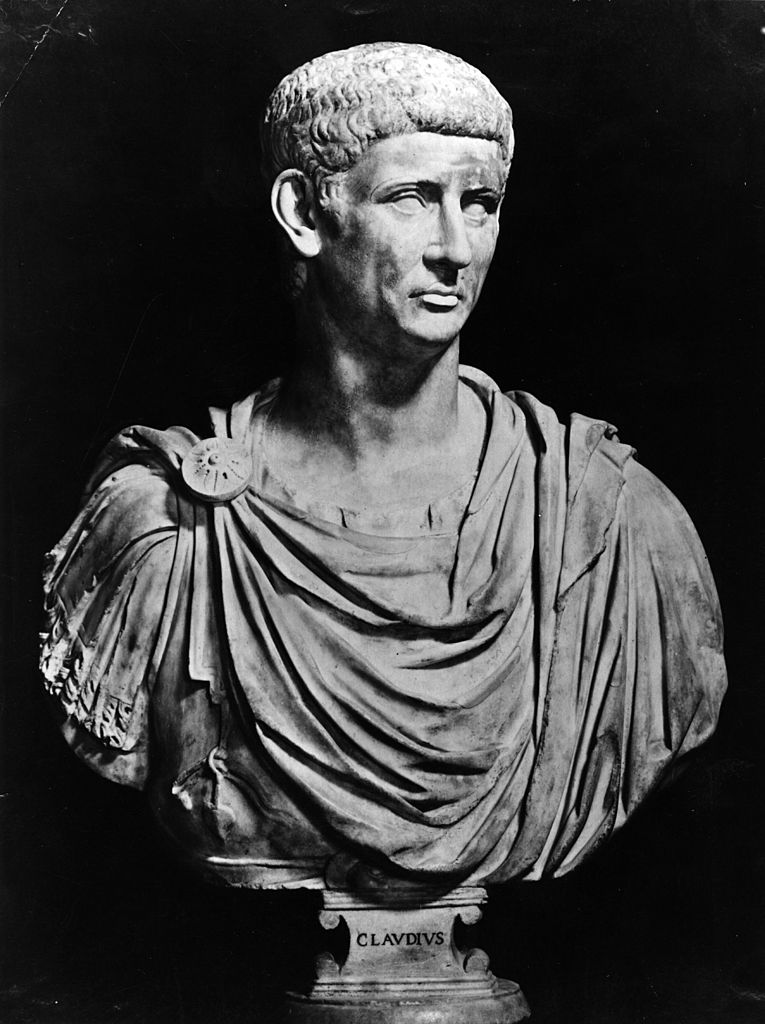
Cover image: Bust of Claudius, fourth Roman Emperor, Uffizi Gallery, Florence. (Photo by Hulton Archive/Getty Images)
 

The nomination of Cardinal Sarah last week to the Congregation for Oriental Churches was not a kindness to Christians of the East, many of whom who were unimpressed -- to say the very least -- with His Eminence’s late unenlightened take on their ancient tradition of admitting married men to Holy Orders, but any insult the nomination gave to Eastern Christians was almost certainly unintentional.

To the extent Cardinal Sarah’s nomination had any point beyond that of parking a red hat somewhere there was a space available, it appeared more closely analogous to the Little Boot's decision (did he take it) to elevate his horse to consular rank.

Cardinal Sarah is the horse. The Roman Curia is the Roman Senate, which went from being the world’s greatest deliberative body in republican times, to window dressing under Augustus, whipping boy under Tiberius, finally to laughingstock and whipping boy under Caligula.

The Roman Curia may not be the Imperial Senate -- not quite, not yet -- but in its current structure and under current leadership, the whole Roman Curia is a lame duck. Pope Francis has largely governed without the bureaucracy. To the extent his designs for the New & Improved Roman Curia™ have any discernible purpose, it is to ensure that the pope’s  governing apparatus will not be in form to do any actual governing or really much of anything.

A few key figures of the imperial papal court have been engaged in a rather Fabian resistance almost from the get-go: the (C8)C9C6 C7 Council of Cardinal Advisors, tasked with the drafting of a new Apostolic Constitution for the Roman Curia.

We first heard the draft law was basically ready in 2018. Since then, the Council of Cardinal Advisors have continued to meet quarterly. Each time they meet, we are treated to an official statement letting us know that the Councilors are working very diligently -- by hearing from department heads and other senior officials, bishops and religious superiors from around the world, experts in various fields, and sundry others – sometimes more than once -- to revise the text so it’s just right.

We had another statement this past week.

“During the meeting,” an entirely virtual affair, “some current issues were discussed, each cardinal describing the situation in his own region, regarding among other things the economic and social consequences of the pandemic and the commitment of the Church in favor of health, economic recovery and support offered to the most needy.”

The sucking sound you hear is all the bids for the 2021 "Zoom Meeting That Should Have Been An Email" Award getting tossed out the airlock.

“Subsequently,” the statement continues, “the members of the Council discussed the working methodology that will have to be implemented for the revision and correction of some normative texts following the future entry into force of the next Apostolic Constitution, as well as the further perspectives opened by the text in preparation.”

Take a beat on that.

They had a meeting in which they planned meetings about how to hold planning meetings for how to implement the planned reforms once the planned reforms are in place, and also to talk about other stuff regarding the planned reforms themselves.

That's an awful lot of planning plans to have to plan and then plan to implement, before implementing a reform that "de facto has already been accomplished," according to (C8)C9C6 C7 member and Cardinal Secretary of State Pietro Parolin.

“The next meeting,” the Press Office communiqué concludes, “is set for the month of June.”

I don’t think they met in February, though the communiqué that followed the December 2020 meeting said they would be meeting then. Does it matter?

If Francis wants to govern without the bureaucracy, that’s his business. In early 2018, I noted that Pope Francis already appeared “more interested in governing by force of personality, than by any other means.” I noted that such a tack was fine to take in the early days of his pontificate, and even in the present of early 2018. It was arguably necessary. The curial silly season that lasted from the late 1990s through the pontificate of Benedict XVI is what gave the conclave that elected Francis its appetite for reform in the first place.

That was then.

It is now apparent that Francis, if and when he does get around to promulgating the new curial constitution, will leave his successor without even the semblance of a governing apparatus. In the seven years and a bit since he created his kitchen cabinet of purple draftsmen, and especially since copies of the draft law began to circulate, folks have been asking: How will it work? That is the wrong question. If it isn't designed not to work, it is designed without a care for functionality as a bureaucracy.

That is arguably worse – at least for the next guy.

Cover image: Bust of Claudius, fourth Roman Emperor, Uffizi Gallery, Florence. (Photo by Hulton Archive/Getty Images)
 

The nomination of Cardinal Sarah last week to the Congregation for Oriental Churches was not a kindness to Christians of the East, many of whom who were unimpressed -- to say the very least -- with His Eminence’s late unenlightened take on their ancient tradition of admitting married men to Holy Orders, but any insult the nomination gave to Eastern Christians was almost certainly unintentional.
To the extent Cardinal Sarah’s nomination had any point beyond that of parking a red hat somewhere there was a space available, it appeared more closely analogous to the Little Boot's decision (did he take it) to elevate his horse to consular rank.

Cardinal Sarah is the horse. The Roman Curia is the Roman Senate, which went from being the world’s greatest deliberative body in republican times, to window dressing under Augustus, whipping boy under Tiberius, finally to laughingstock and whipping boy under Caligula.

The Roman Curia may not be the Imperial Senate -- not quite, not yet -- but in its current structure and under current leadership, the whole Roman Curia is a lame duck. Pope Francis has largely governed without the bureaucracy. To the extent his designs for the New & Improved Roman Curia™ have any discernible purpose, it is to ensure that the pope’s  governing apparatus will not be in form to do any actual governing or really much of anything.

A few key figures of the imperial papal court have been engaged in a rather Fabian resistance almost from the get-go: the (C8)C9C6 C7 Council of Cardinal Advisors, tasked with the drafting of a new Apostolic Constitution for the Roman Curia.

We first heard the draft law was basically ready in 2018. Since then, the Council of Cardinal Advisors have continued to meet quarterly. Each time they meet, we are treated to an official statement letting us know that the Councilors are working very diligently -- by hearing from department heads and other senior officials, bishops and religious superiors from around the world, experts in various fields, and sundry others – sometimes more than once -- to revise the text so it’s just right.

We had another statement this past week.

“During the meeting,” an entirely virtual affair, “some current issues were discussed, each cardinal describing the situation in his own region, regarding among other things the economic and social consequences of the pandemic and the commitment of the Church in favor of health, economic recovery and support offered to the most needy.”

The sucking sound you hear is all the bids for the 2021 "Zoom Meeting That Should Have Been An Email" Award getting tossed out the airlock.

“Subsequently,” the statement continues, “the members of the Council discussed the working methodology that will have to be implemented for the revision and correction of some normative texts following the future entry into force of the next Apostolic Constitution, as well as the further perspectives opened by the text in preparation.”

Take a beat on that.

They had a meeting in which they planned meetings about how to hold planning meetings for how to implement the planned reforms once the planned reforms are in place, and also to talk about other stuff regarding the planned reforms themselves.

That's an awful lot of planning plans to have to plan and then plan to implement, before implementing a reform that "de facto has already been accomplished," according to (C8)C9C6 C7 member and Cardinal Secretary of State Pietro Parolin.

“The next meeting,” the Press Office communiqué concludes, “is set for the month of June.”

I don’t think they met in February, though the communiqué that followed the December 2020 meeting said they would be meeting then. Does it matter?

If Francis wants to govern without the bureaucracy, that’s his business. In early 2018, I noted that Pope Francis already appeared “more interested in governing by force of personality, than by any other means.” I noted that such a tack was fine to take in the early days of his pontificate, and even in the present of early 2018. It was arguably necessary. The curial silly season that lasted from the late 1990s through the pontificate of Benedict XVI is what gave the conclave that elected Francis its appetite for reform in the first place.

That was then.

It is now apparent that Francis, if and when he does get around to promulgating the new curial constitution, will leave his successor without even the semblance of a governing apparatus. In the seven years and a bit since he created his kitchen cabinet of purple draftsmen, and especially since copies of the draft law began to circulate, folks have been asking: How will it work? That is the wrong question. If it isn't designed not to work, it is designed without a care for functionality as a bureaucracy.

That is arguably worse – at least for the next guy.

subscribe to
the catholic herald

Continue reading your article with a subscription.
Read 5 articles with our free plan.
Subscribe

subscribe to the catholic herald today

Our best content is exclusively available to our subscribers. Subscribe today and gain instant access to expert analysis, in-depth articles, and thought-provoking insights—anytime, anywhere. Don’t miss out on the conversations that matter most.
Subscribe