
May 24, 2026

How I discovered the Latin Mass

Eduard Habsburg
More
Related
Min read
share

The first time I stumbled into a Traditional Latin Mass years ago, I had absolutely no idea what I was getting into. A well-meaning traditionalist friend took me there in Italy, convinced that I would simply be blown away by the beauty and the timelessness of it all. There are stories of people stumbling into their first Latin Mass and instantly ‘getting it’, being drawn in.

Well, reader, I was not. My instinctive reaction after exiting the church was that this was the weirdest thing I had ever seen, and that I was most definitely never going to attend another one. Several things put me off strongly, first and foremost the veils on the heads of the women, then the endless genuflections of the priest, who did not look at us even once, and also his stiff, old-fashioned vestments. It was all so formal and seemed to confirm what a friend in church circles had told me about those strange traditionalists: ‘They are simply in love with a black and white photograph of the Church, and cannot cope with the modern world.’
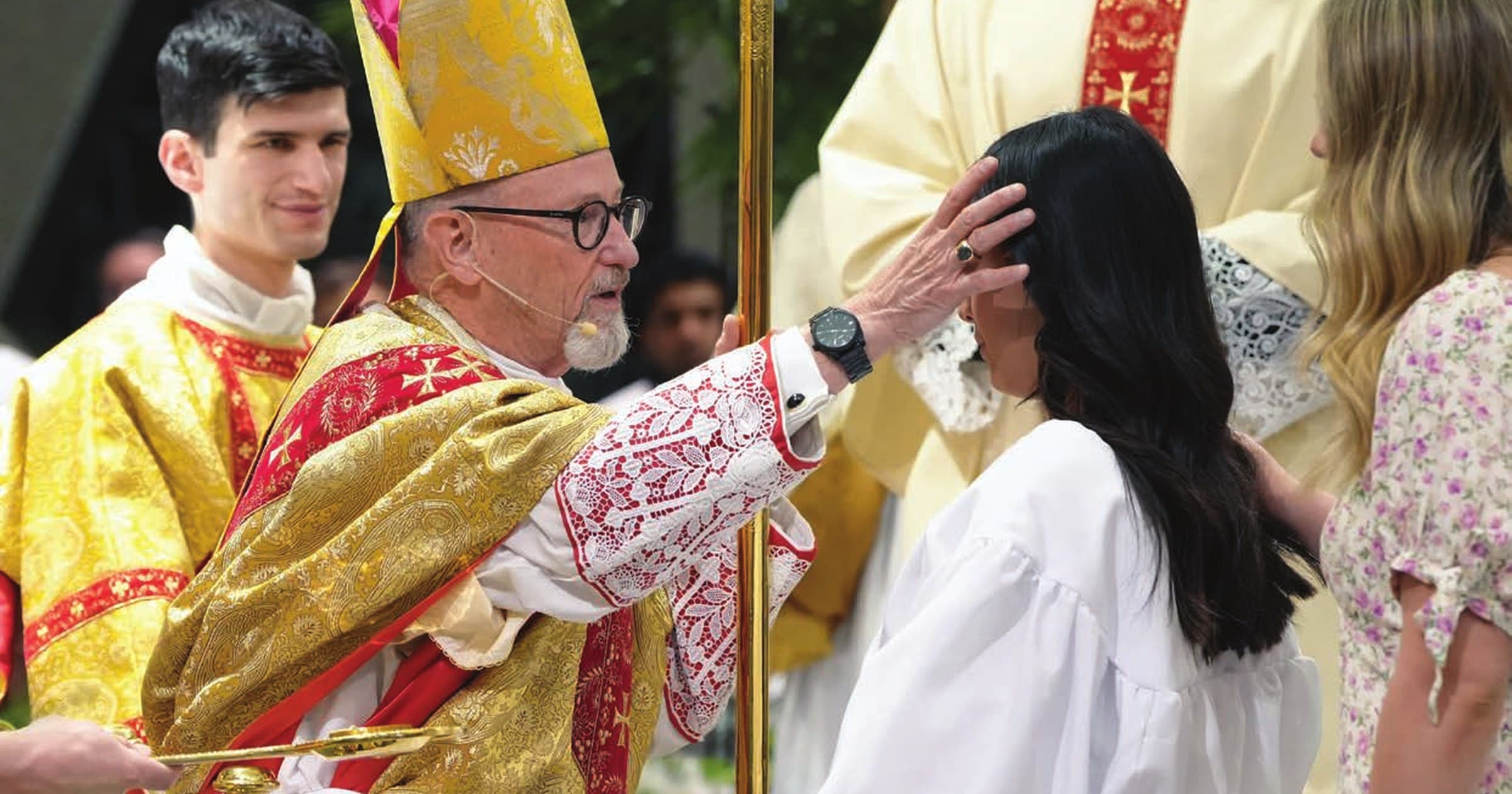
The second time, several years later in Austria, was a similar disaster. I stumbled upon a rare form of the silent Mass, one with organ accompaniment. Behind me, the organ was hammering very loudly. In front of me, a group of nuns seemed instinctively to know when to kneel and get up, even if the priest did not say anything or move much. ‘How did they do it?’, I wondered constantly. When it was all said and done, I was mostly irritated.

If it had not been for a friend in Rome (and my wife), very patiently and slowly overcoming my considerable prejudice (and my fear of suddenly slipping into this strange little sect in the Catholic Church), I probably would never have found my way to the vetus ordo. I was firmly at home in the novus ordo, today’s Mass, and had been all my life, serving as an altar boy from earliest childhood and going to Mass every Sunday. I had worked for the Church and a bishop, written my PhD on Thomism and Aquinas, and was sure I knew it all – from parish life via pilgrimages such as Medjugorje, via Opus Dei and the Charismatic movement (I was a member of the Catholic Charismatic Emmanuel Community for 10 years, with speaking and singing in tongues), I knew Dominicans and Jesuits, Benedictines, and, as a diplomat to the Holy See, had ‘seen it all’ when it came to the Church. Or so I thought – until, in my fifties, God sprang a small surprise on me and my family.

So this friend spoke to my wife, and she in turn worked on me, slowly overcoming my resistance. Finally, she managed to get me into a Mass in the FSSP parish of Trinità dei Pellegrini. I remember standing in the pews, almost missing the beginning of the Mass because the priest came in so quietly, desperately trying to read along in the missal our friend had lent us, and to make sense of what I was seeing.

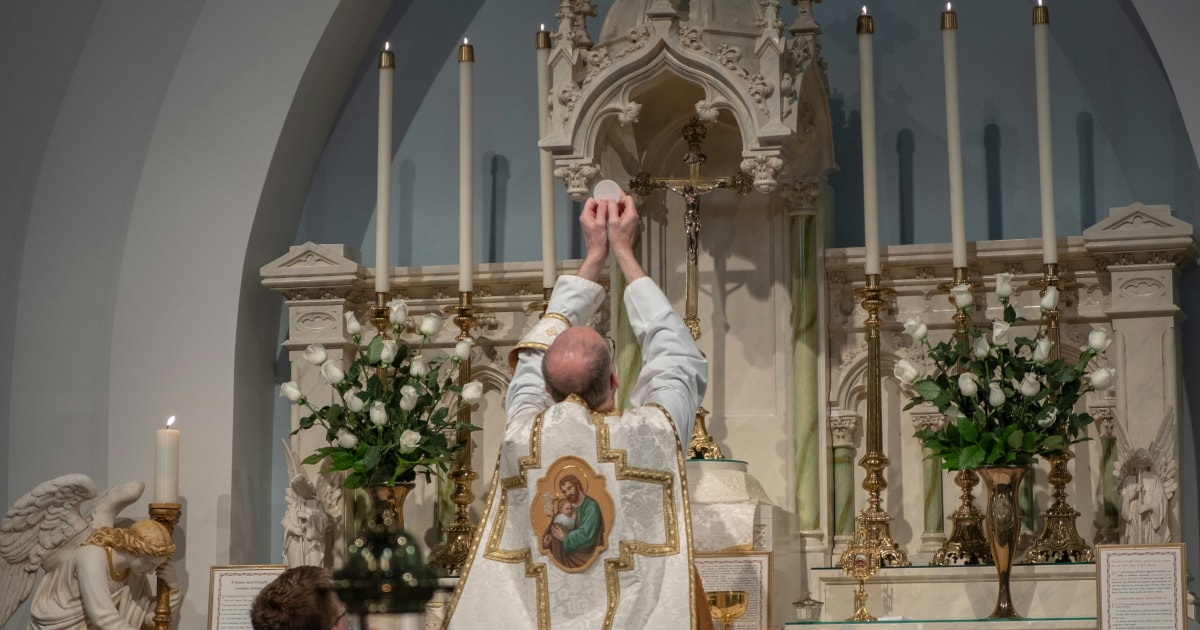
Then I was struck by something extraordinary. It happened after the Sanctus. Suddenly the priest, standing at the centre of the altar, ceased all spoken word and fell totally silent. He was ‘working’, as one could see, praying the words from the open missal standing to his left. But there was a silence that almost pressed on my ears the longer it endured. It was maintained until the bells announced the consecration and the priest lifted the Body and Blood of Christ. The silence then continued and, apart from one quietly muttered half-line, lasted until the Our Father.

That oasis of silence, which allowed me to enter into an attitude of prayer to prepare for the greatest moment this side of heaven – the consecration, when Christ transforms bread and wine into Himself – was the hook that drew me in. I have to admit that in today’s Mass I often had difficulty focusing on that central part of the liturgy. It can pass very quickly after the sermon; often we sing right up to it and immediately afterwards, so we are sometimes in danger of missing that intimate moment. Not so in the Traditional Latin Mass.

What touches a person in the Traditional Latin Mass can differ for each individual. Some are drawn by the beauty, the incense, the vestments or the solemnity of the movements; others by the Gregorian chant (though, incidentally, none of that did much for me). Quite a few – among them some of my children – are drawn by reading and praying along with the solemn, beautiful and timeless words of the liturgy in the missal.

Others may not find a way in, and that is all right. The Catholic Church has many voices in its choir; some sing low and some sing higher. Some will miss the interaction, the exchange with the priest, and seeing his face. That is understandable: for someone used to the strongly communal experience of today’s parishes, the first Latin Mass may resemble a walk on the surface of the moon.

For me and my wife, it did not. It transformed our lives. To our great surprise, our children immediately took to it after their first visit. What impressed us most deeply was the effect the Traditional Latin Mass had on them. It deepened their faith and their relationship with Christ in a beautiful way.

For others, however, access is not so easy. We often carry prejudices when it comes to the Latin Mass and those who attend it. This is understandable: some members of so-called ‘Trad Inc’ behave poorly online. Once you attend such a liturgy, however, you may find that the congregation consists largely of young people, and that the only ‘rowdiness’ comes from very small children escaping their parents.

Looking back, I wish someone had given me a small booklet, something that would fit into a back pocket, setting out the basic structure of this form of liturgy, which is now attracting many Catholics worldwide, especially young people. Something simple, allowing one to check: if the altar server is on the right and the priest in the middle, which part of the Mass are we in?

Would it not be helpful to have a small, accessible guide to the Traditional Latin Mass?

So I wrote one.

Small, colloquial and easy to read, and, to my knowledge, available free of charge (apart from shipping costs), Discovering the Latin Mass is being published by Sophia Press. It is a brief read, suitable for an afternoon. It should provide enough knowledge to enable you to explore a Traditional Latin Mass in your area.

Why not give it a try?

Eduard Habsburg was Hungarian ambassador to the Holy See from 2015 to 2025.

Continue reading with a free account

Create a free account to read up to five articles each month
Create free account

You have # free articles remaining this month.

Subscribe to get unlimited access.
Sign up

subscribe to the catholic herald today

Our best content is exclusively available to our subscribers. Subscribe today and gain instant access to expert analysis, in-depth articles, and thought-provoking insights—anytime, anywhere. Don’t miss out on the conversations that matter most.
Subscribe