

Long Reign of Silence: The Story of Britain’s Monasteries , by James Kelly (320pp, Angelico Press)
Britain remains littered with monastic ruins while possessing remarkably little cultural memory of what the monasteries once were. Eynsham, the very place the author of this article lives, was originally founded around a vibrant Anglo-Saxon minster before truly coming to prominence in 1005 with the establishment of its grand Benedictine abbey by the nobleman Æthelmær. Walking through the village today, it is impossible not to feel the heavy pull of that deep history. Long after Henry VIII’s dissolution of the monasteries reduced the great abbey to rubble in 1538, its physical legacy remained interwoven with the town; the very limestone blocks that once formed soaring cloister walls were salvaged by 16th- and 17th-century locals to construct the historic cottages that still line the streets.

Abbeys all over England survive as picturesque remnants, archaeological interests or tourist destinations, yet sadly detached from the institutional and spiritual world that originally produced them. The dissolution of the monasteries has long been absorbed into a familiar national chronicle in which the destruction of monastic life appears as an unfortunate but necessary stage in England’s emergence into political modernity. James Kelly’s new book Long Reign of Silence is, at its core, an attempt to challenge precisely this historical construct. What the book seeks to recover is the extent to which monasticism once functioned as one of the principal civilisational frameworks through which Britain understood authority, learning, memory, labour and transcendence together.
The scale of the work’s ambition quickly becomes apparent. Kelly refuses to begin with the Reformation or even with late medieval monastic decline. Instead, he traces the emergence of monastic Britain from the collapse of Roman authority through the missionary, political and intellectual transformations of the early medieval world. What Kelly gradually constructs is a cumulative historical thesis according to which monasticism furnished the mediating institutional structure through which sacred authority became socially, politically and culturally operative within post-Roman Britain.
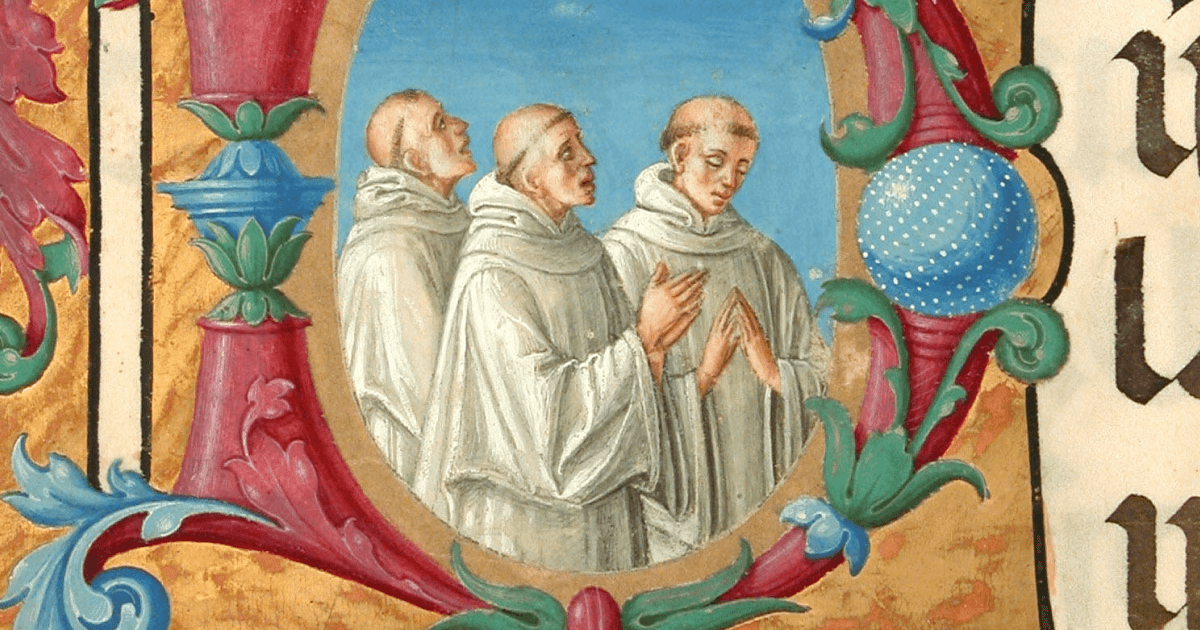
The monasteries appear throughout as the sites where contemplation and governance, literacy and kingship, ascetic discipline and civilisational continuity were held together within a unified social form. These communities preserved literacy after Rome’s withdrawal, cultivated administrative continuity, stabilised kingship through ritual and scribal culture, transmitted theological and classical learning, organised labour and gradually integrated disparate kingdoms into wider Latin Christendom.
The chapters on Dál Riata, Iona, Lindisfarne and Alfredian Wessex are especially effective in demonstrating this broader civilisational role. Kelly repeatedly returns to the relationship between literacy and authority. The importance of monastic scriptoria, census records, royal advisers, translators and schools lies in the way they rendered political order itself durable and even conceptually tenable. His treatment of Iona and the Senchus fer nAlban is particularly suggestive here. The emergence of post-Roman bureaucracy, taxation, kingship and administration appears inseparable from monastic textual culture.
The educational reforms of Alfred were at the same time pragmatic responses to Viking devastation, but more significantly contributed to a deepening and restoration of learning and discipline and thus became the foundation of the spiritual order. The famous translation programme under Alfred consequently signals more than a pragmatic educational reform. Much like Alcuin’s role within the Carolingian renewal under Charlemagne, Alfred’s patronage of translation, literacy and learning reflects the conviction that political order depends ultimately upon the restoration of intellectual and spiritual continuity.
The book is strongest, however, when its argument moves beyond institutional history and begins to illuminate the theological structure of medieval social order. Kelly repeatedly demonstrates that monastic culture supplied the symbolic and intellectual conditions under which authority could appear as more than naked force. Kingship required liturgical mediation; law depended upon literacy; memory required contemplative institutions capable of preserving continuity across generations. The monasteries functioned simultaneously as centres of prayer, education, administration, economic production and cultural transmission precisely because medieval society had not yet fragmented these activities into separate spheres governed by autonomous rationalities.
Particularly illuminating in this regard is Kelly’s attention to geography. Islands, coastlines, marshes and remote frontiers recur throughout the narrative as privileged monastic locations. Such spaces appear almost sacramentally charged: marginal to political power and yet foundational to the reconstruction of order after collapse. Lindisfarne, poised between sea and kingdom, solitude and accessibility, becomes emblematic of the larger monastic vocation within the book as a whole.
Kelly is equally concerned with confronting the long historiographical inheritance through which Protestant and Whig accounts of the English Reformation transformed the dissolution into a narrative of historical necessity. Against the familiar portrayal of late medieval monasticism as economically parasitic, spiritually empty, politically obstructive and therefore destined for disappearance, the book insists that such judgments were themselves deeply implicated in the ideological legitimation of the Tudor settlement.
To his credit, Kelly does not simply reverse the polemic through romantic idealisation. He acknowledges monastic corruption, institutional complacency, failed reforms, tensions between ascetic vocation and accumulated wealth and the increasing integration of monastic houses into structures of political power. Yet precisely this nuance sharpens the force of his larger argument. The monasteries did not disappear because they had ceased to perform any meaningful civilisational function, nor because history had rendered them obsolete according to some inevitable logic of modernisation.
What was dismantled under Henry VIII was a mediating institutional order through which contemplation, learning, charity, political authority and communal memory had long remained internally connected. Kelly’s deeper challenge therefore concerns the persistence of a peculiarly English historical mythology in which the destruction of monasticism still appears retrospectively as liberation from superstition rather than as the violent reconfiguration of an entire social and metaphysical world.
At points, the argument occasionally risks idealising monastic coherence and sharpening the contrast between medieval integration and modern fragmentation too starkly. One sometimes wishes for greater attention to the extent to which later modern institutions inherited and transformed monastic functions rather than simply abolishing them. Universities, archives, welfare structures, disciplined regimes of labour and even modern habits of scholarship continue to bear the imprint of older monastic forms, albeit under altered metaphysical conditions. The limitation of the book lies less in its sympathy for monastic civilisation than in its relative unwillingness to theorise sufficiently the forms of institutional mediation that succeeded it. Nevertheless, such reservations do little to diminish the force of Kelly’s broader historical challenge.
The final chapters acquire a more meditative register, reflecting upon silence, libraries and the strange afterlife of monastic sensibilities within secular modernity. They sharpen the book’s underlying question: if monasteries once cultivated the conditions under which contemplation, learning and communal memory remained socially intelligible, what becomes of a civilisation that preserves many of their cultural fruits while forgetting the spiritual vision that sustained them?
Kelly does not answer the question directly; it would be difficult to do so. Yet his book succeeds precisely because it compels the reader to confront it. The monasteries emerge as institutions deeply implicated in the formation of Britain itself. Their ruins consequently signify more than historical disappearance. They mark the partial loss of an older conception of culture in which transcendence, learning, authority and social order still belonged to a unified vision of reality.

.png)

.png)