.png)


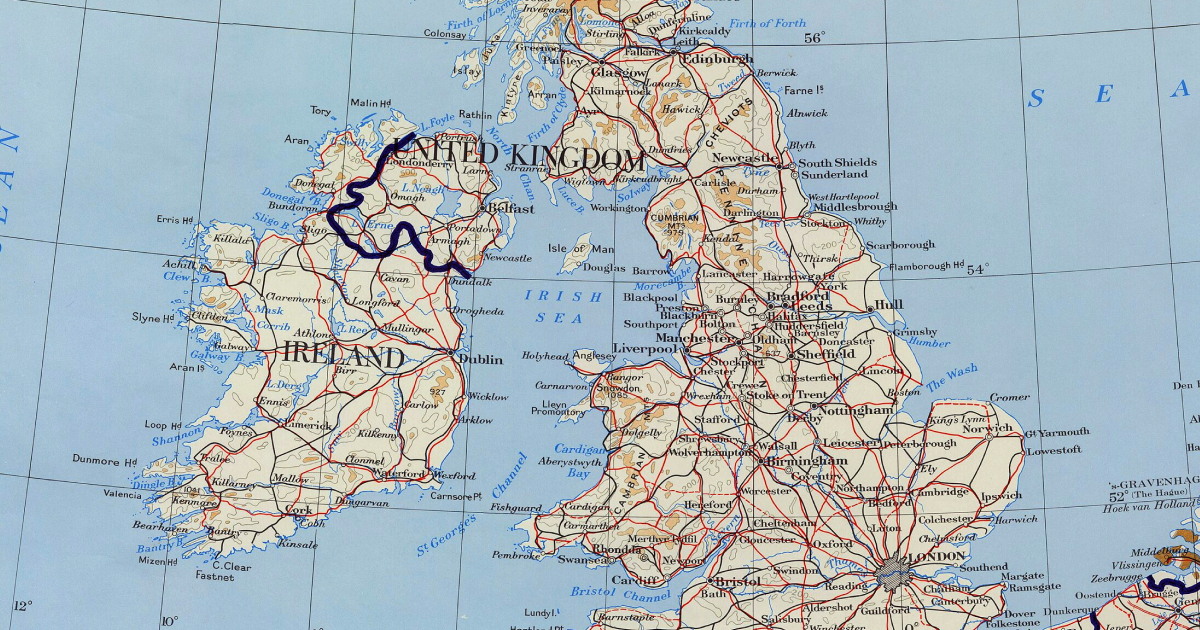
At a time when Ireland is need of a Catholic intellectual revival, its presence at third level is shrinking. At the end of May, St Patrick’s, Carlow College, announced that it will cease to exist in two years, with its campus being handed over to a state-run, secular university. In return, Carlow College will receive funding from the Irish state for a two-year period, to allow students currently undertaking study to complete their courses. It marks the second Catholic college to be given to the state in just three years, after St Angela’s College on the west coast of Ireland was gifted to another secular university by its patrons, the Ursuline Sisters. That leaves just Mary Immaculate College in Limerick and St Mary’s University Belfast in the North as the two remaining publicly funded colleges on the island of Ireland. This is a real indictment of the lack of initiative and drive that has mired the Church’s approach to the intellectual formation of the laity, a problem which stretches back at least to the 19th century.
The case of Carlow College, as it is generally known, is a difficult one. The college was facing significant financial difficulties, local newspapers report, and had previously been in negotiations with South East Technological University (SETU) about a potential amalgamation. When this fell through, the college – whose patron is the bishop of Kildare and Leighlin – had little choice, it appears, but to turn to the state for help. The Government has committed to supporting the running of the university for two further years, while sources have told me the issue of staff redundancy may also have come into the picture.
While the college ultimately had few choices open to it, this is not an isolated incident: it is part of a pattern of deals that do little favour to the Catholic population who supported these colleges for so long, first through donations and later through taxation. St Angela’s is another example – the Sisters got little in return for gifting the state such an excellent resource. Going slightly further back, St Patrick’s College, the former All Hallows’ seminary, and the Mater Dei Institute of Education in Dublin were sold to the nearby Dublin City University, with MDI continuing to exist in an attenuated form as a centre within the state-run college.
Then we have the case of MIC, one of the last remaining publicly funded Catholic colleges in the south of Ireland, under the patronage of the bishop of Limerick. MIC has faced a great deal of scrutiny over the past three years over its failure to appoint either a head of the theology department or a new chaplain. Two theology positions are also vacant. One senior lecturer in MIC, Dr Cathy Swift, told The Irish Catholic back in 2023 that the failure to appoint a new head of theology adds to concerns that the college’s Catholic ethos is not “of particular concern” for negotiators who were, at the time, engaged in dialogue with the nearby state-run University of Limerick about a closer structural alignment. These talks fell through, which did not help staff morale.
While there are arguments for and against each individual case I have highlighted, the overall picture painted is of a lack of vision and investment in Catholic universities, at a time when the faithful are crying out for more formation. It will be argued that there is little that can be done, given the decline in the Church overall, the expense involved in running the colleges and an “evolving” educational landscape, as Carlow College president Fr Conn Ó Maoldhomhnaigh put it.
But this ignores the fact that, while we may not have the resources ourselves, there are others who do and who are very interested in the Church in Ireland. For instance, consider the announcement earlier this year that the American Catholic college Ave Maria University is establishing a campus in Ireland. It is hoped that the liberal arts university will give new life to the historic former Cistercian monastery of Mount Melleray in County Waterford. Then there is the presence of the University of Notre Dame, which already has a footprint in Ireland through a centre in Dublin. Notre Dame’s presence in Ireland would be of great benefit in a culture where the intellectual side of the Faith has struggled to gain ground.
In saying this, I am thinking of the failure to establish a Catholic university that seeks to cater to an educated laity, of the kind envisaged by St John Henry Newman when he set up the failed Catholic University of Ireland. This ultimately became University College Dublin, another secular university formed on infrastructure and resources paid for by Catholics. As this shows, the issue is not the present hierarchy, but a whole culture of underinvestment in lay Catholic education, of a kind that could have formed the laity to better resist the tide of secularism.
The underinvestment in third-level Catholic education does not look much better when you consider that college chaplaincies are some of the most fertile evangelisation grounds across the island of Ireland. Universities and colleges were previously, and in many ways still are, perceived as hostile territory for the Faith. But whether it be in Belfast, Cork, Dublin or Galway, chaplains report significant interest in spirituality generally and Catholicism specifically. The response to the work of Focus missionaries – who sadly have now pulled out of Europe – demonstrated the hunger young Irish men and women have for faith.
The investment of Church leaders in our chaplaincies must be praised, as it is paying an unexpected and welcome dividend. But that cannot distract from the pressing need for proper investment in its remaining Catholic colleges, rather than allowing them to drift into oblivion.