.png)


Between the smooth organisation, the strident tones of his address to the nation’s parliament, the fireworks over Barcelona’s Sagrada Familia and his focus on migrants, Leo XIV’s voyage to Spain has proved as noteworthy an event as was ever expected.
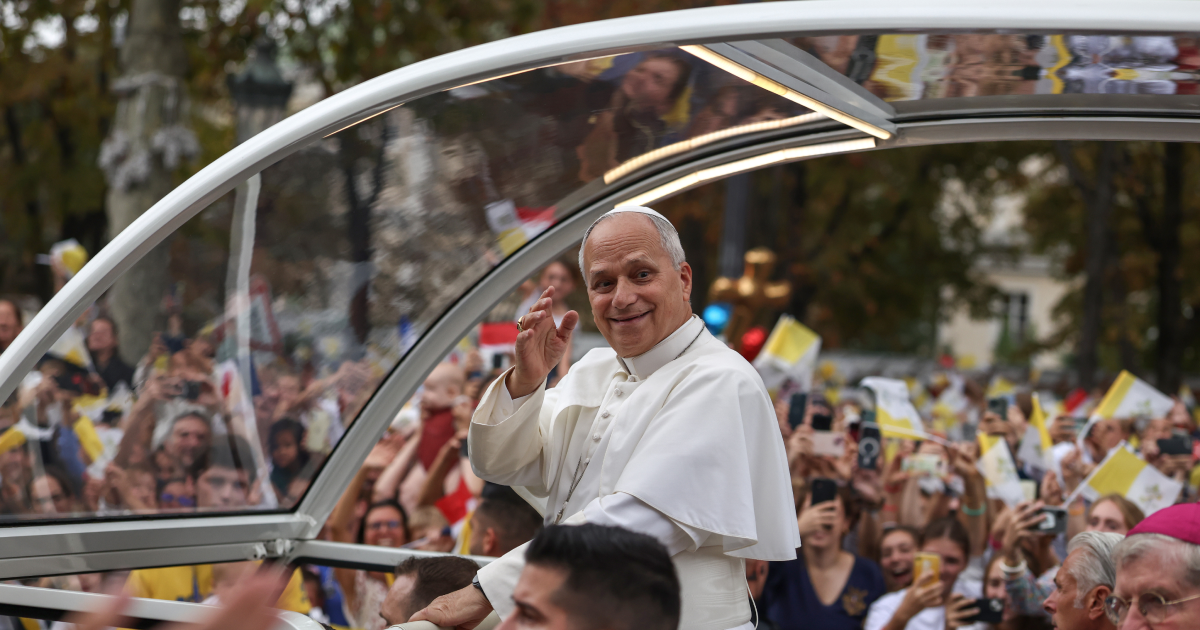
As he returned to Rome on Friday evening, Leo will have been afforded ample opportunity to dwell on the reception granted to him in the Iberian Peninsula this past week. He joked to journalists on the plane to Spain last Saturday about whether the young people would choose to see him, or Puerto Rican rapper Bad Bunny in Madrid. The answer was clear: some 1.2 million people turned out to greet the Pope for his Corpus Christi procession through the streets last Sunday.
Spain is no longer a de facto Catholic country, according to the president of the bishops’ conference, Archbishop Luis Argüello. “The time has passed, settled for centuries, when we said: I’m Catholic because I was born in Spain,” he stated in April 2025. Leo’s task was therefore to tap into the Catholic roots and culture of the nation in order to awaken a dormant religiosity, and to encourage young Spaniards that the Church offers something the world cannot.
He certainly received the memo on Sunday, urging those present to reject “other idols” and the promises of secular society. “Herein lies the task of Spain today and in the future,” he said, “to ensure that the religiosity which has shaped and defined this country for centuries is not a museum of the past to be visited, but a school of faith from which to draw even today.”
Corpus Christi, the Pope said, is “not an exhibition, a remnant of folklore or a simple display of beauty. It is a profession of faith in the presence of the risen Lord”.
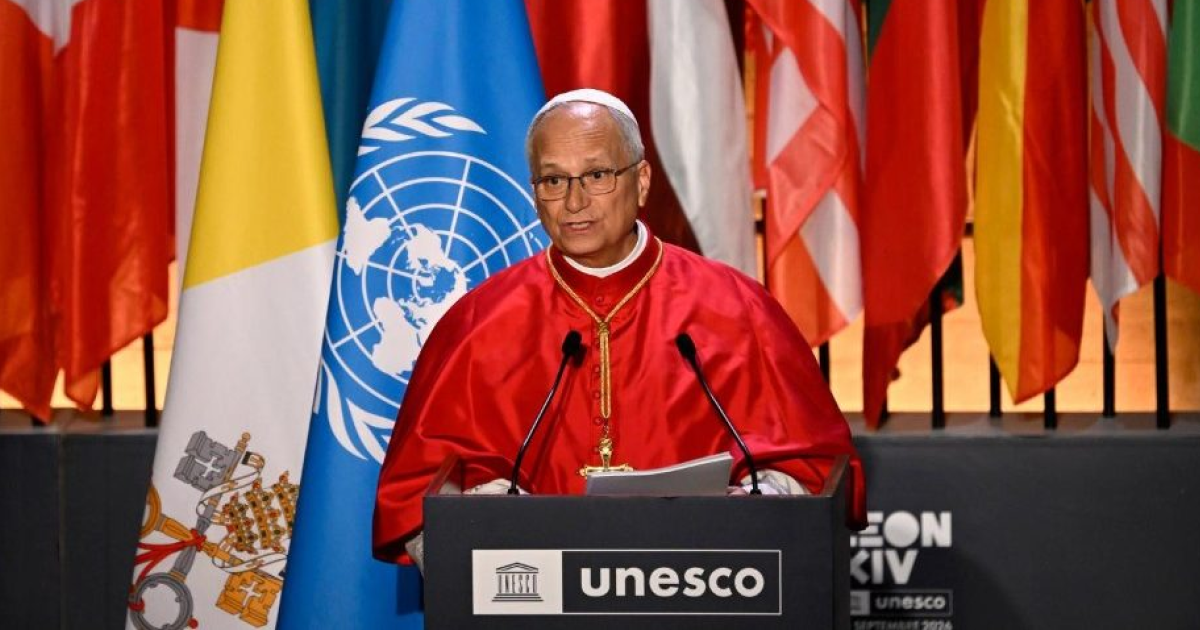
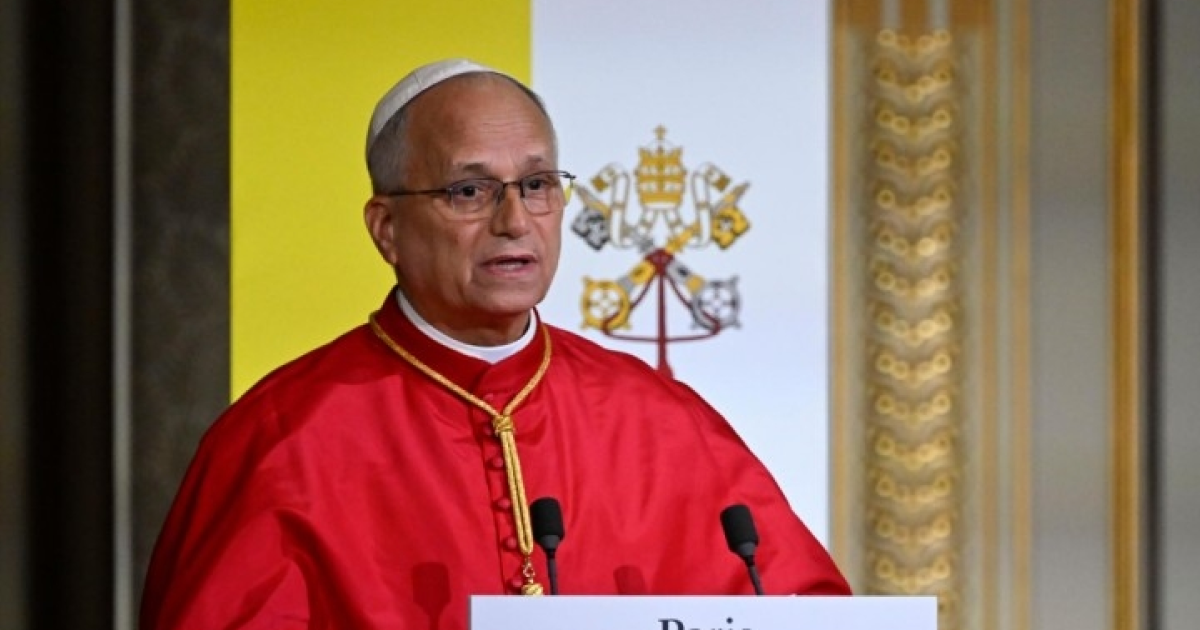
He echoed such themes during his address to the Spanish parliament, the first such by a Pope to the Congress of Deputies. Just as Magnifica Humanitas seemed to contain Leo’s plan of subtly evangelising a secular world, his speech to the politicians on Monday summarised his own interpretation of Catholic social teaching.
“The defence of human life is neither a partisan issue nor a confessional interest: it is a goal of civilisation,” he declared. Decrying abortion and euthanasia, Leo also defended the family as “the natural foundation of the community”, upon which the very existence of society rests, while outlining that “every truly just society is built upon the recognition of the inviolable dignity of the human person”.
During that same address, he also defended the rights and life of the Church – no small matter considering just days prior France had very nearly moved forward with a bill which would have undermined the seal of Confession. To legally preserve this sacramental seal “means preserving a sacred space of inner freedom, where the believer can open his or her soul to God without fear of external pressures,” said the Pontiff.
To the bishops’ conference – a body which has seen no shortage of division and increasing heterodoxy in recent years – the Pope recalled that each of them must be “a visible sign of communion: first and foremost, of communion with Christ, lovingly safeguarding the faith we have received, in docility to the Word of God and to the living Tradition of the Church”.
These encounters complete, the focus thus shifted to the highlights of the second half of the week: his visit to Barcelona’s Sagrada Familia basilica and his two meetings with migrants in the Canary Islands.
The former was highly anticipated, as one of the most notable churches in the world prepared to receive the Pontiff – the first papal visit since Pope Benedict XVI consecrated the basilica in 2010. Sagrada Familia’s architectural style is not to everyone’s taste, but there could be no doubt that the church – which began construction in 1882 – was well prepared for the papal celebration.
After blessing the recently completed Tower of Jesus Christ, Leo was treated to an intricately orchestrated show featuring choir, orchestra, organ, drones, fireworks and the performative use of the basilica’s lighting system.
But it was Thursday and Friday which saw some of the final key moments of the week-long trip, as Leo fulfilled a dream of his predecessor by meeting migrants in the Canary Islands. Pope Francis prominently championed the cause of migration, and Leo has continued that cause, though with more subtlety and nuance.
Thursday’s meeting was held on the infamous “Port of Shame” in Gran Canaria, which in 2020 saw immense numbers of migrants arrive from Africa, to be met with poor supplies of food, water and shelter. The “tragedy” of forced migration “must serve as an appeal to the conscience of the nations of origin of the migrants, which must establish conditions for peace, justice and development,” said Leo. It was a reality which must “challenge” the Church too, he opined.
Leo added greater nuance than Francis often did, in also defending “the right not to have to migrate” and “to remain in one’s own home without hunger, war, persecution, violence, the land becoming uninhabitable, corruption stealing the bread from the poor or weapons destroying the future of children”.
This factor is a key element which must not be overlooked, especially at a time when the Holy See’s perceived weak stance on illegal immigration continues the risk of ostracising many Catholics concerned about national border integrity.
Indeed, the Vatican has been weak on this aspect when it comes to acknowledging the not infrequent reality of fraudulent immigration, and the impact seen on the local communities receiving such foreign nationals. This has, and continues to be, a point of contention between the Holy See and the current Trump administration, and is one on which the Vatican would do well to be more aware.
For his part, Leo is certainly more nuanced than his predecessor in his rhetoric.
Michael Haynes is an English journalist in the Holy See Press Corps. He serves as Vatican Correspondent and Analyst for Pelican+ and the Catholic Herald, while readers can follow him at Per Mariam and on X/Twitter @MLJHaynes.