

The Vatican has reportedly accepted an appeal from the Benedictine monks of the Valle de Cuelgamuros against Spanish government plans to remake parts of the vast monument complex, opening a formal canonical process that now runs alongside civil legal challenges in Spain. According to Advaticanum, the move is likely to deepen the dispute over one of the country’s most politically and religiously charged sites.
At the centre of the row is the Sánchez government’s project to “re-signify” the former Valle de los Caídos, now officially called the Valle de Cuelgamuros. The winning architectural proposal, titled La base y la cruz, envisages significant changes to parts of the complex, including the entrance atrium, the Marian side chapels along the nave and the Chapel of the Blessed Sacrament near the main altar. The formal presentation of the scheme is expected in June 2026.
The government has insisted that the project was advanced with ecclesiastical knowledge and agreement. Félix Bolaños, the minister responsible, has claimed that an accord was reached with Cardinal José Cobo of Madrid and with the Vatican. But that assertion has been publicly challenged by the Spanish bishops, who say no representative of the Holy See signed any such agreement. Mgr Francisco César García Magán, secretary general of the Spanish Episcopal Conference, said after the bishops’ plenary assembly that “the Vatican has not been a signatory”.
That objection goes to the heart of the controversy. Cardinal Cobo has reportedly maintained that neither he nor the Archdiocese of Madrid holds canonical authority over the Basilica of the Holy Cross or the resident Benedictine community, since the basilica remains under the direct jurisdiction of the Holy See. The monks, for their part, argue that any purported arrangement lacks force if it was advanced without prior consent and without Rome’s direct involvement.
The community has raised particular concern over the planned alteration of the entrance atrium, a space bound up with the monastery’s liturgical life and used for major ceremonies, including ordinations. Church officials have also stressed that canonical protections for consecrated places remain in force, meaning that sacred spaces cannot simply be repurposed for non-liturgical ends without proper authority.
The dispute has already been complicated by tension around the Benedictine house itself. The former prior, Santiago Cantera, was removed last year amid a mixture of government pressure and ecclesiastical decisions, a development that sharpened suspicions among critics of the state’s intentions for the site. Parallel legal appeals in Spain have also questioned whether the necessary municipal and regional permissions have been secured.
The president of the Spanish Episcopal Conference, Archbishop Luis Argüello, has called for renewed dialogue and urged both the government and the monastic community to reach what he described as a reasonable and satisfactory agreement. Significantly, his intervention made no reference to any previous settlement involving Cardinal Cobo.
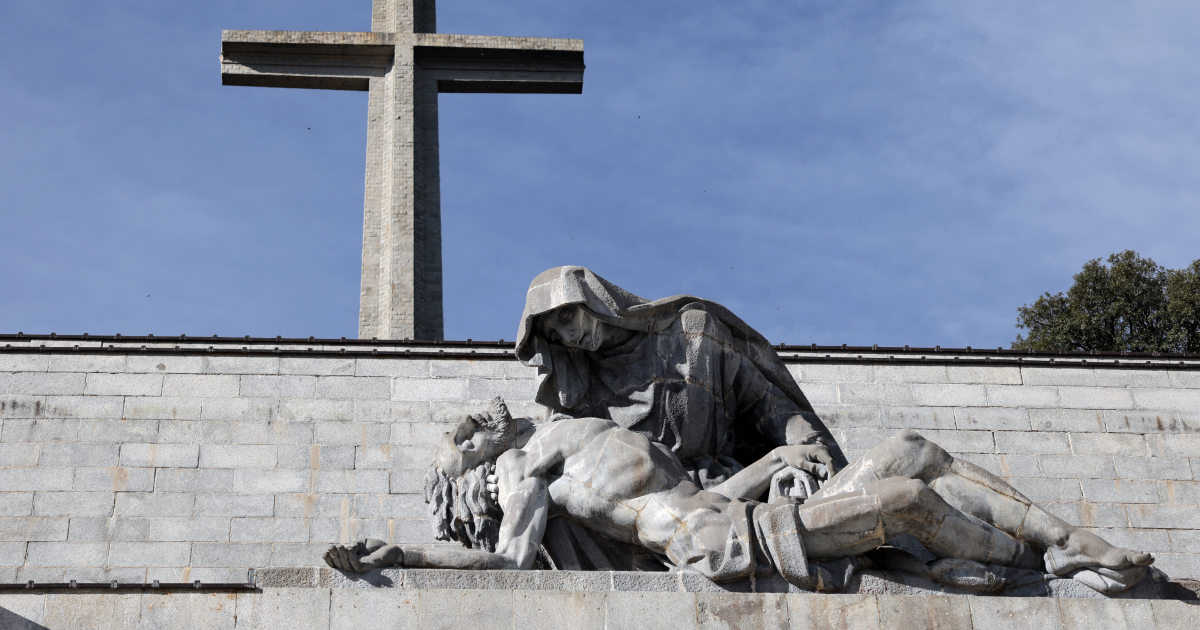
The Valle de Cuelgamuros, with its underground basilica and immense cross, is not only a place of worship but one of the most symbolically burdened sites in modern Spain, bound up with the legacy of the Civil War, Francoism and the politics of historical memory. Since 2018, Pedro Sánchez has repeatedly sought to reshape its civic meaning, and under the Democratic Memory Law the site was formally renamed in 2022.
For supporters of the government, the redesign forms part of an effort to detach the monument from its older ideological associations. For critics, it looks increasingly like state encroachment on a consecrated basilica and a resident religious community. By accepting the monks’ appeal, the Vatican has not settled the matter. But it has made clear that the Church’s own legal order will now have its say before any claim of ecclesiastical consent can be taken for granted.