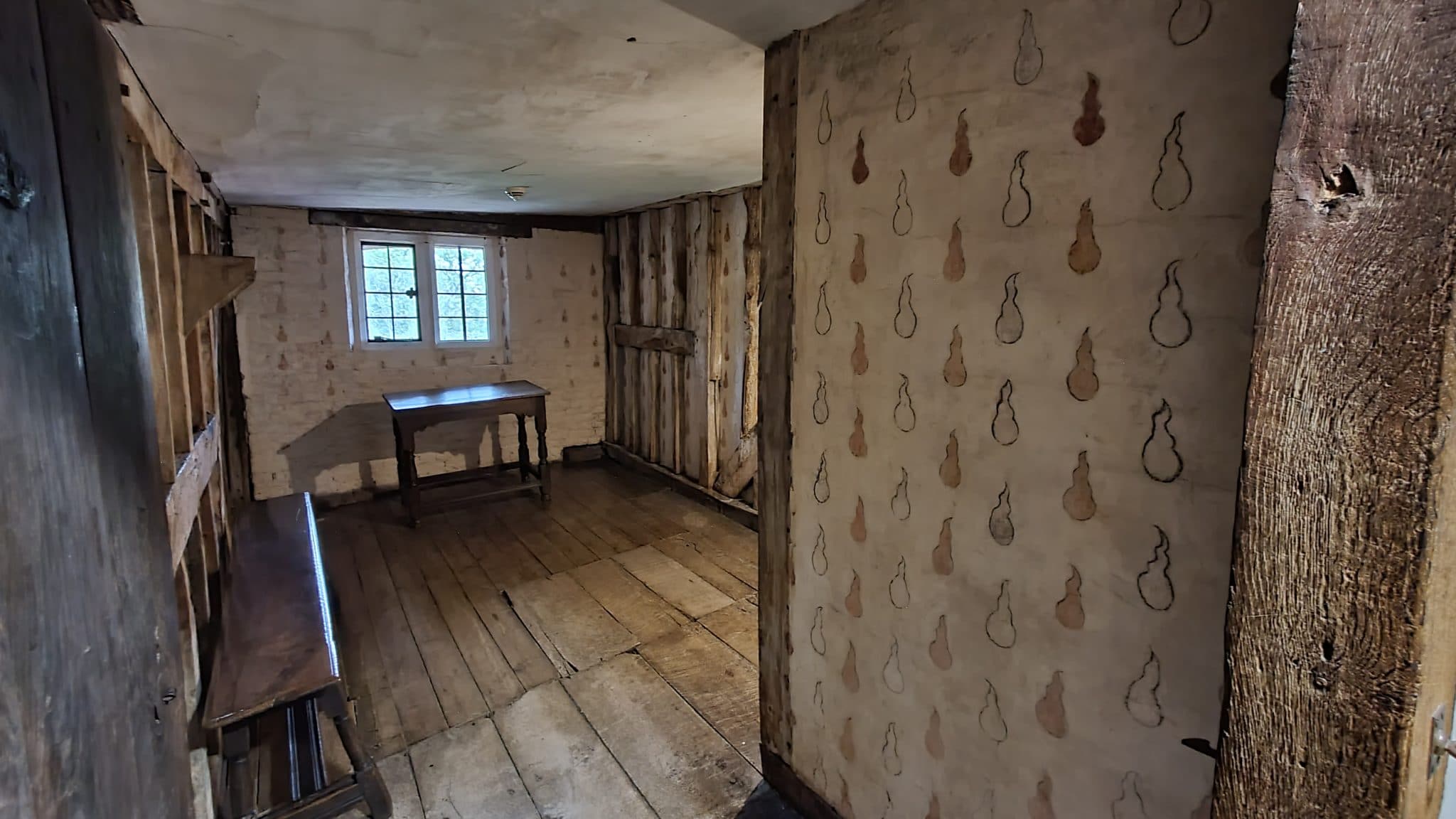



Very few secret Catholic chapels from the 16th century have been identified in England – fewer, indeed, than the “priest holes’”(properly called “hides”) sometimes found in recusant houses. There are good reasons, however, to believe that such a chapel has been identified in Norfolk – and the discovery is rendered all the more intriguing by the fact that the family who created it did not publicly avow their Catholicism.
The rarity of these secret chapels is scarcely surprising, given the capital penalty for saying Mass in the reign of Elizabeth and the circumstances of secrecy and haste in which priests were compelled to celebrate Mass. In most cases, secret oratories were simply disguised as an ordinary room of the house; often they were located in the eaves of a building, sometimes with a secret point of access such as a concealed staircase that allowed both the priest to escape at a moment’s notice and the faithful to access the chapel directly, without drawing attention by going through the house. Yet in a few cases, Catholics went to the trouble of decorating a secret chapel – most famously, perhaps, at Harvington Hall in Worcestershire. The small chapel at Harvington, located on the top floor, was distinctively decorated in around 1576-8 with alternating lines of red and white drops, which represent the blood and water that flowed from Christ’s side at his Passion. This is a distinctively Catholic decorative scheme, recalling both the medieval cult of the Holy Blood of Christ as well as the sacrifice of the Mass. Until recently, however, no other example of a decorative scheme similar to that in the small chapel at Harvington was known in a domestic building in England.