


Several communities of religious sisters and a Catholic diocese have filed a lawsuit seeking to block New York's assisted suicide law, arguing that it violates their religious freedom by compelling them to participate in practices contrary to their faith.
The lawsuit, Carmelite Sisters for the Aged and Infirm v. Letitia James, was filed in the US District Court for the Northern District of New York on July 17. Letitia James is the Attorney General of New York.
The plaintiffs are the Carmelite Sisters for the Aged and Infirm, the Dominican Sisters of Hawthorne, the Missionary Sisters of St Benedict, the Little Sisters of the Poor, Bishop John Barres of Rockville Centre and the Diocese of Rockville Centre.
They argue that New York's Medical Aid in Dying Act would force them to violate their consciences by requiring participation in the process of ending the lives of patients. They are asking the court to block the law before it comes into force on August 5.
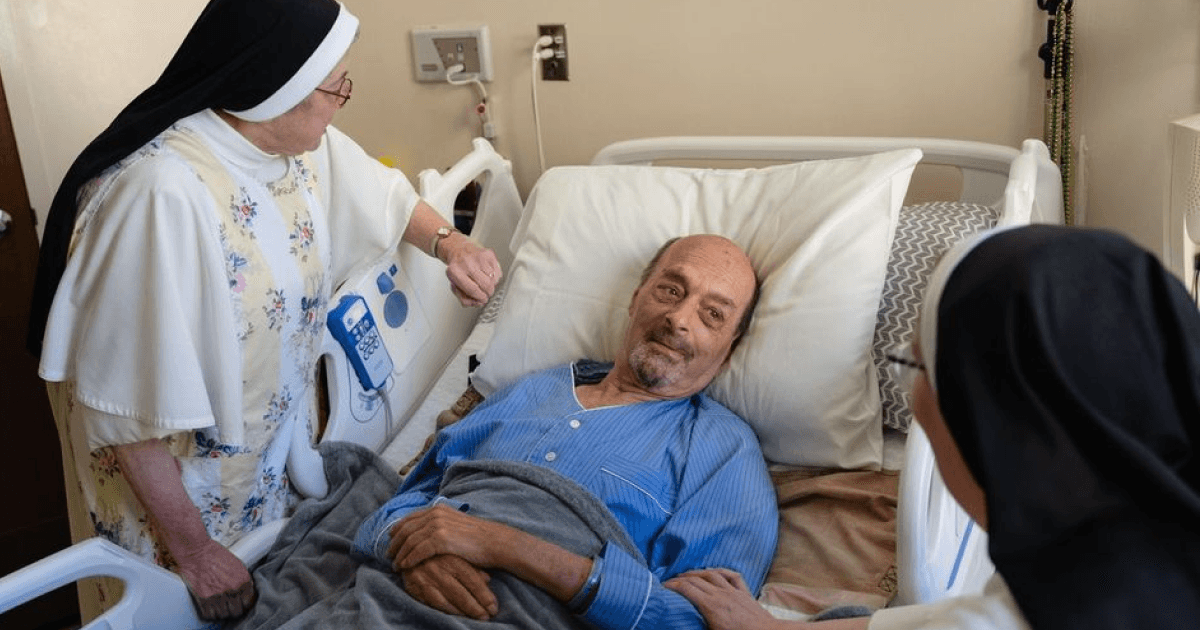
The four religious institutes all provide healthcare as part of their ministries, while the Diocese of Rockville Centre sponsors Catholic Health. The diocese describes Catholic Health as “an integrated system” comprising six acute-care hospitals, three nursing homes, a home health service, a hospice, a community-based agency for individuals with special needs and a network of physicians.
Although religious healthcare facilities are not required to provide lethal medication to patients seeking assisted suicide, the plaintiffs argue that the law's religious exemption does not adequately protect their rights.
According to a July 20 press release issued by Becket, the law firm representing the plaintiffs, the law requires religious healthcare providers to inform and counsel terminally ill patients about assisted suicide, determine whether they qualify for life-ending medication, or refer them to someone who will.
Becket says failure to comply could result in fines, the loss of professional licences or imprisonment.
“New York is forcing sick and dying people to consider suicide at their lowest moment, regardless of whether they ask for it or not. Worse, it's conscripting the nuns who care for them into its suicide cult on pain of crushing fines and professional ruin,” said Mark Rienzi, president of Becket and lead counsel in the case.
“That is both unconscionable and unconstitutional. We're confident the federal courts will put a stop to it.”
The Catechism of the Catholic Church states that “Voluntary co-operation in suicide is contrary to the moral law” and that suicide itself is “contrary to love for the living God”.
“We will never submit to New York's culture of death. Assisted suicide is a grave moral failure that puts the elderly, the disabled, and those suffering from mental and emotional illness at risk of abuse and manipulation,” Bishop Barres said in a statement.
“Christ the Divine Physician calls us to accompany the sick and dying with compassion, not abandon them to death. The court should protect that millennia-old mission.”